Description
Vibrant Golden Blooms on a Climbing Vine
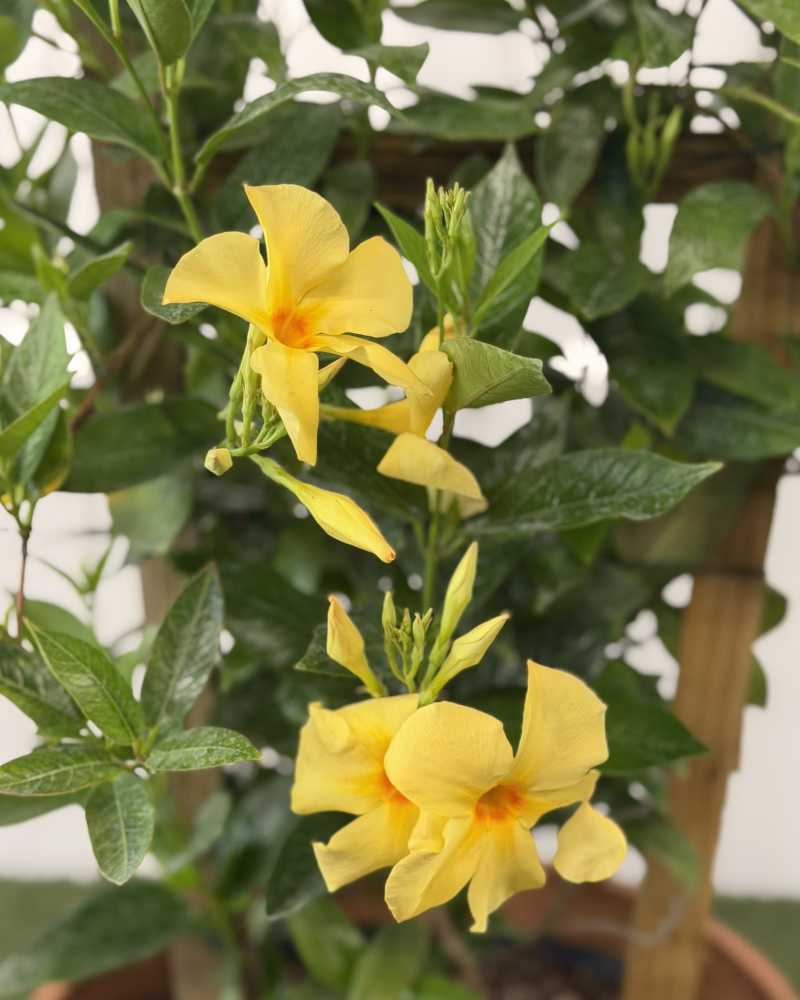
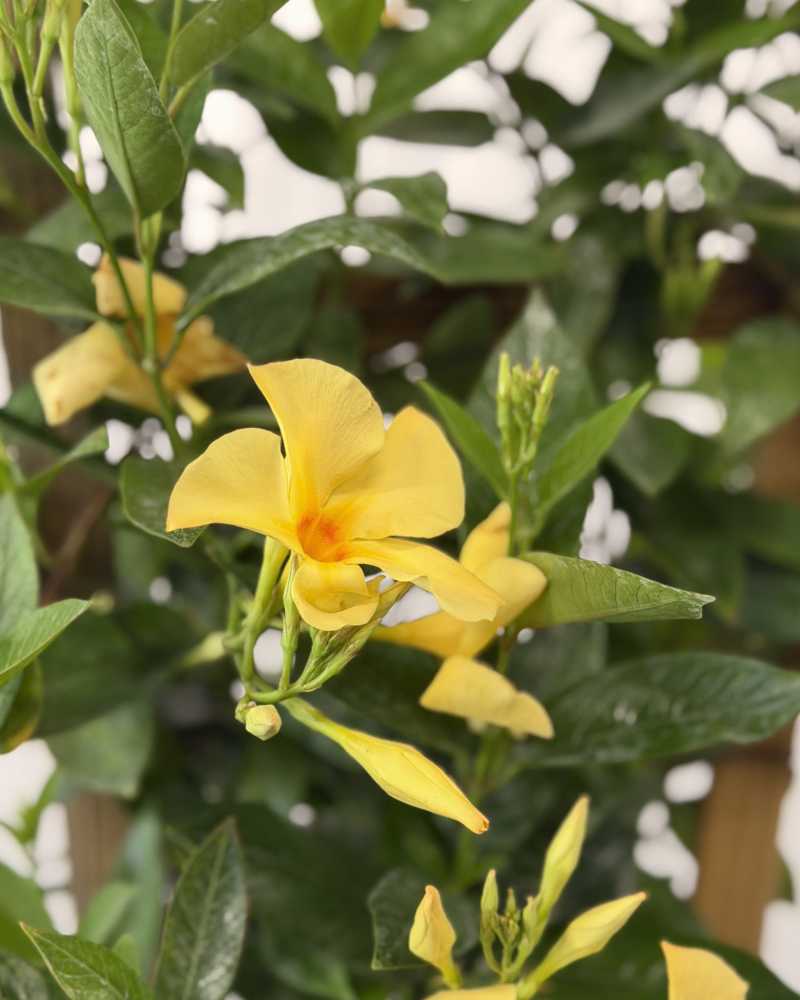
Who does not like flowers? Imagine having a plant at home that gives you the most vibrantly golden, trumpet-shaped flowers.
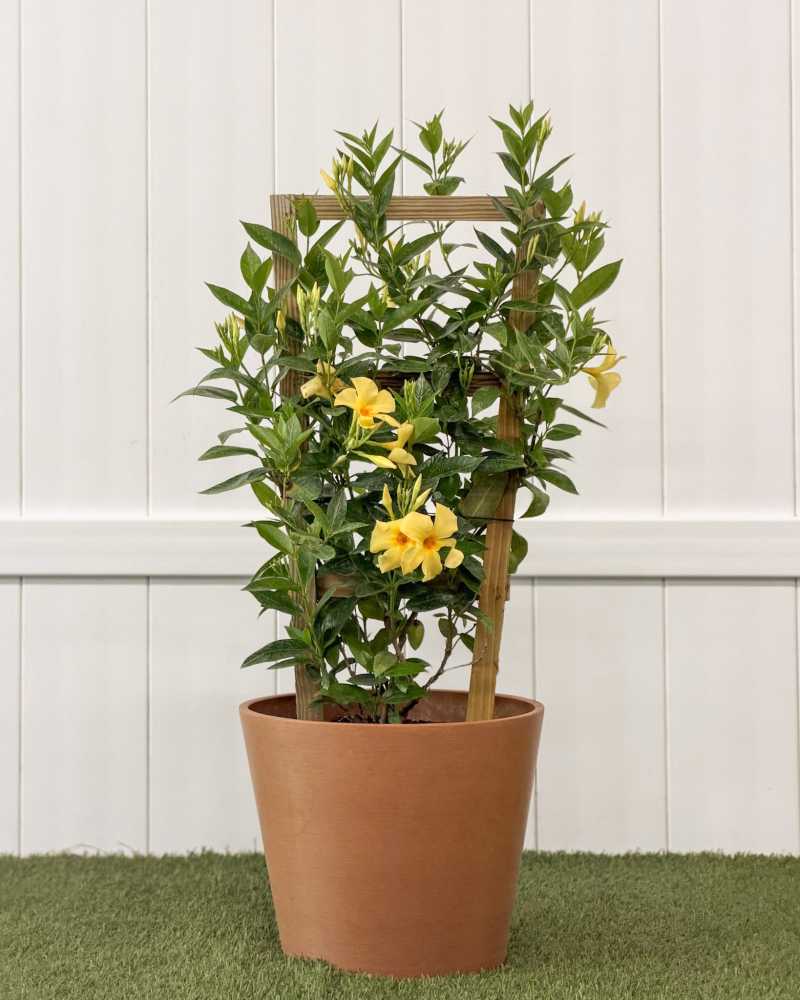
The Mandevilla Yellow Trellis will be the aesthetic and sunny addition your home needs.
Caring for your Mandevilla Yellow
The Mandevilla is an exceptionally vigorous grower when provided with a support structure like a trellis. If you live in a warmer region, it is a stunning perennial that can cover a wall in a single season. In colder regions, it is most commonly grown in large containers with a built-in trellis so it can be moved indoors when the temperatures drop.
Light
Being a true tropical native, the Mandevilla loves the sun. To get the most flowers, it should be placed in a spot that receives at least 6 to 8 horas of direct sunlight. However, if you live in an extremely hot and arid climate, providing some filtered afternoon shade can prevent the leaves from scorching. Indoors, the best place is near a bright, south-facing window where it can soak up the rays.
Soil
When growing this vine in a container, use a high-quality potting mix that is well-drained but rich in organic matter. A mix containing peat moss or leaf mold is ideal as it retains the right amount of moisture without becoming soggy. If planting outdoors, ensuring the spot has excellent drainage is crucial to prevent root issues, especially during rainy seasons.
Water
The Mandevilla Yellow Trellis prefers consistent moisture but does not like “wet feet.” You should water it when the top inch of the soil feels dry to the touch. During the peak of summer, especially for plants in containers, you may need to water daily. In more humid environments, ensure there is good air circulation around the foliage.
Typically, providing 1-1.5 inches of water per week is the gold standard for keeping it lush and blooming.
Fertilizer
To keep those yellow blooms coming all season long, use a high-phosphorus, slow-release fertilizer at the start of the growing season. This will fuel the vine’s rapid growth and flower production. During the summer, you can supplement every two weeks with a diluted liquid fertilizer or fish emulsion to give the plant an extra boost of nutrients.
Common Issues
While Mandevillas are generally hardy and resistant, keeping an eye on their environment will prevent most common problems.
Pests
The most common visitors to the Mandevilla are aphids, mealybugs, and whiteflies. These pests like to hide on the undersides of the leaves or near the new growth. You can easily manage these by using a spray of neem oil or a mild liquid detergent mixed with water. For indoor plants, a sharp spray of water in the shower can also help dislodge any unwanted guests.
Disease
Most diseases in Mandevillas are fungal and stem from overwatering or poor drainage. Leaf spot or crown rot can occur if the plant sits in stagnant water. If you notice yellowing leaves that drop prematurely, it is usually a sign of either too much water or a sudden drop in temperature. Ensure the pot has plenty of drainage holes to keep the roots healthy.
Pruning
Since the Mandevilla Yellow Trellis is a fast grower, pruning is essential to keep it tidy. The best time to prune is in late winter or very early spring before new growth begins. You can trim back old vines to encourage bushier growth and more flower buds. If bringing the plant indoors for winter, you can give it a significant cutback to make it more manageable.
Propagation
You can propagate your Mandevilla using stem cuttings. Take a 4-6 inch cutting from a healthy, non-woody stem during the spring or early summer. Dip the end in rooting hormone and place it in a moist potting mix. Keeping the cutting in a warm, humid environment will help it develop roots that match the parent plant’s vigor.
Potting / Repotting
Repot your Mandevilla every one to two years as it grows. Since this is a climbing plant, ensure that your new pot is heavy enough to support the weight of the trellis and the vine without tipping over. Using a deep container will provide enough space for the root system to support a massive display of flowers throughout the year.