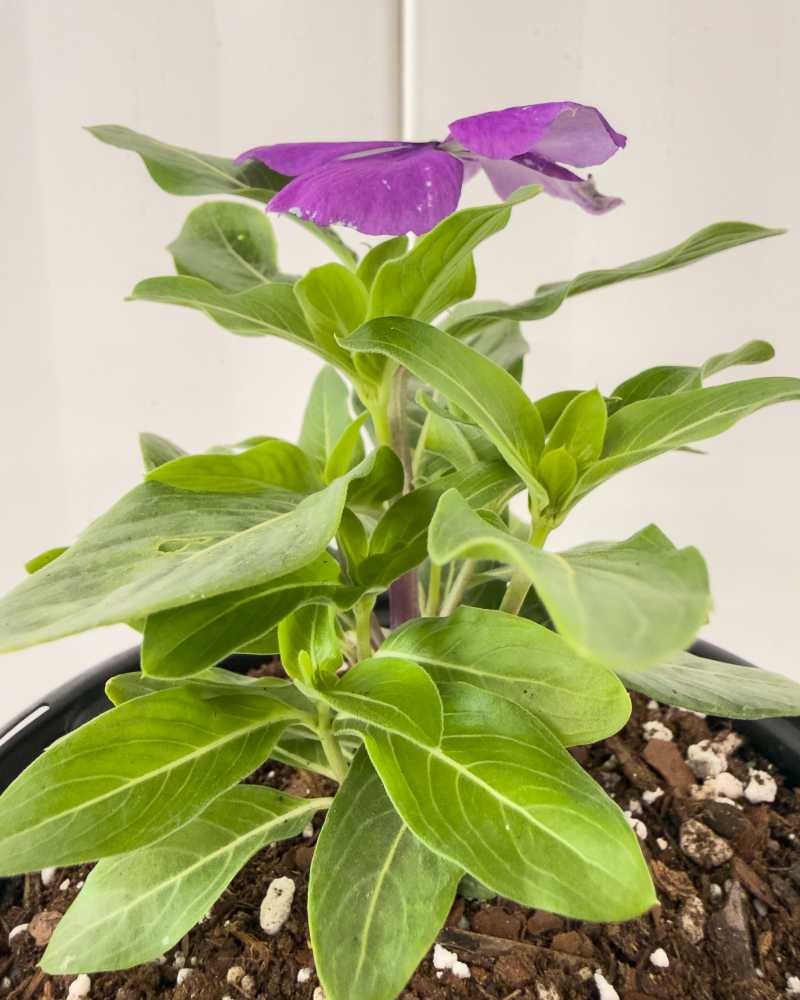
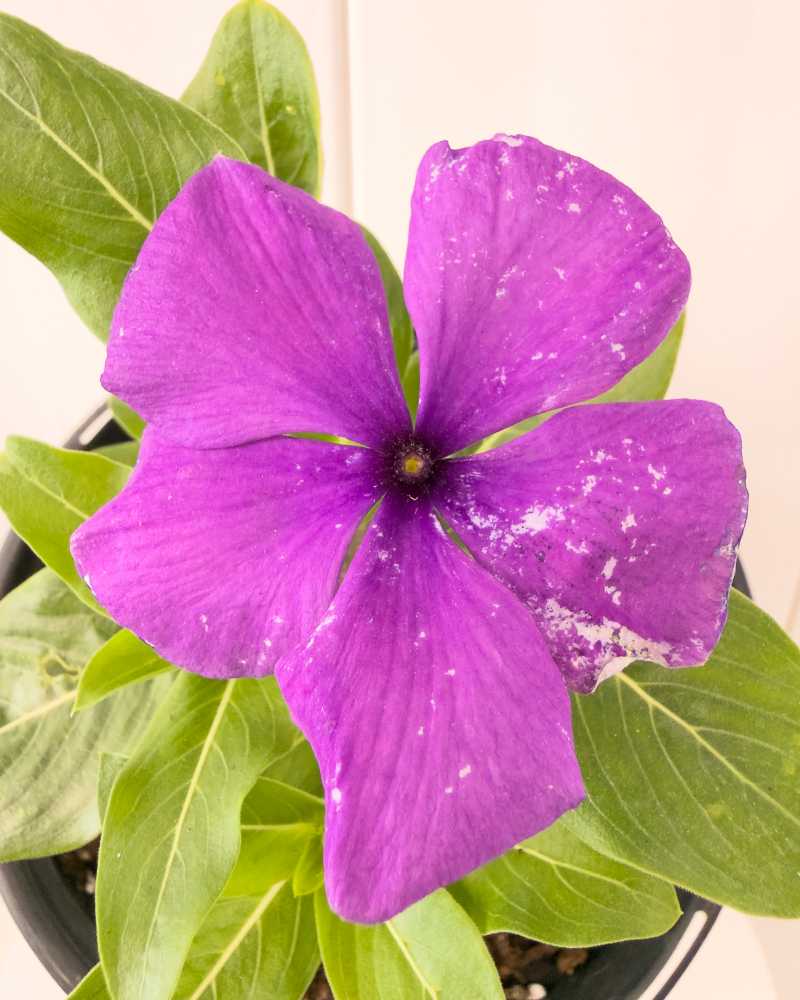
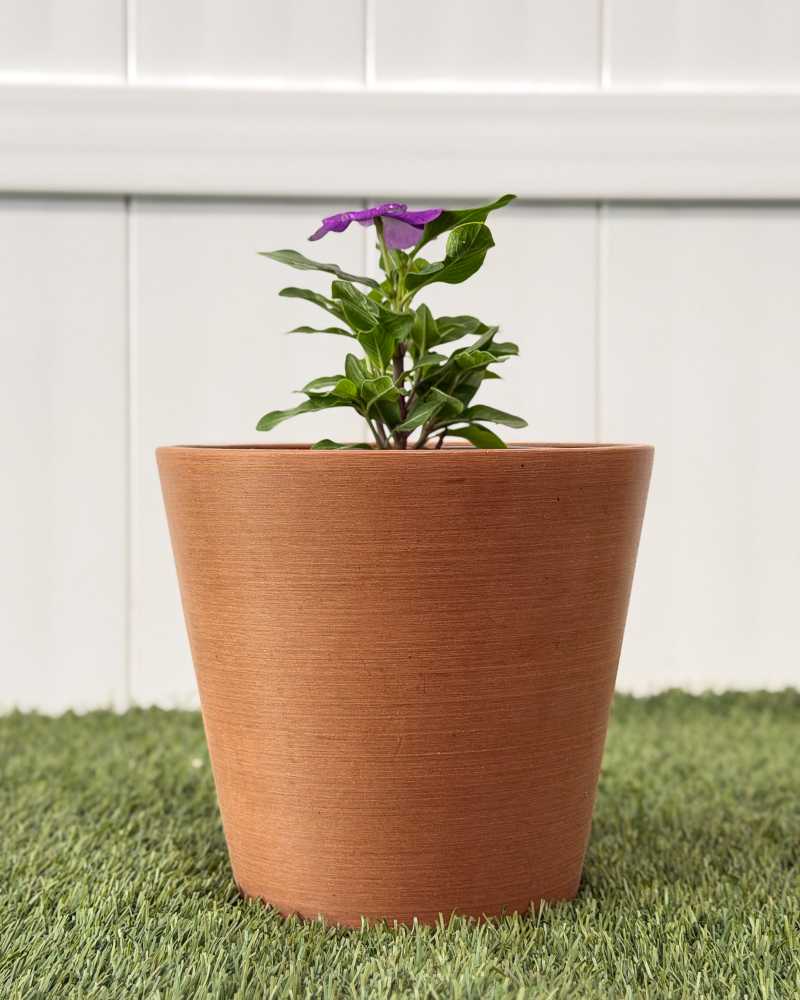
Description
Caring for your Vinca Purple
Light
Vinca Purple thrives in full sun and requires at least 6 to 8 hours of direct sunlight daily to produce the maximum number of blooms. While it can tolerate partial shade, the plant will produce fewer flowers and may lose its compact, mounding shape in lower light conditions.
Soil
This plant is adaptable to various soil types but performs best in well-draining soil with a slightly acidic to neutral pH. It is crucial to avoid heavy, compacted soils that retain too much moisture, as Vinca is particularly sensitive to “wet feet.”
Water
Once established, Vinca is remarkably drought-tolerant. It is best to water the plant deeply but allow the top inch of soil to dry out completely between waterings. To prevent disease, avoid overhead watering and instead apply water directly to the base of the plant to keep the foliage dry.
Fertilizer
Vinca is a moderate feeder and benefits from a balanced, slow-release fertilizer applied at the time of planting. During the peak growing season, a monthly application of a water-soluble fertilizer can help sustain its vigorous blooming cycle, though care should be taken not to over-fertilize, which can lead to more foliage than flowers.
Common Issues
The most common issue with Vinca is overwatering, especially in high-humidity environments, which can lead to fungal problems. Ensure the plant has plenty of space for airflow and is not sitting in waterlogged soil.
Pests
Vinca is generally pest-resistant, as its sap contains alkaloids that deter many common insects. However, it can occasionally be affected by aphids or spider mites during periods of extreme drought or stress; these can usually be managed with a strong stream of water or insecticidal soap.
Disease
This variety can be susceptible to phytophthora (aerial blight) or root rot if the environment is too wet. Maintaining excellent drainage and avoiding watering late in the evening is the best way to keep the root system and foliage healthy.
Pruning
Vinca is largely “self-cleaning,” meaning it drops its spent flowers naturally and does not require deadheading to continue blooming. If the plant becomes too leggy mid-season, you can pinch back the stems to encourage a bushier, more compact growth habit.
Potting / Repotting
When grown in containers, ensure the pot has multiple drainage holes to prevent water accumulation. Use a high-quality, porous potting mix and consider repotting if the plant fills the container, though it generally maintains a manageable size throughout the season.