Description
Caring for your Venus Fly Trap ‘Mammoth’
With proper care, the Venus Fly Trap ‘Mammoth’ can be a rewarding, long-lasting highlight in your home, offering a slice of prehistoric wonder. Paying attention to their strict needs for pure water, intense sunlight, and nutrient-poor soil ensures massive, vibrant traps with deep red interiors. Whether you are an experienced hobbyist or a beginner, the effort put into cultivating a ‘Mammoth’ is truly worth it.
Light
Venus Fly Traps require specific conditions to flourish, starting with abundant light. They thrive in full, direct sunlight, needing at least 4 to 6 hours of direct sun daily to develop their large traps and rich crimson interior color. Indoors, an unshaded south or west-facing window is ideal, often supplemented by high-intensity LED grow lights. Outdoors, place them in an open, sunny spot to maximize growth.
Soil
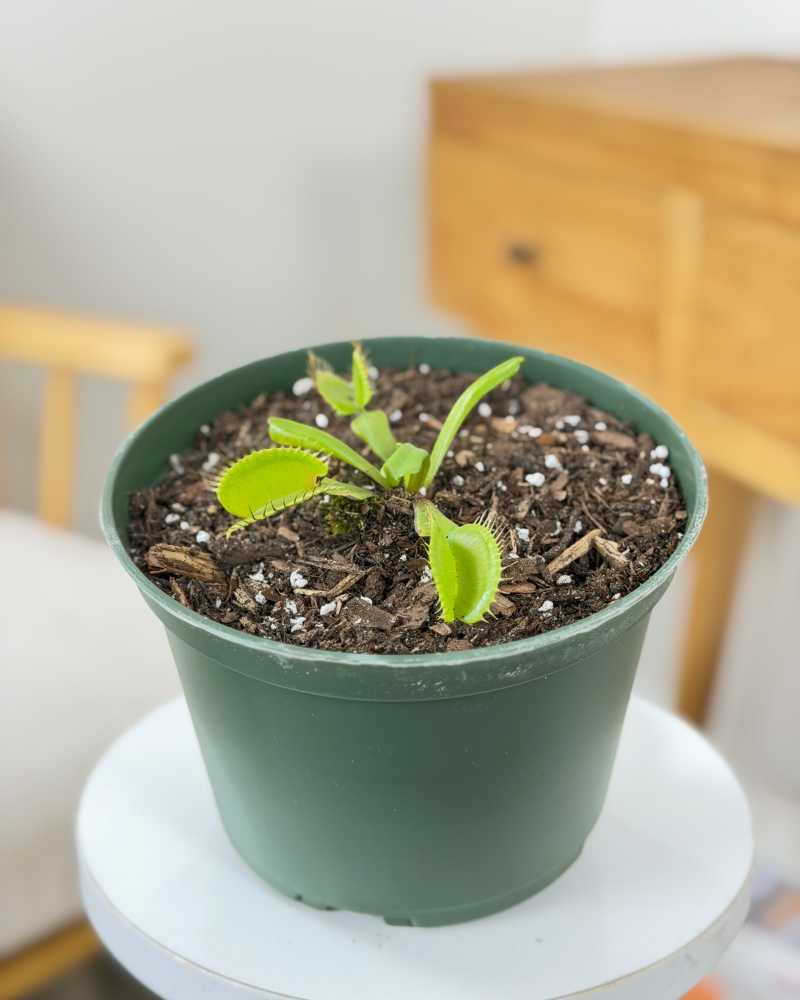
The right soil is critical for your ‘Mammoth’ to survive. Unlike traditional houseplants, they prefer an acidic, nutrient-poor medium that mimics their native bog environment. A well-draining mix of 50% pure peat moss and 50% perlite or silica sand is perfect. Never use standard potting soils, composts, or mixes with added fertilizers, as the minerals will burn their delicate roots and kill the plant.
Water
Consistent moisture and strict water quality are key to keeping Venus Fly Traps healthy during the active spring and summer months. These plants are highly sensitive to minerals and must only be watered with distilled water, rainwater, or reverse osmosis water. Use the tray method by placing the drainage pot in a shallow dish filled with an inch of pure water, keeping the soil constantly damp.
The ‘Mammoth’ flourishes in warm temperatures and high humidity during summer. However, it requires a mandatory winter dormancy period of 3 to 4 months starting in late autumn. During this phase, growth slows and old traps die back; move the plant to a cooler spot and reduce watering, keeping the soil only slightly damp to prevent root rot.
Fertilizing
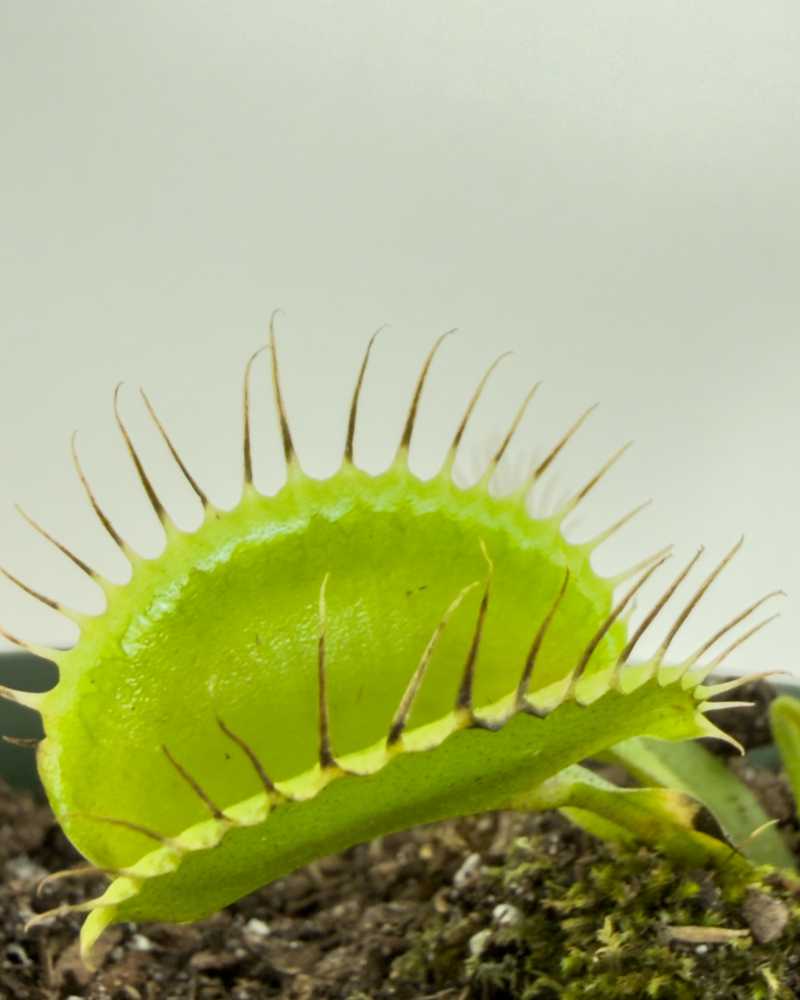
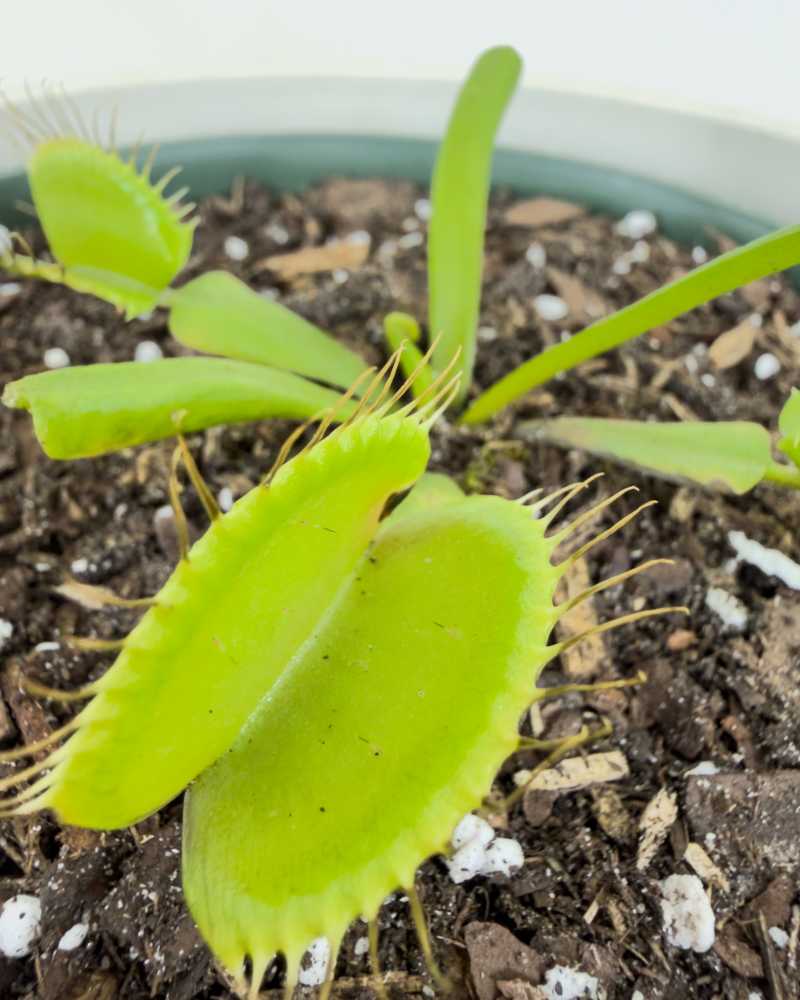
Never apply standard commercial fertilizers to a Venus Fly Trap, as they absorb nutrients through their traps instead of their roots. The ‘Mammoth’ captures insects like flies, spiders, and gnats to extract essential nitrogen. Outdoors, the plant will feed itself effortlessly. Indoors, you can occasionally feed a single trap with a live insect no larger than one-third the size of the trap itself.
Pruning and Maintenance
Pruning keeps the plant healthy and prevents fungal issues. As old traps naturally die off after closing a few times, they will turn completely black; use small, sterilized scissors to snip these dead leaves away at the base. In spring, mature plants send up a tall flower stalk. Unless you want seeds, prune this stalk early so the plant focuses its energy on growing massive traps.
Pest and Disease Management
While they are predatory, Venus Fly Traps can still be targeted by pests like aphids and spider mites. Inspect the center of the rosette regularly and treat infestations early with carni-safe insecticidal soap or diluted neem oil. Prevent diseases like root rot and gray mold by ensuring strong airflow, plenty of sunlight, and never over-saturating the crown during winter dormancy.
Propagation
The Venus Fly Trap ‘Mammoth’ propagates easily through rhizome division during late winter or early spring. As the plant matures, the underground white bulb splits to form secondary rosettes. Gently remove the plant from its pot, wash away the old medium, and pull the new bulb segments apart, ensuring each has healthy roots. Plant them immediately into a fresh peat-perlite mix to establish.