Description
Caring for your Texas Sage Green
Light
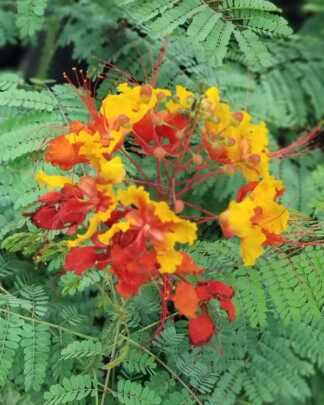
This desert native absolutely loves the sun. It requires full sun, meaning at least 6 to 8 hours of direct sunlight daily to thrive and produce its signature, explosive blooms. Planting it in shaded or partially shaded areas will result in leggy growth, sparse foliage, and significantly fewer flowers.
Soil
Excellent drainage is the absolute key to keeping this plant happy. The Texas Sage thrives in poor, rocky, sandy, or alkaline soils and completely dislikes heavy, water-retaining clay. A loose, sharply draining soil mix replicates its native habitat and prevents moisture from trapping around the roots.
Water
Once established, the Texas Sage is exceptionally drought-tolerant and can survive on minimal rainfall. Water regularly after planting to help the root system develop. Afterwards, only water during prolonged dry spells. Overwatering is the most common mistake; let the soil dry out completely between watering cycles, as this plant prefers a “neglect-rather-than-overcare” approach.
Fertilizer
This plant naturally thrives in nutrient-poor environments and does not require regular fertilization. In fact, over-fertilizing can cause rapid, weak growth and reduce flowering. If desired, a single, very light application of a balanced, slow-release fertilizer in early spring is more than enough.
Common Issues
The most frequent issue is root rot caused by poor soil drainage or overwatering. If you notice yellowing leaves dropping off rapidly, check the soil moisture immediately. Another fascinating trait is that its blooming cycles are triggered by humidity changes and rainfall; don’t worry if it drops its flowers after a week or two, as it will push out a fresh batch with the next weather shift.
Pests
The Texas Sage is highly pest-resistant due to its tough foliage and stems. Occasionally, it might host spider mites or scale in stagnant conditions. A simple spray of water or a light application of organic neem oil will quickly resolve any issues without damaging the plant.
Disease
Because it is adapted to dry climates, cotton root rot can occur if planted in poorly drained, heavy soils. To prevent fungal issues, always ensure it is placed in an area with maximum sunlight and superb air circulation around the canopy.
Pruning
Pruning should be minimal to preserve its naturally beautiful, rounded shape. If needed, prune in late winter or early spring before new growth starts. Avoid tight, formal shearing (box-cutting), as this removes the outer flower buds; instead, use selective hand-pruning to maintain a full and natural appearance.
Potting / Repotting
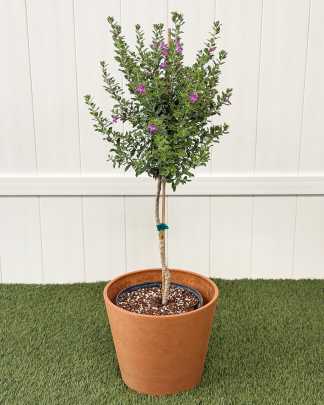
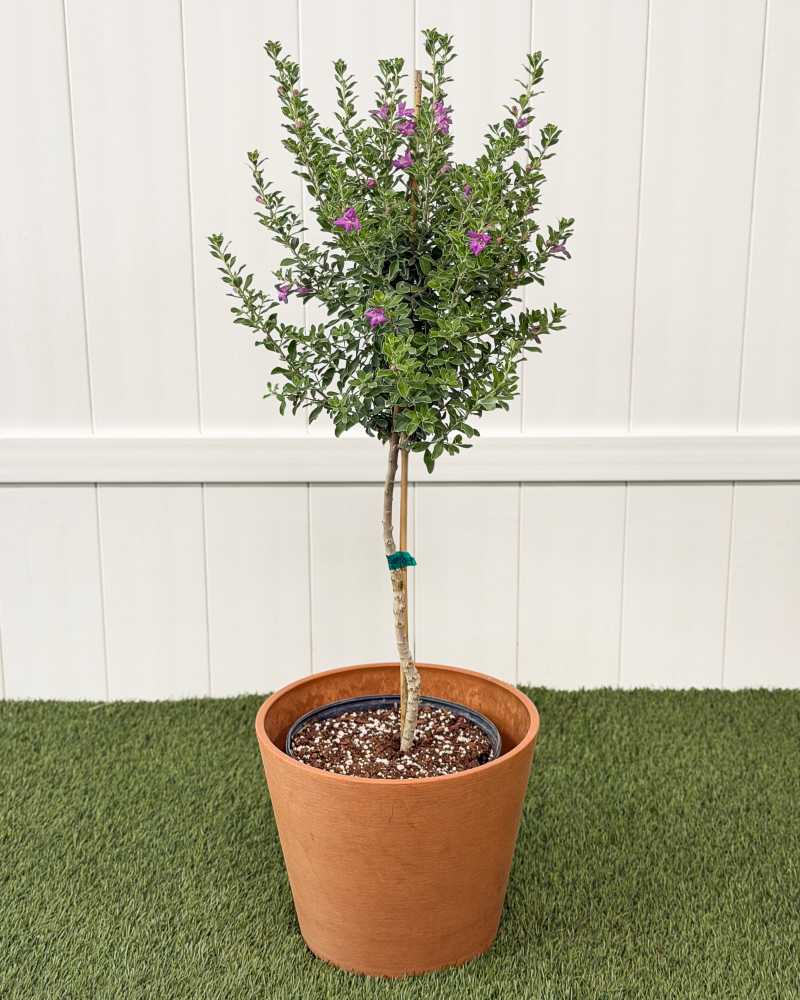
While it prefers being in the ground, younger or dwarf varieties can be grown in large, heavy porous containers (like terracotta) that allow the soil to breathe. Use a high-quality cactus or succulent potting mix blended with perlite or coarse sand to guarantee maximum drainage. Repot only when it becomes completely root-bound.