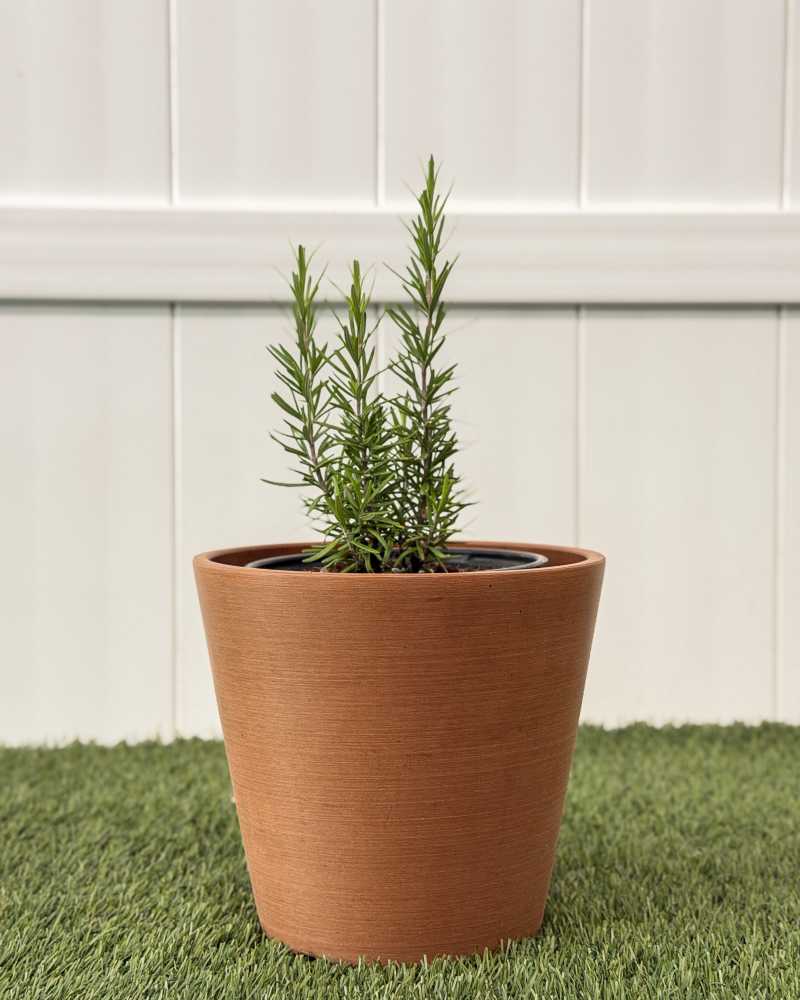
Description
Caring for your Rosemary
Light
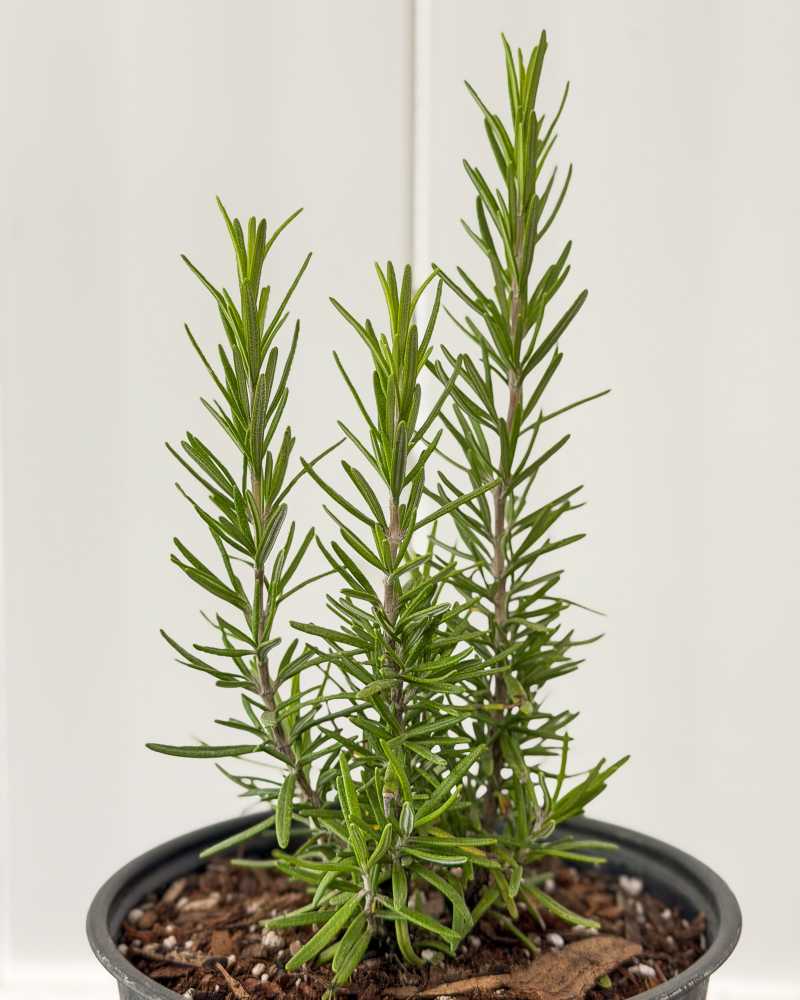
Rosemary is a sun-loving plant that requires full sun to maintain its essential oils and dense growth. Aim for at least 6 to 8 hours of direct sunlight daily to prevent the plant from becoming leggy or losing its characteristic aroma.
Soil
This herb thrives in sandy or rocky, well-draining soil with a slightly acidic to neutral pH. It is highly sensitive to “wet feet,” so ensuring that the soil is light and porous is the most critical factor for its long-term health.
Water
Once established, Rosemary is extremely drought-tolerant and prefers to stay on the drier side. Water the plant deeply but infrequently, allowing the soil to dry out completely between sessions to mimic its natural Mediterranean environment.
Fertilizer
Rosemary does not require frequent feeding and typically thrives in soils with moderate to low fertility. A light application of a balanced, slow-release fertilizer in early spring is sufficient to support new growth without compromising the intensity of its fragrance.
Common Issues
The most frequent problem with Rosemary is overwatering or high humidity combined with poor drainage, which can lead to root rot. Providing adequate spacing and a breezy location will help keep the plant dry and healthy.
Pests
This plant is naturally pest-resistant due to its high concentration of aromatic oils, which act as a deterrent for many common insects. Occasionally, it may attract spider mites or whiteflies in very dry, indoor environments, but these are easily managed with improved airflow or organic treatments.
Disease
Powdery mildew can occur if the plant is kept in a location with stagnant air or excessive moisture on the leaves. To avoid fungal diseases, always water at the base of the plant and ensure it has plenty of room for air to circulate through the branches.
Pruning
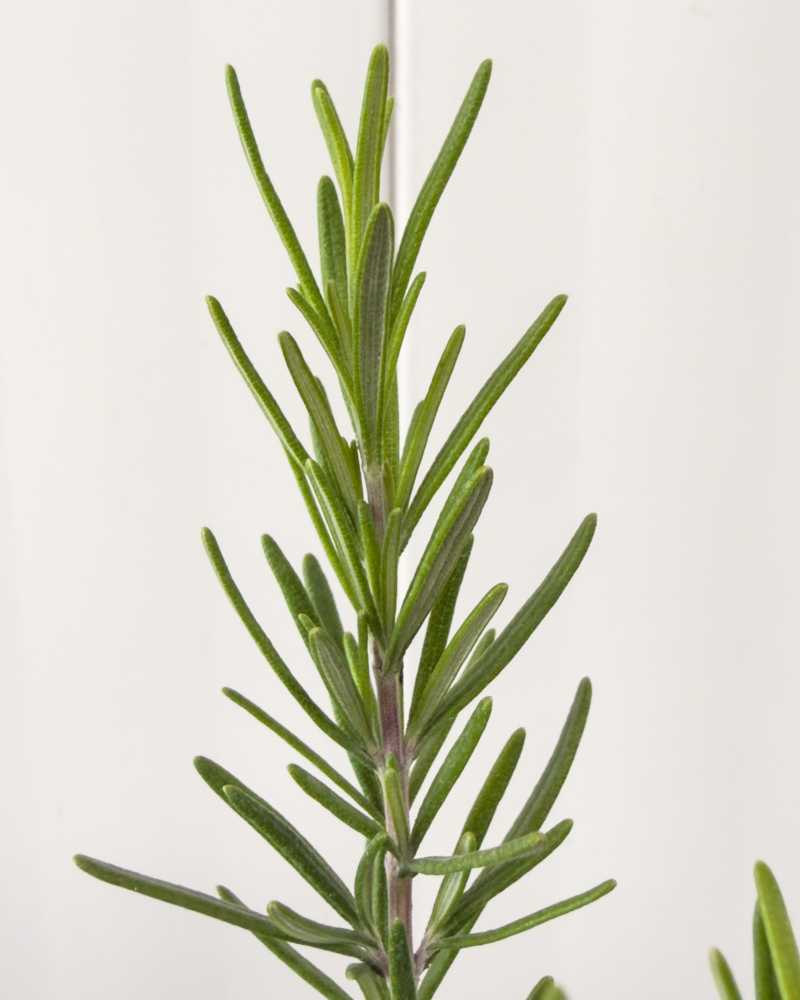
Pruning is recommended after the plant finishes flowering to maintain a bushy shape and prevent it from becoming too woody. Regular harvesting of the tips also acts as a natural pruning method that encourages fresh, tender growth throughout the season.
Potting / Repotting
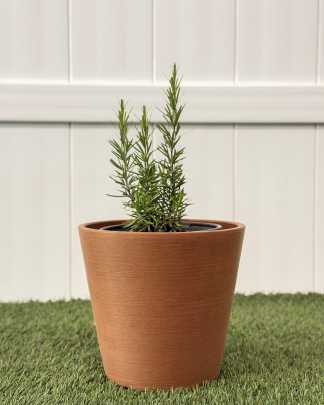
Rosemary grows exceptionally well in terra cotta pots, which help pull excess moisture away from the roots. Use a high-quality, well-draining potting mix and consider repotting every year or two to provide fresh soil and space for the root system to expand.