Description
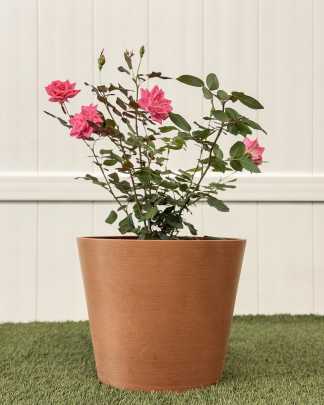
Caring for your Pink Rose Bush
Light
This plant thrives in full sun and requires at least 6 to 8 hours of direct sunlight daily to produce its signature, abundant blooms. Insufficient light will lead to poor flower production, weak stems, and a higher susceptibility to pests and fungal diseases. Morning sun is particularly beneficial as it dries the dew off the leaves early in the day.
Soil
The Pink Rose Bush prefers a rich, loamy, and well-draining soil with a slightly acidic to neutral pH (around 6.0 to 6.5). It is a heavy feeder that loves nutrients, so amending your garden soil with high-quality organic matter, compost, or peat moss at the time of planting will yield the best results.
Water
Deep and consistent watering is essential for healthy roses. Water deeply at the base of the plant 1 to 2 times a week, ensuring the moisture reaches the deep root system. Avoid overhead watering, as wet foliage is an open invitation for fungal infections. Increase watering frequency during hot, dry summer spells.
Fertilizer
To fuel its continuous blooming cycles, feed your rose bush with a balanced, slow-release rose fertilizer in early spring as new growth emerges. Repeat the application after the first major flush of blooms in early summer. Stop fertilizing about 6 to 8 weeks before the first expected winter frost to prevent tender new growth from getting damaged by the cold.
Common Issues
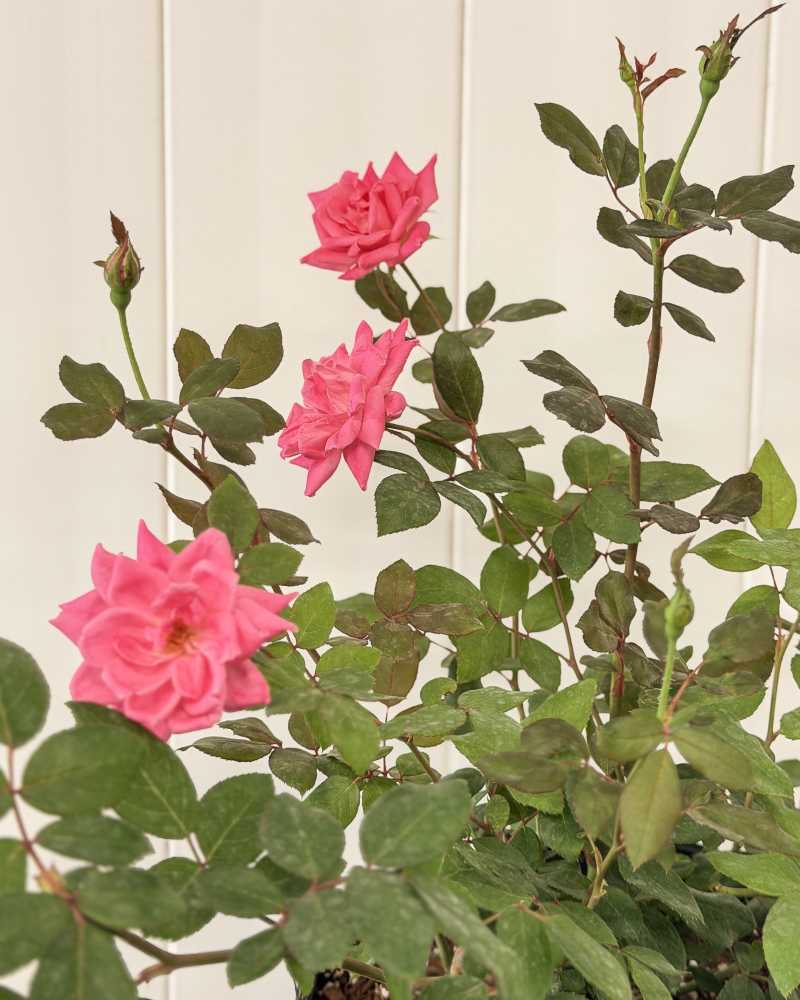
The most common mistake with rose bushes is letting the spent blooms remain on the plant, which signals it to stop producing flowers. Regular “deadheading” (removing faded flowers) is key to forcing the plant to redirect its energy into pushing out gorgeous new pink buds all season long.
Pests
Roses can occasionally attract common garden pests such as aphids, spider mites, and Japanese beetles. Keep a close eye on new growth and flower buds. Minor infestations can be managed by spraying the plant with a strong stream of water or applying organic insecticidal soap or neem oil during the cooler hours of the day.
Disease
Roses are susceptible to fungal issues like black spot and powdery mildew, especially in warm, humid climates. The best defense is prevention: always water at the base of the plant, ensure proper spacing between plants for optimal air circulation, and apply a preventive organic fungicide if you live in a highly humid region.
Pruning
Major pruning should be done in late winter or early spring when the plant is dormant and buds begin to swell. Remove any dead, diseased, or crossing branches to open up the center of the bush, allowing sunlight and air to penetrate. Always make your cuts at a 45-degree angle just above an outward-facing bud.
Potting / Repotting
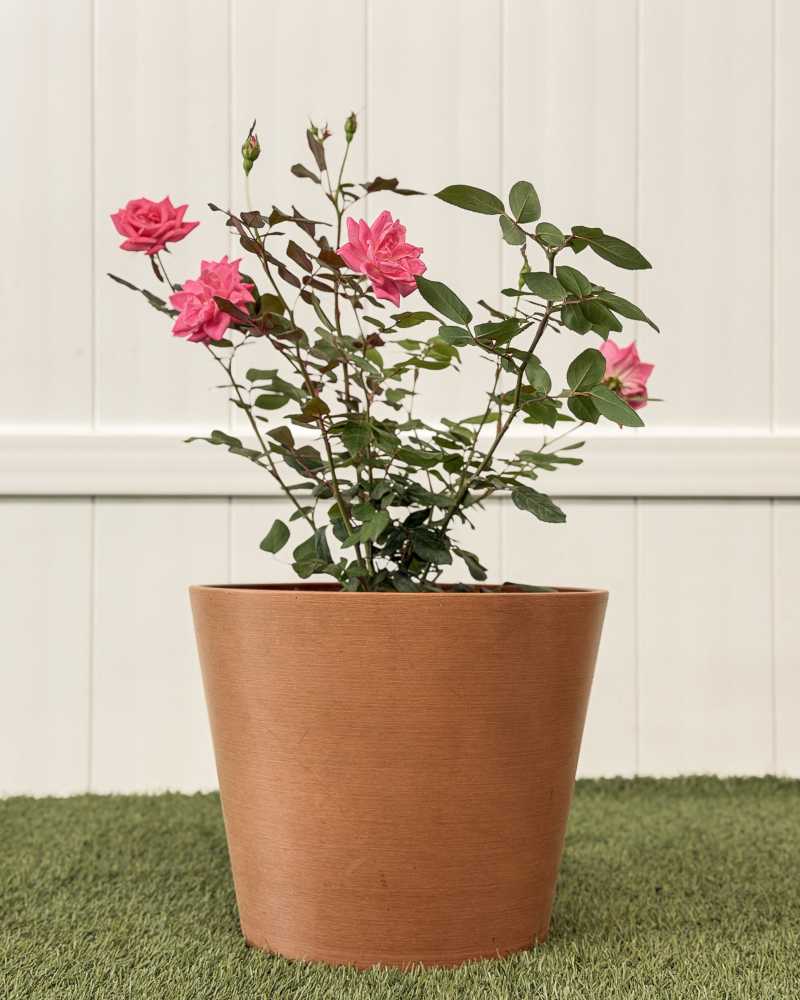
While they love the open ground, compact or dwarf pink rose varieties can thrive in large, heavy containers (at least 15-20 inches in diameter) with excellent drainage holes. Use a premium, lightweight potting mix and ensure the pot is placed in the sunniest spot on your patio or balcony. Repot every 2 to 3 years to refresh the soil nutrients.