Description
The Sun-Loving Desert Rose
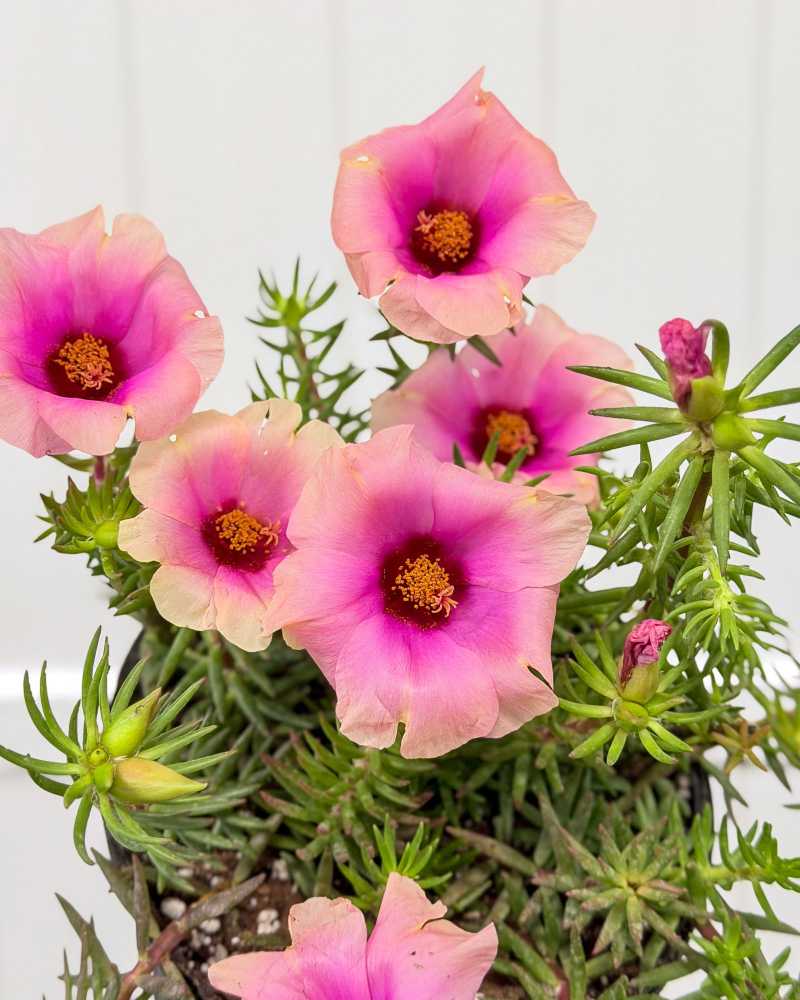
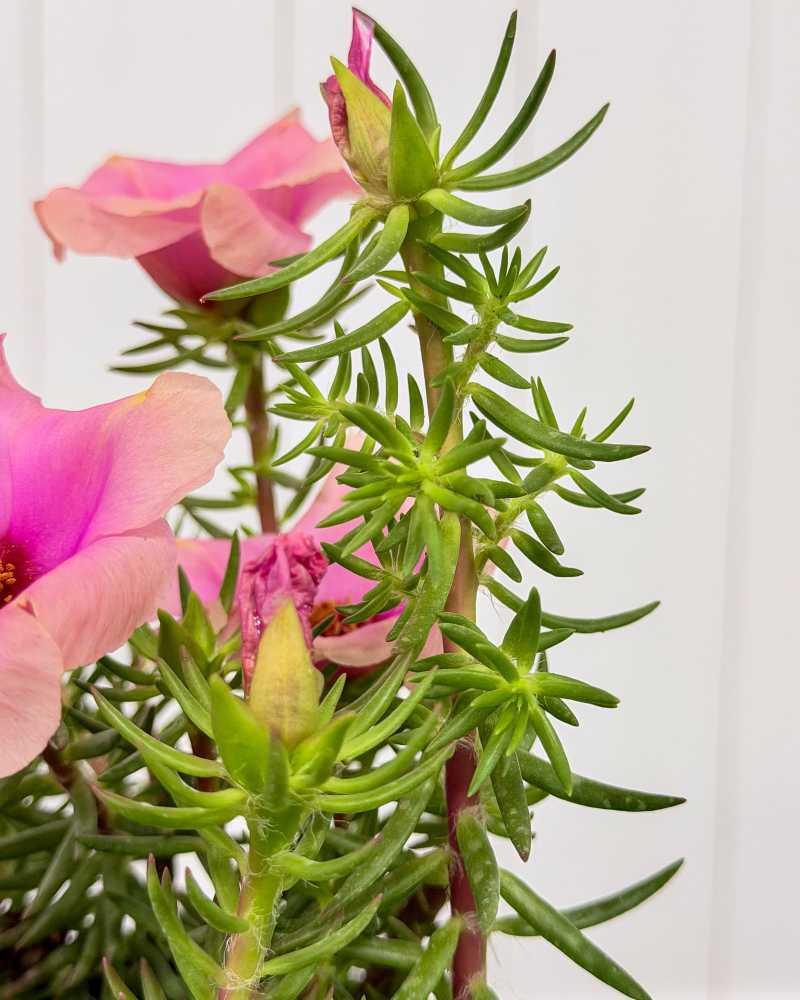
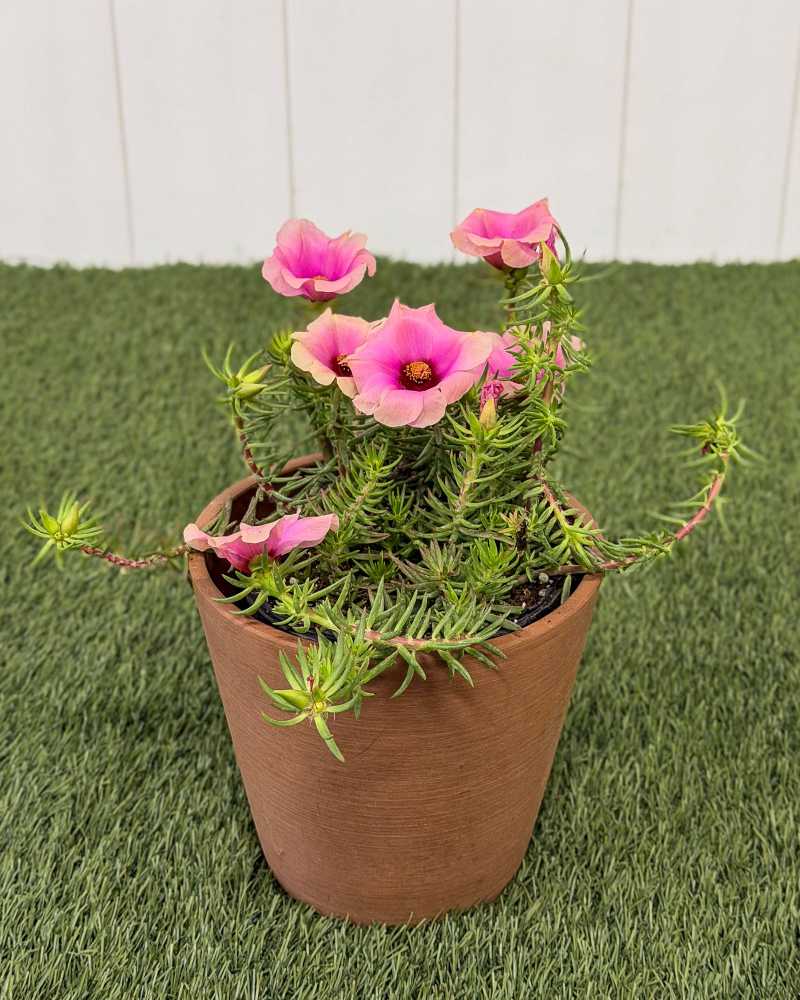
The Portulaca, scientifically known as Portulaca grandiflora, is a stunning, low-growing succulent annual (or short-lived perennial in warm climates) that thrives where other plants wilt. Characterized by its fleshy, needle-like succulent leaves and its spectacular, rose-like pink blooms, this plant is a powerhouse of color for the hottest spots in your garden.
Caring for your Portulaca
This drought-tolerant beauty is the definition of low-maintenance. It is perfectly adapted to poor soils and intense heat, making it a favorite for rock gardens, hanging baskets, or as a vibrant groundcover. One of its most charming traits is that its flowers typically open with the morning sun and close in the evening. It’s a pollinator magnet, bringing bees and butterflies to its nectar-rich, vivid pink petals all summer long.
Light
Portulaca is a true sun-worshipper. It requires full sun—at least six to eight hours of direct sunlight—to produce its signature carpet of pink flowers. If planted in the shade, the flowers will remain closed and the plant will become leggy and sparse.
Soil
This plant actually prefers poor, sandy, or gravelly soil as long as it has excellent drainage. It is the perfect choice for those “difficult” spots in the garden where the soil is too lean for other flowers. It does not tolerate heavy clay or consistently wet soil, which can lead to root rot.
Water
As a succulent, Portulaca stores water in its leaves and stems, making it highly drought-tolerant. While it appreciates occasional watering during long dry spells, it is crucial to let the soil dry out completely between waterings. Overwatering is the most common mistake with this plant; when in doubt, it’s better to leave it dry.
Fertilizer
Portulaca needs very little to no fertilizer. In fact, too much food can encourage more foliage at the expense of its beautiful pink flowers. If your soil is extremely depleted, a light application of a balanced, water-soluble fertilizer in early summer is more than enough.
Pruning
Very little pruning is required. You can “deadhead” spent blooms to keep the plant looking tidy, although it often self-cleans. If the plant becomes too leggy toward the end of the season, you can give it a light trim to encourage a new flush of growth and more flowers.
Pests and Diseases
Portulaca is remarkably pest-resistant. Its main struggle is root rot from overwatering. Occasionally, aphids may appear on new growth, but they are easily managed with a gentle spray of water or insecticidal soap. Its tough, succulent nature makes it a very “set it and forget it” addition to your collection.
Growth & Soil
Portulaca has a trailing, mat-forming habit, usually staying under 6 to 8 inches tall but spreading up to 12 inches wide. It thrives in well-drained, sandy soil and is practically built for sun-drenched areas where other flowering plants might struggle.