
Description
Caring for your Dona Aurora Mussaenda – White
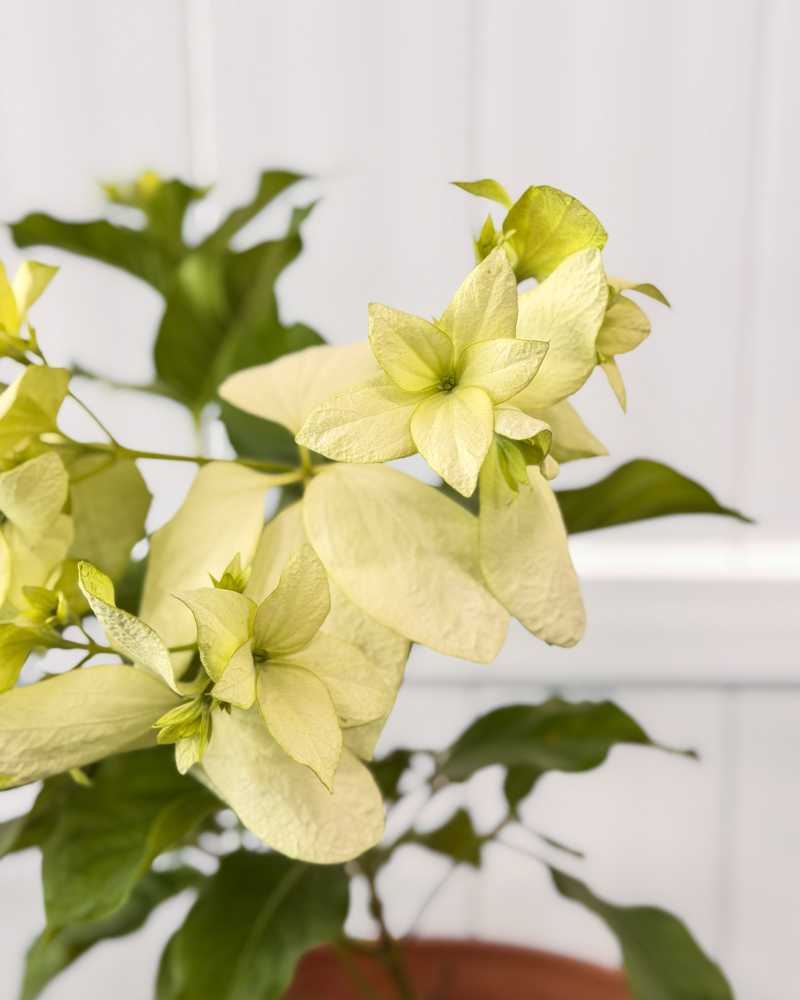
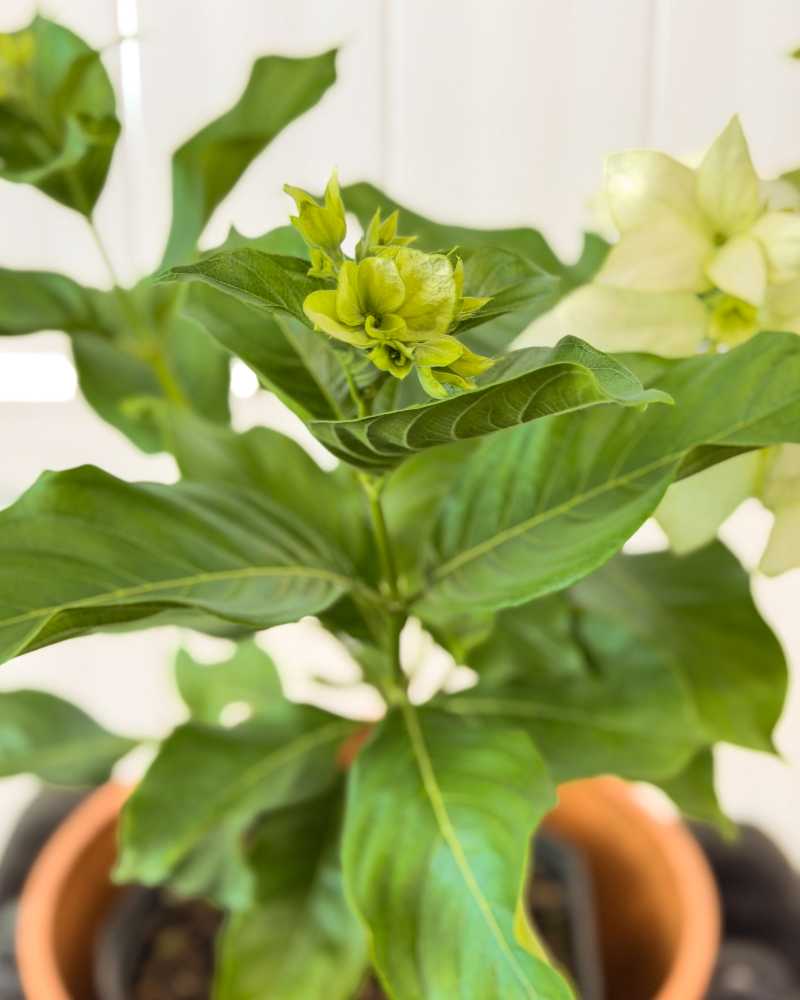
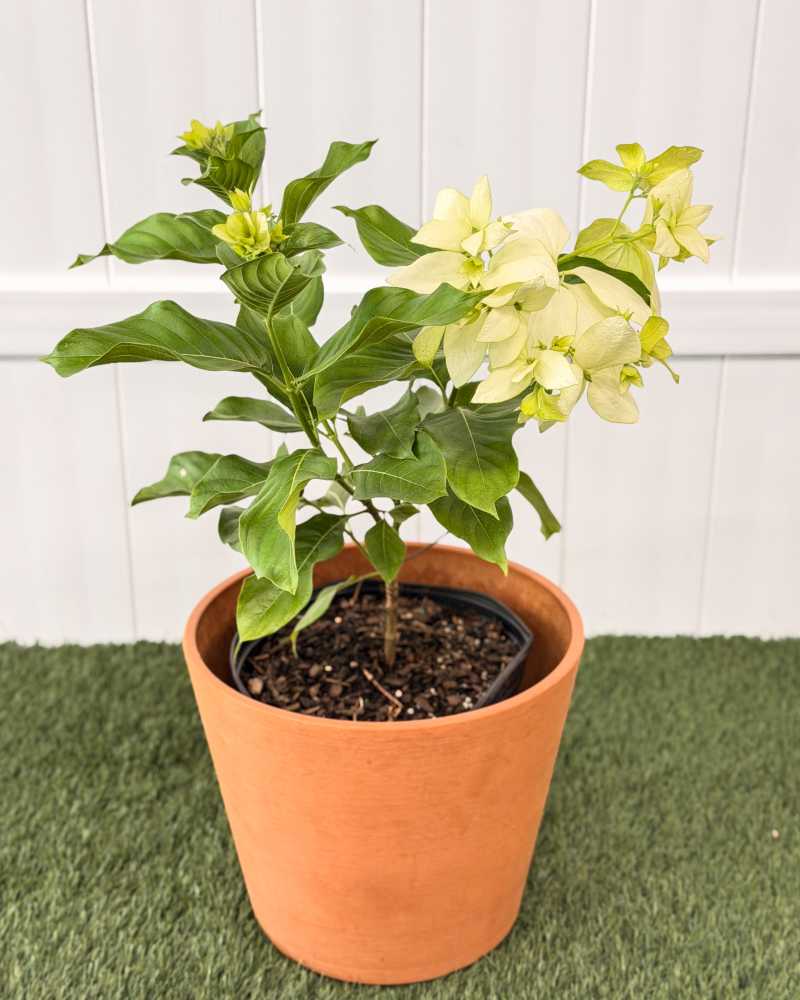
Mussaenda philippica ‘Dona Aurora’, commonly known as White Mussaenda or Dona Aurora, is a flowering tropical shrub in the family Rubiaceae. Native to the Philippines, this plant is celebrated for its heavy production of snow-white bracts from spring through late autumn. With an upright, bushy growth habit, it brings elegance and soft tropical structure to warm landscapes and bright container gardens.
Light
Dona Aurora Mussaenda thrives in full sun to light partial shade. It requires at least 5 to 6 hours of direct sunlight daily to produce its signature white bracts in abundance. In areas with scorching summer conditions, light afternoon shade helps protect the foliage from leaf scorch.
Soil
Prefers rich, fertile, well-draining soil with a slightly acidic to neutral pH (5.5 to 6.5). Incorporating organic matter such as compost or peat moss helps retain moisture while allowing excess water to drain freely. Ensure pots have adequate drainage holes to prevent water retention.
Water
Keep the soil consistently moist during the active growing season, but never waterlogged. Water deeply whenever the top inch of soil feels dry to the touch, typically once or twice a week depending on heat levels. Reduce watering frequency during the cooler winter months when the plant enters a slower growth phase.
Fertilizing
Feed every 4 to 6 weeks during spring and summer using a balanced, slow-release fertilizer or a high-phosphorus bloom booster to support continuous flowering. Suspend or drastically reduce fertilizing in late fall and winter.
Pruning and Maintenance
Prune back heavily in late winter or early spring before new growth begins to maintain a compact, bushy shape and encourage fresh flowering stems. Deadheading spent bloom clusters throughout the season promotes continuous flower production. Pinching stem tips on young plants encourages denser branching.
Pest and Disease Management
Watch for common tropical pests such as whiteflies, spider mites, aphids, and scale. Treat any infestations promptly using insecticidal soap or neem oil spray. Avoid overhead watering to prevent leaf spot fungal diseases, and ensure sharp drainage to eliminate the risk of root rot.

Patricia K. (verified owner) –
Teresa C. (verified owner) –
I just repotted them after being acclimated to their environment for over a week .
They seem to be doing just fine .
Very happy with the way they arrived .
Stanley (verified owner) –
I received the plant in good condition. I am waiting for the correct time to plant them in front yard.