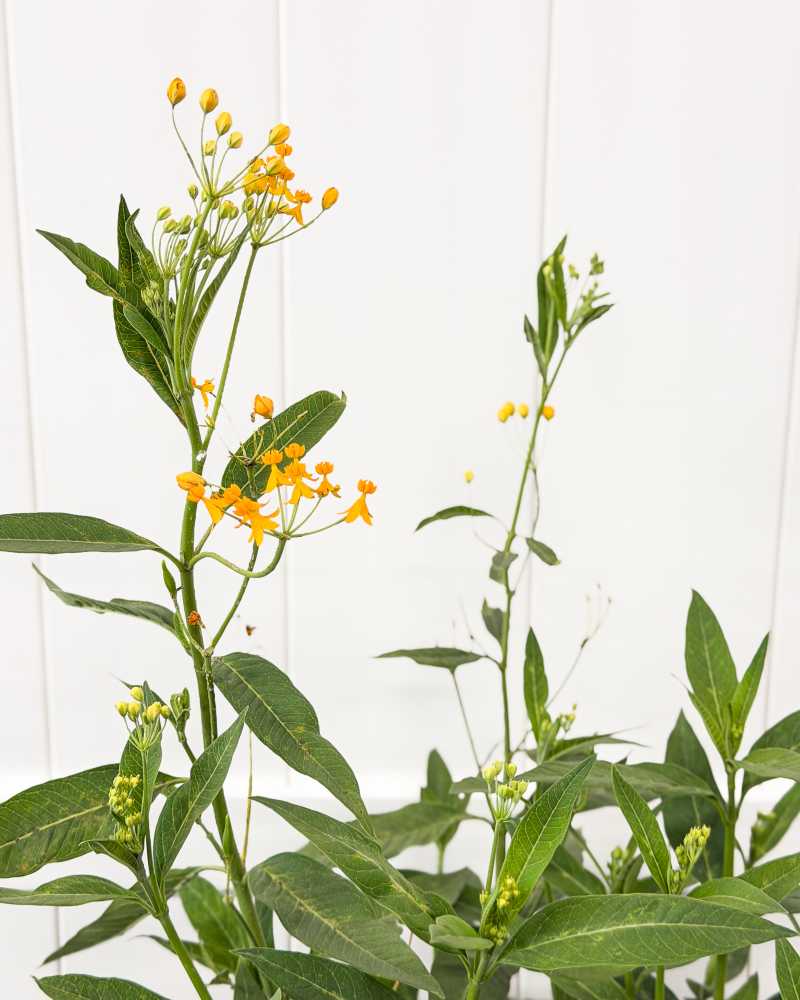
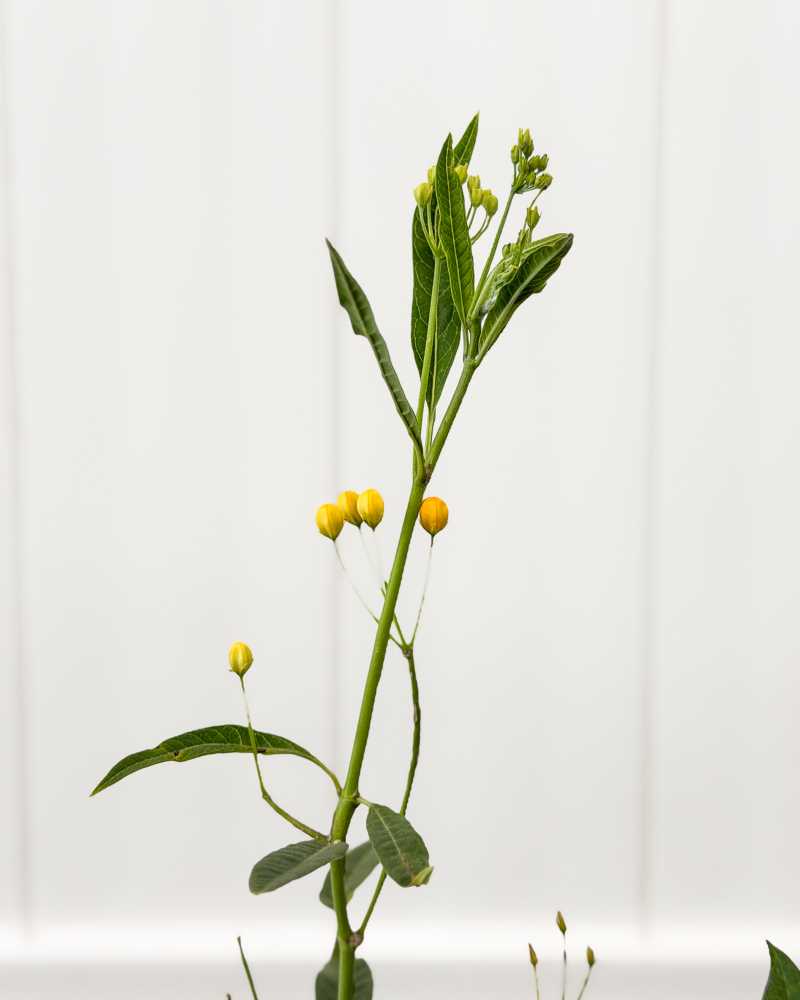
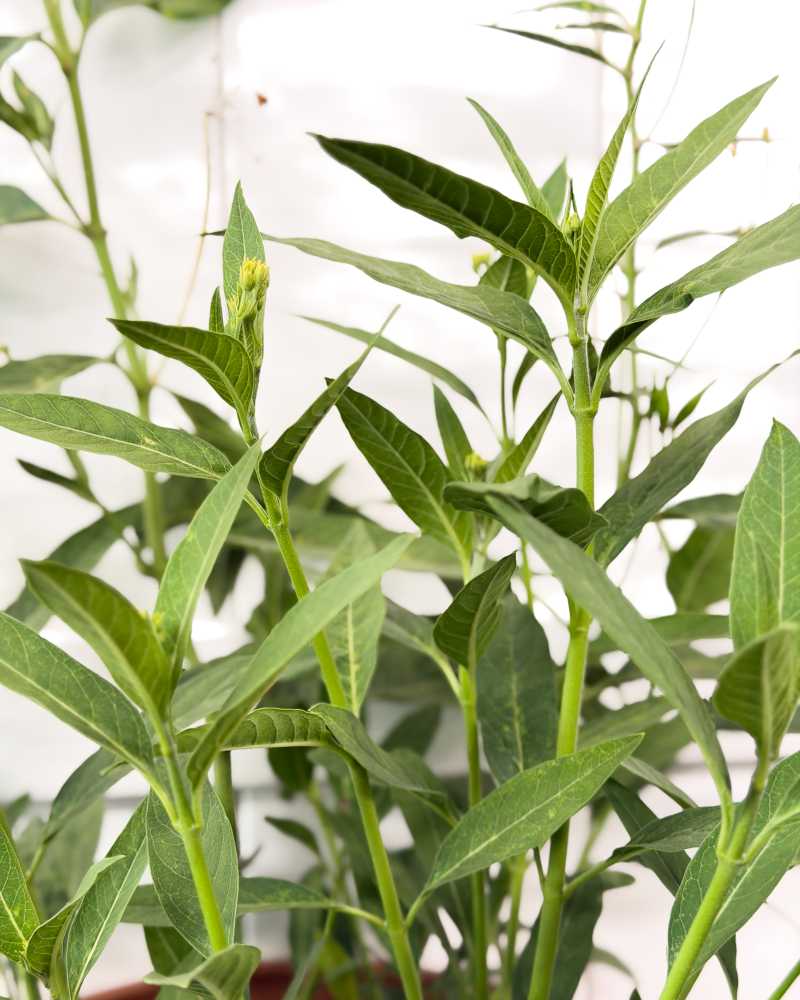
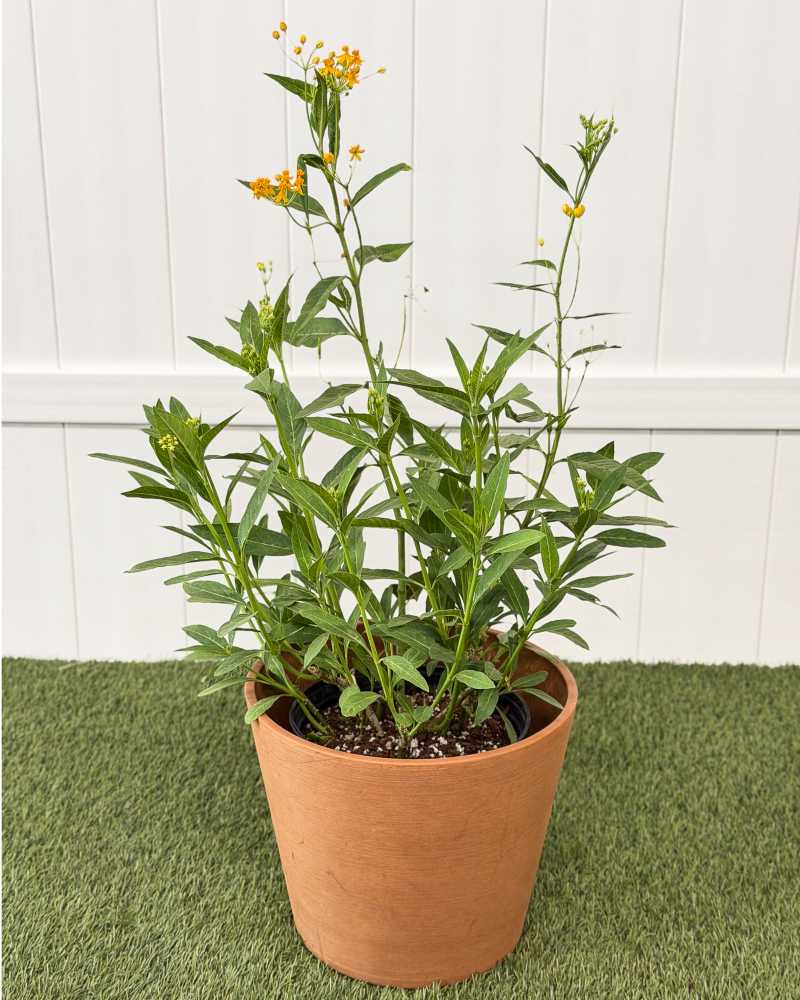
Description
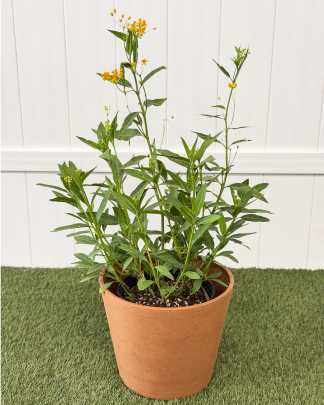
Caring for your Yellow Milkweed
Light
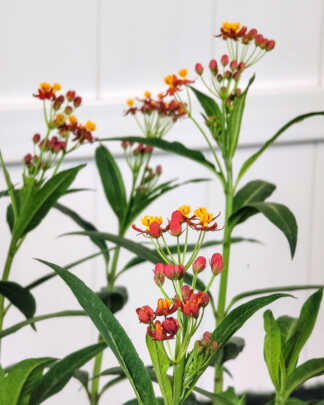
This plant is a sun-lover and requires full sun exposure to thrive and produce its signature golden clusters. Aim for at least 6 to 8 hours of direct sunlight daily to ensure the plant remains robust and continues to bloom vigorously through the season.
Soil
Yellow Milkweed is adaptable to a variety of soil types, from sandy to loamy, provided they offer good drainage. While it prefers a consistently moist environment, it does not tolerate standing water, so ensuring a porous soil structure is key to preventing root issues.
Water
Maintain regular watering to keep the soil consistently moist but not waterlogged, especially during the establishment phase. Once the plant is settled, it can handle brief periods of dryness, but regular moisture is required to support the high energy demands of flowering and supporting hungry caterpillars.
Fertilizer
Apply a balanced, slow-release fertilizer in early spring to kickstart growth and support flower production. Because this plant is intended for pollinators, avoid using systemic insecticides or heavy chemical fertilizers that could be harmful to the butterflies and larvae that depend on it.
Common Issues
Yellow aphids often congregate on the stems and undersides of the leaves. While they rarely cause permanent damage to the plant, they can be managed with a strong blast of water from a hose or by encouraging natural predators like ladybugs.
Pests
Aside from aphids, the most common “visitors” are Monarch caterpillars. Keep in mind that heavy defoliation is a sign of a successful butterfly garden; the plant is resilient and will typically grow back quickly once the caterpillars move on to their pupal stage.
Disease
Good air circulation is vital to prevent fungal issues such as leaf spot or powdery mildew, particularly in humid environments. Avoid overhead watering to keep the foliage dry and reduce the risk of pathogens developing on the leaves.
Pruning
Periodic pruning helps maintain a bushy shape and prevents the plant from becoming too leggy. In late autumn or early winter, it is often recommended to cut the plant back significantly to encourage fresh, healthy growth for the following season and to disrupt the life cycle of certain butterfly parasites.
Potting / Repotting
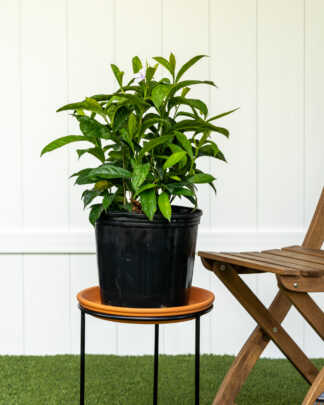
Yellow Milkweed performs exceptionally well in containers as long as they have sufficient drainage holes. Use a high-quality potting mix and consider repotting if the plant becomes root-bound, as its vigorous root system may require more space over time to support its upright growth.