Description
Caring for your Lucky Bamboo Spiral
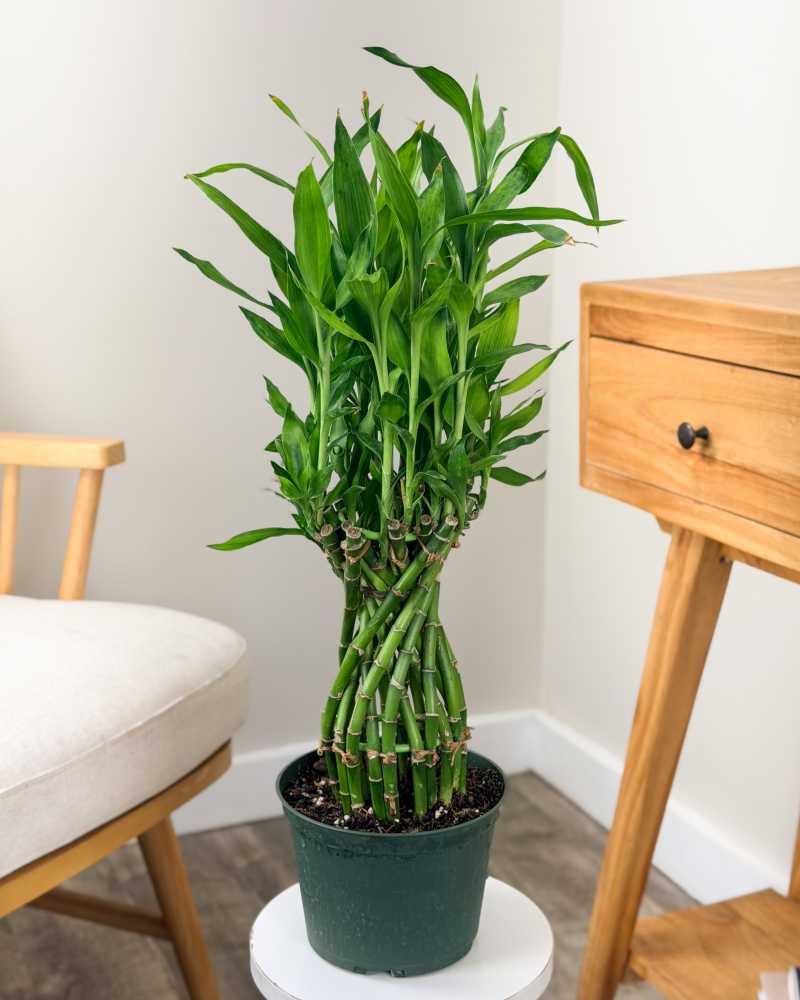
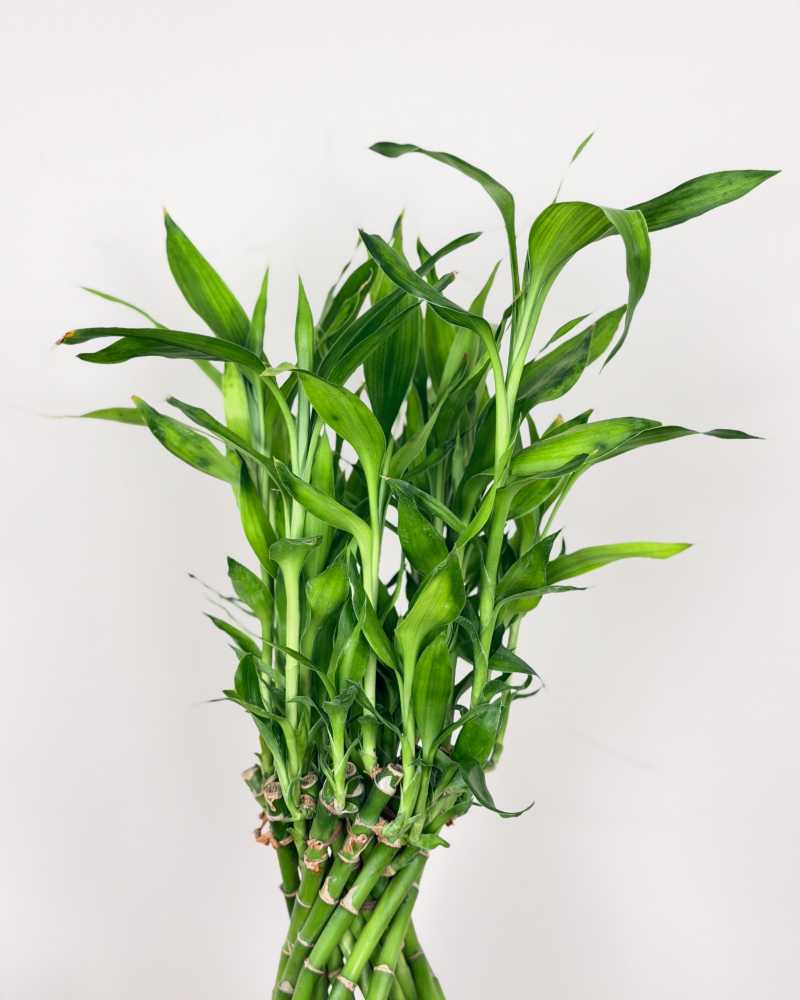
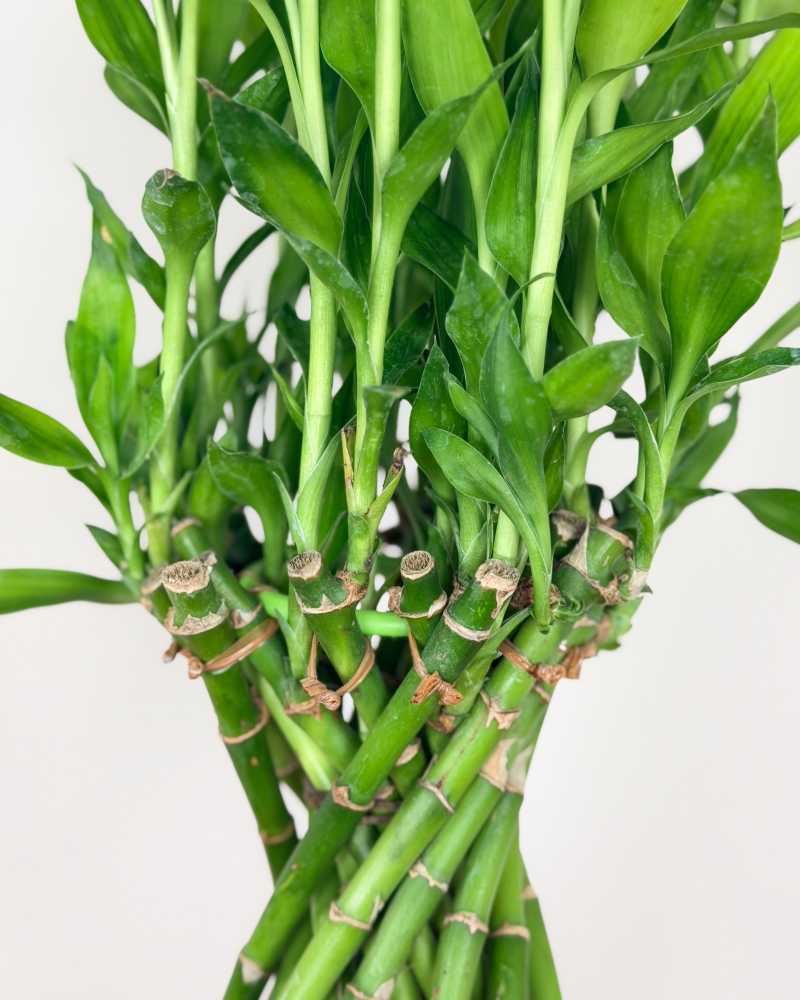
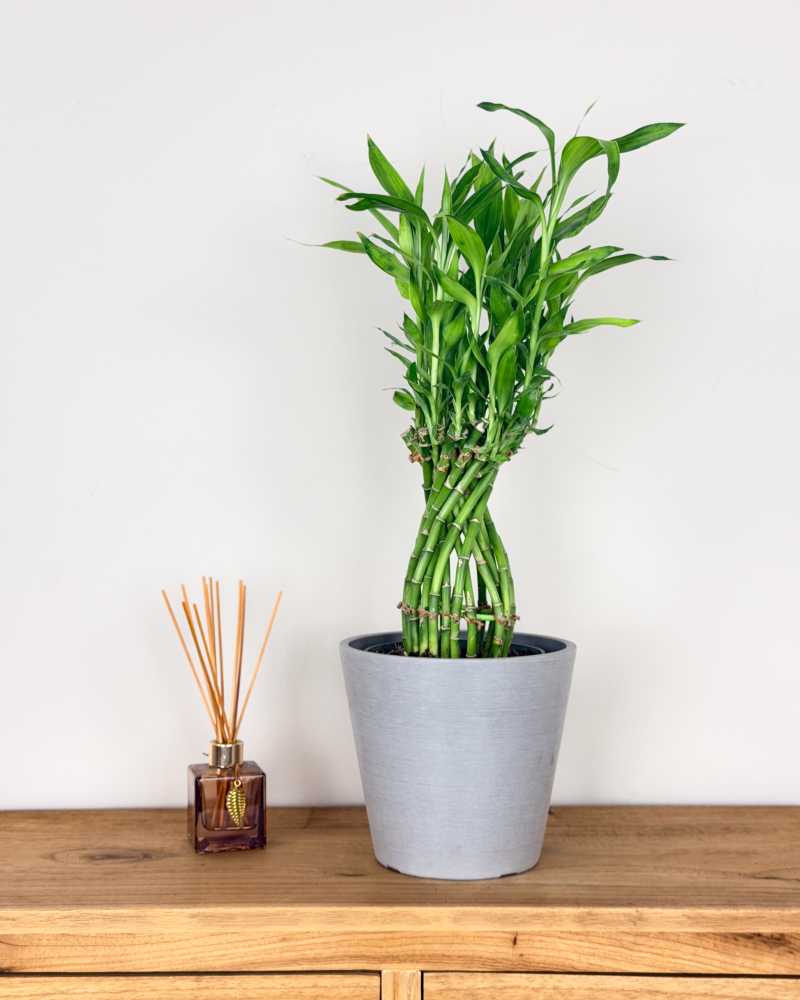
Dracaena sanderiana, commonly known as Lucky Bamboo Spiral, is an iconic, sculptural plant celebrated for its spiraling green stalks and lush foliage. Rooted in Feng Shui traditions, it is believed to attract positive energy, prosperity, and good fortune. Extremely adaptable and low-maintenance, this architectural favorite can be grown directly in water with pebbles or planted in rich, well-draining soil.
Light
Thrives best in moderate to bright, indirect sunlight. Filtered light helps maintain its vibrant green color and healthy foliage without scorching the leaves. Avoid direct sunlight, which can quickly sunburn the leaves and turn the stalks yellow. While it tolerates lower light conditions, growth will slow significantly, and new shoots may lose their tight, compact form.
Soil / Growing Medium
Lucky Bamboo is unique because it can be cultivated in two ways:
In Water: Place the stalks in a container filled with clean water, using decorative pebbles, marbles, or stones to anchor the stems upright.
In Soil: Plant in a loose, aerated, well-draining potting mix rich in organic matter. Ensure the pot has drainage holes to avoid standing water.
Water
If grown in water: Keep the roots fully submerged at all times. Change the water completely every 7 to 14 days to prevent algae buildup and stagnation. Lucky Bamboo is very sensitive to chlorine, fluoride, and salts found in tap water; use filtered, distilled, or rainwater to prevent leaf tips from yellowing or browning.
If grown in soil: Keep the substrate lightly moist, but never soggy. Water when the top inch of soil feels dry to the touch, ensuring excess water drains away completely.
Fertilizing
Lucky Bamboo is a very light feeder.
In water: Add just one or two drops of a balanced liquid houseplant fertilizer diluted to quarter-strength once every 1 to 2 months during spring and summer. Never over-fertilize, as excess salts will rapidly turn the stalks yellow.
In soil: Feed once a month during the active growing season with a diluted, balanced houseplant fertilizer. Pause feeding during late fall and winter.
Pruning and Maintenance
Wipe the leaves occasionally with a soft, damp cloth to remove dust. If lower leaves yellow naturally over time, snip them off cleanly near the stalk using sterile scissors. If new shoots grow too long and disrupt the spiral look, prune them back to about an inch above a stem node to encourage fresh branching.
Pest and Disease Management
Relatively pest-free, but occasionally susceptible to mealybugs, spider mites, or scale. Treat gently with insecticidal soap or wipe affected areas with a cotton swab dipped in rubbing alcohol. The most frequent health issue is stalk yellowing, which is almost always caused by poor water quality (fluoride/chlorine), over-fertilization, or root rot from stagnant water.
Potting / Repotting
Water containers: Refresh pebbles and clean the container thoroughly every couple of months to maintain hygiene around the root zone.
Soil containers: Repot every 2 to 3 years when the root system fills the container, moving up to a pot 1 to 2 inches larger with fresh potting mix.