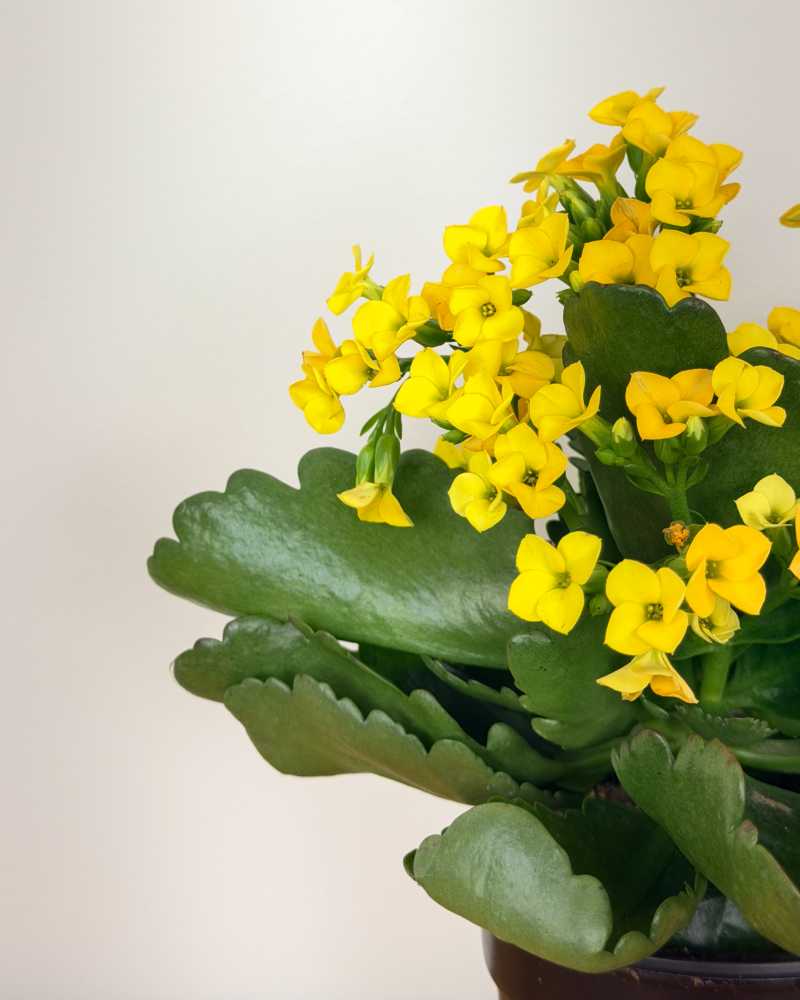
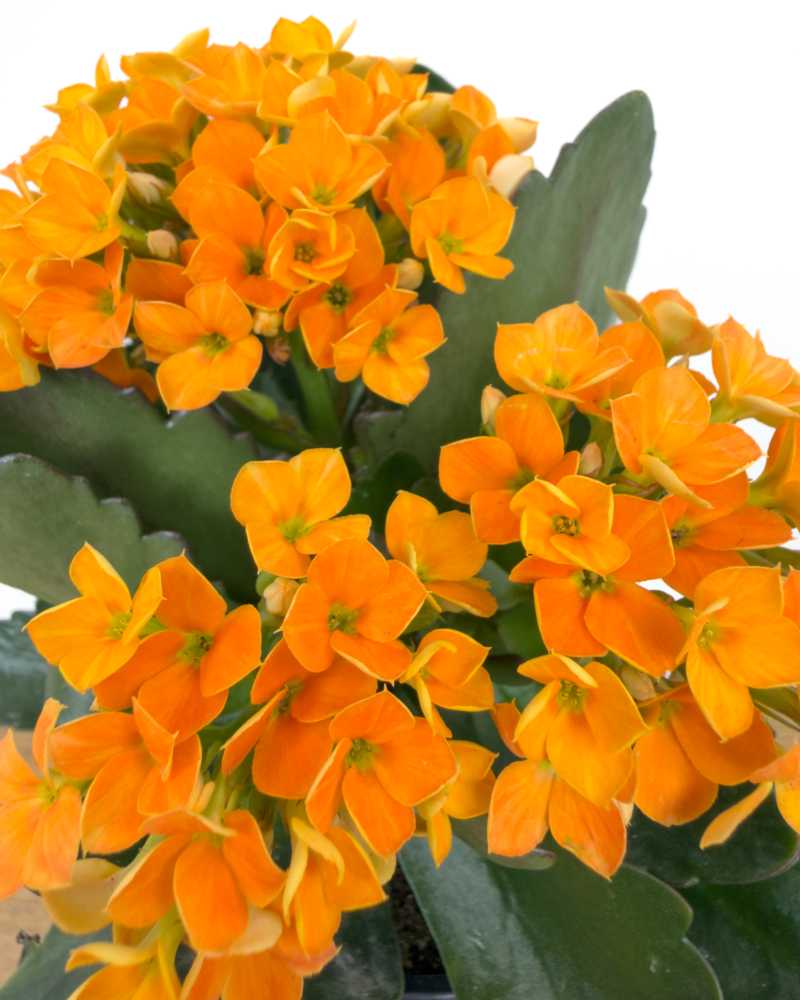
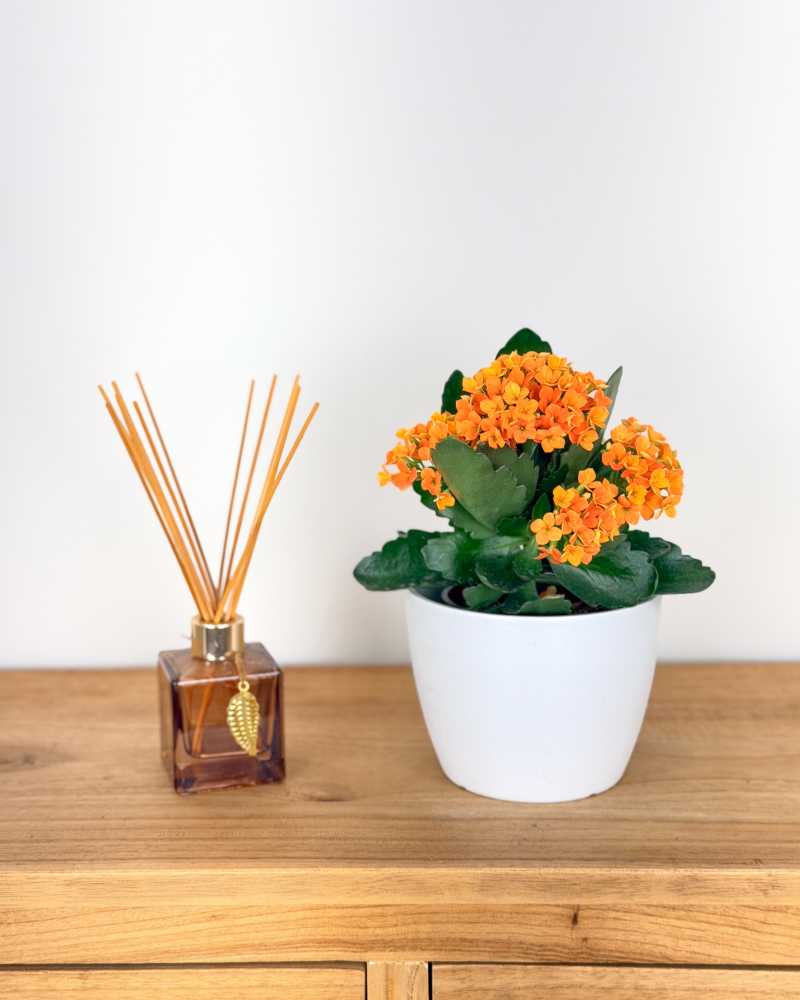
Description
Caring for your Kalanchoe
Taking good care of any plant is essential to ensure it grows appropriately and blooms. You need to take care of several things, such as the amount of water you need to give the plant, the best way to propagate it, and the kind of fertilizer you need to use. Here is a complete care guide you can use.
Light
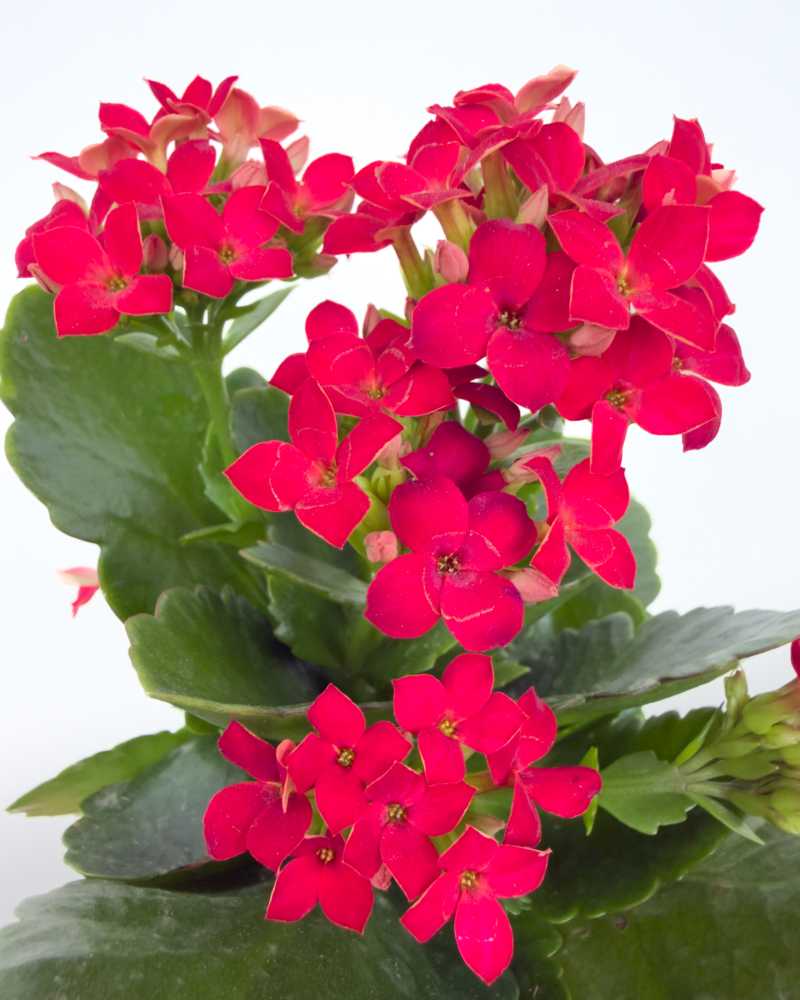
This plant thrives in plenty of bright, indirect sunlight and can easily tolerate a few hours of gentle, direct morning sun. Ample light is essential for your Kalanchoe to produce its signature clusters of vibrant blooms. If kept in low-light conditions, the plant will stretch toward the light source, develop weak, leggy stems, and stop producing flower buds. Place your Kalanchoe near a south- or east-facing window where it can soak up bright, ambient light throughout the day.
Soil
As a succulent, Kalanchoe requires a gritty, fast-draining potting medium that does not hold excess moisture. A specialized cactus and succulent mix enriched with perlite, coarse sand, or pumice is ideal. Avoid using standard, heavy garden or clay soils, as they retain too much water and choke the shallow, sensitive root system of the plant.
Water
It is vital to give your Kalanchoe a balanced amount of water using the “soak and dry” method. Because of its thick, fleshy leaves and stems, this plant stores moisture and is exceptionally drought-tolerant. If you do not give the plant water for extended periods, the lower leaves may wrinkle slightly, but overwatering is by far the biggest threat. Excess water will quickly cause the stems to soften and the roots to rot. Always allow the top 2 inches (or even the top half of the pot) to dry out completely before watering again. Water thoroughly until it drains out of the pot’s bottom, and empty the drip tray immediately. Reduce watering significantly during the winter months.
Fertilizer
The Kalanchoe is a light feeder and does not require heavy fertilization. During its active growing and blooming periods in spring and summer, you can feed it once a month with a balanced, water-soluble houseplant or succulent fertilizer diluted to half strength. Avoid fertilizing during the late fall and winter or when the plant has finished flowering and entered a brief period of rest.
Common Issues
If you do not take good care of your Kalanchoe, it may face issues such as pest infestations and fungal problems. Let’s look at all the common problems you must be aware of.
Pests
Mealybugs are the most common pests to attack Kalanchoe, often hiding as white, cotton-like clusters in the leaf joints and underside of the leaves. Scale insects, aphids, and spider mites can also occasionally appear. These sap-sucking pests cause leaves to distort, lose color, and drop prematurely. To treat an infestation, dab the pests directly with a cotton swab dipped in rubbing alcohol, or spray the foliage thoroughly with insecticidal soap or neem oil.
Disease
Root and stem rot caused by overwatering or soggy soil is the most frequent disease affecting Kalanchoes. If the base of the stems becomes black, mushy, or discolored, rot has taken hold. To prevent this, always ensure your container has adequate drainage and never leave the plant sitting in standing water. Powdery mildew can also develop on the leaves if the plant is kept in cool, damp conditions with stagnant air. To prevent fungal issues, water at the soil level rather than over the flowers and foliage, and maintain good airflow around the plant.
Pruning
Pruning is simple and helps keep your Kalanchoe compact and bushy. Snip off spent flower stems right down to the leaf nodes (deadheading) once the blossoms fade; this encourages the plant to direct its energy into fresh growth and future blooms. You can also pinch back leggy stems in early spring to maintain a tidy, rounded shape.
Propagation
You can easily propagate Kalanchoe through stem cuttings. Snip a healthy 3- to 4-inch stem cutting with a few leaves attached, and let the cut end callous over in a dry, shaded spot for 1 to 2 days. Once dry, insert the cutting into a moist perlite-and-cactus soil mix. Keep it in bright, indirect light with minimal watering, and roots will establish in a few weeks.