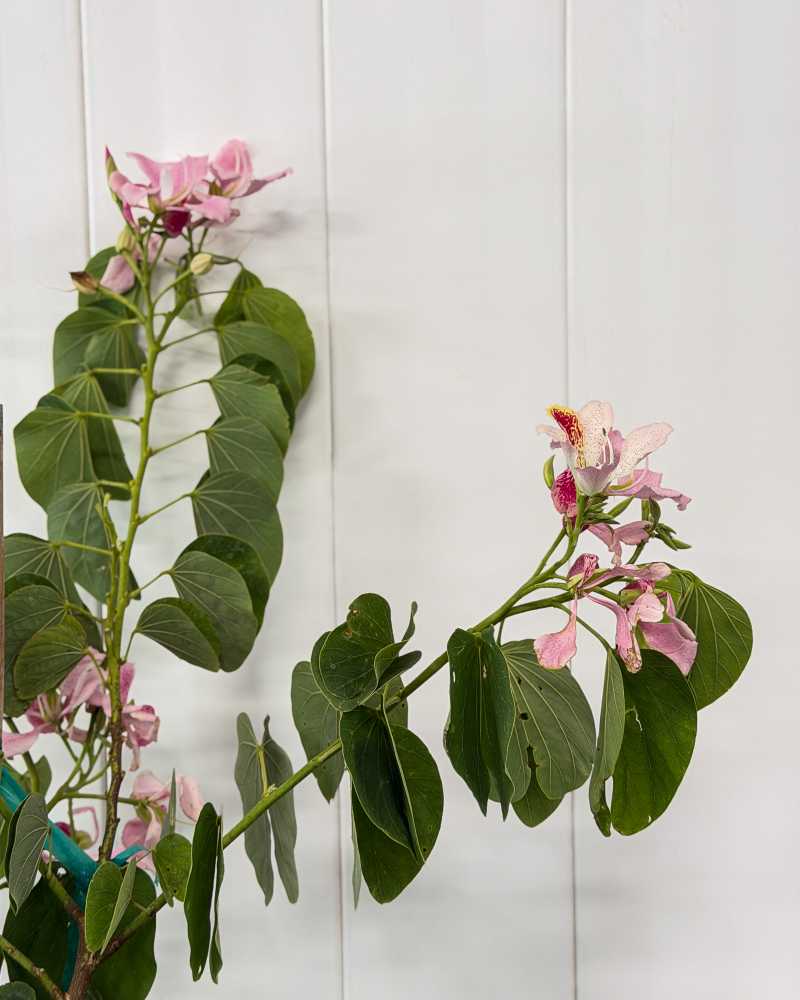
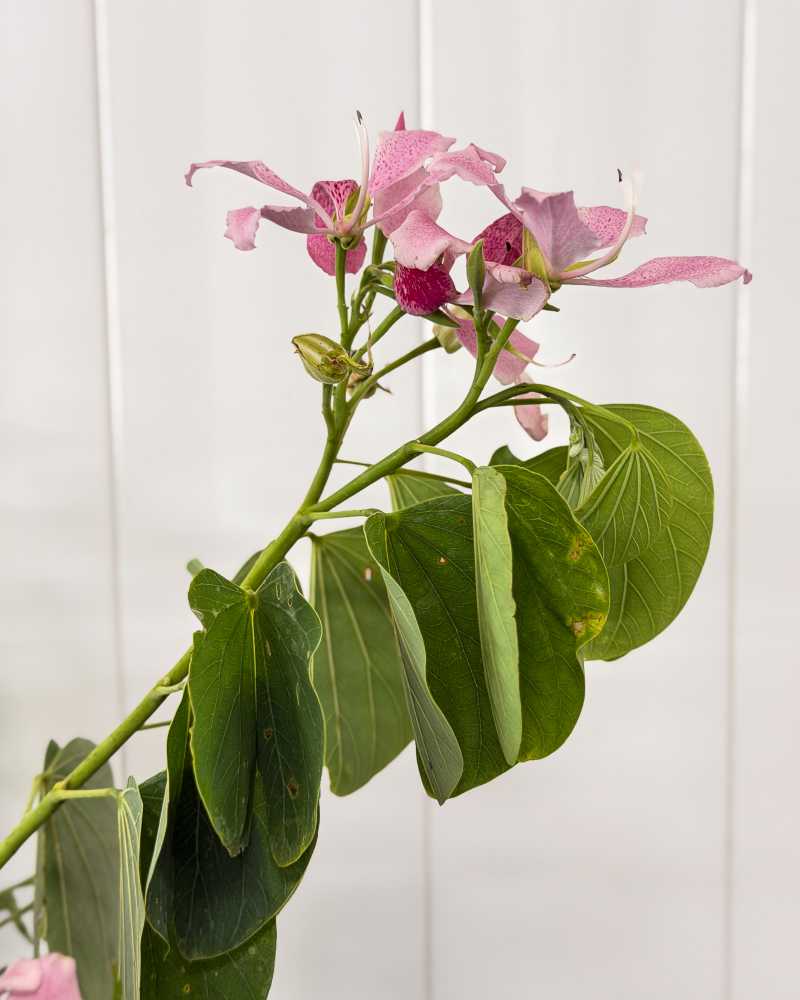
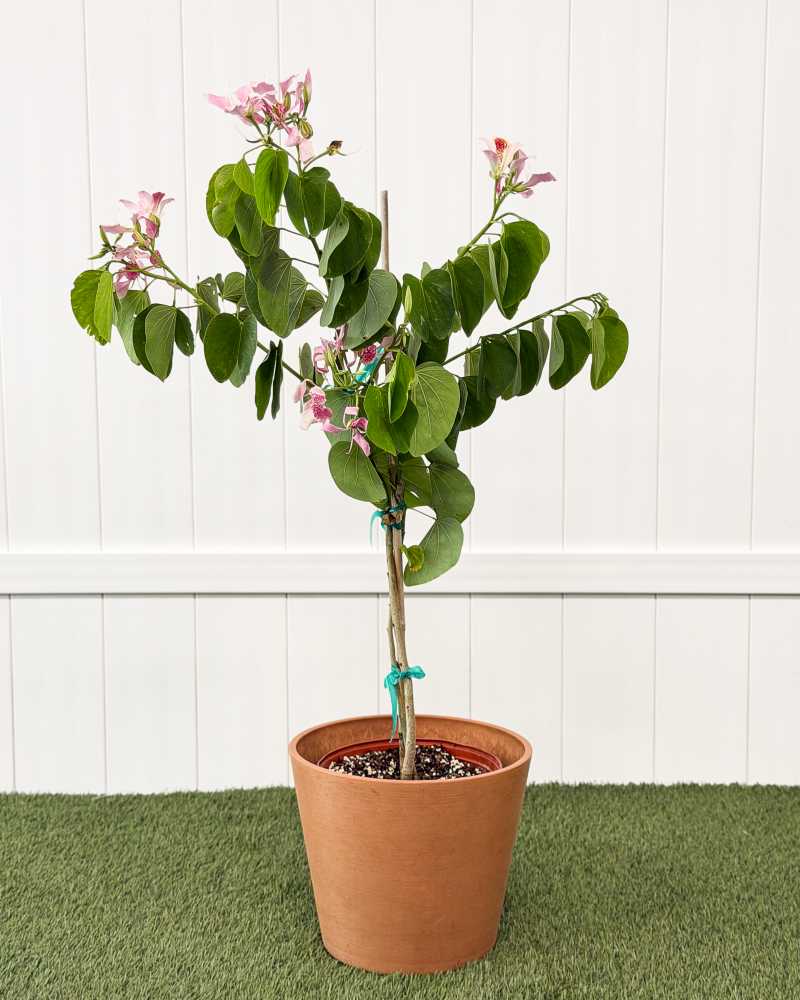
Description
Caring for your Hong Kong Orchid
Light
This tree performs best in full sun, requiring at least 6 to 8 hours of direct light daily to support its spectacular blooming season. While it can tolerate very light shade, insufficient sun will result in sparse foliage and significantly fewer flowers.
Soil
The Hong Kong Orchid is adaptable to a variety of soil types, including sandy and loamy soils, as long as they are well-draining. It prefers a slightly acidic to neutral pH and can struggle in highly alkaline soils, which may cause yellowing of the leaves (chlorosis).
Water
Regular watering is essential during the establishment phase to help the tree develop a deep, healthy root system. Once established, the Hong Kong Orchid is moderately drought-tolerant, though it appreciates consistent moisture during periods of extreme heat to maintain its lush appearance.
Fertilizer
Apply a balanced, slow-release fertilizer in early spring as new growth begins. A second application in early summer can help support the tree’s energy for the upcoming blooming season, but avoid over-fertilizing late in the year to prevent tender new growth from being damaged by cold snaps.
Common Issues
Because this hybrid is sterile and does not produce seeds, it is a much cleaner option for patios and walkways than other orchid trees. However, its wood can be somewhat brittle, so it is best to plant it in a location protected from high, sustained winds to prevent branch breakage.
Pests
This tree is relatively pest-resistant, though it can occasionally be visited by caterpillars or aphids. These are usually not a threat to the tree’s health and can be managed with a strong stream of water or organic treatments if the infestation becomes significant.
Disease
Maintaining good drainage is the most important factor in preventing root rot. In humid environments, ensure the tree has enough space for air to circulate through the canopy to minimize the risk of leaf spot or other minor fungal issues.
Pruning
Pruning should be done after the flowering season ends to maintain the tree’s shape and remove any dead or weak wood. Early structural pruning is recommended to encourage a strong central trunk and a well-balanced canopy.
Potting / Repotting
While the Hong Kong Orchid is typically grown in the ground, younger specimens can be kept in large containers with adequate drainage. Use a high-quality, well-draining potting mix and ensure the container is stable enough to support the tree’s upright growth habit.