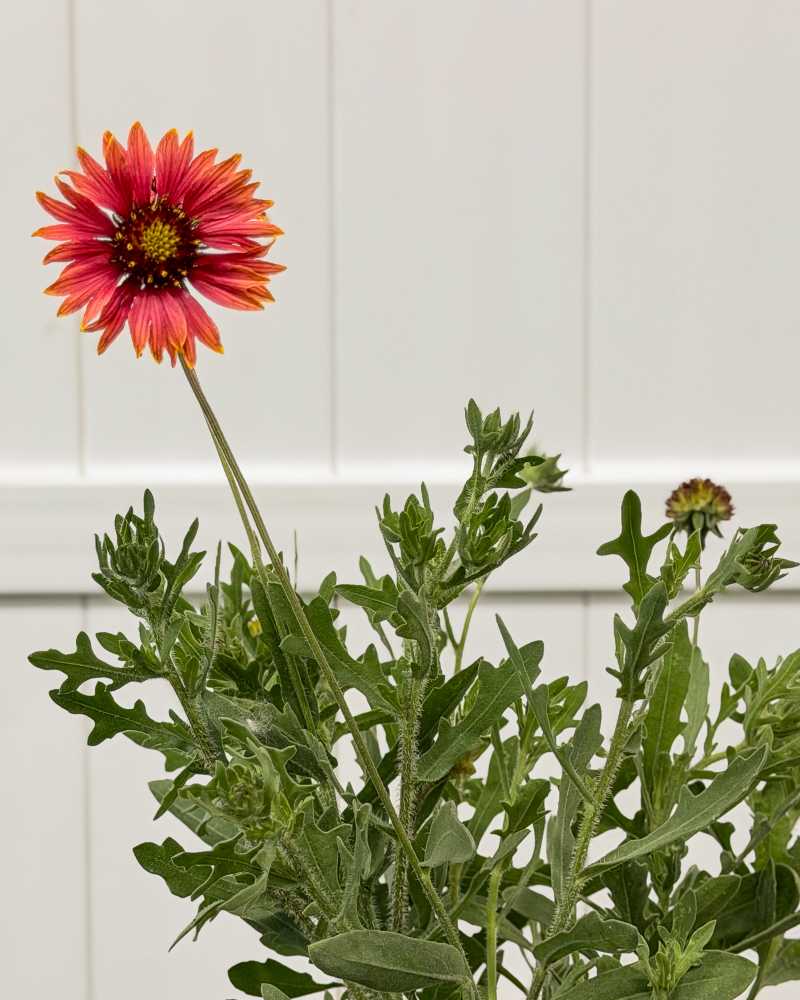
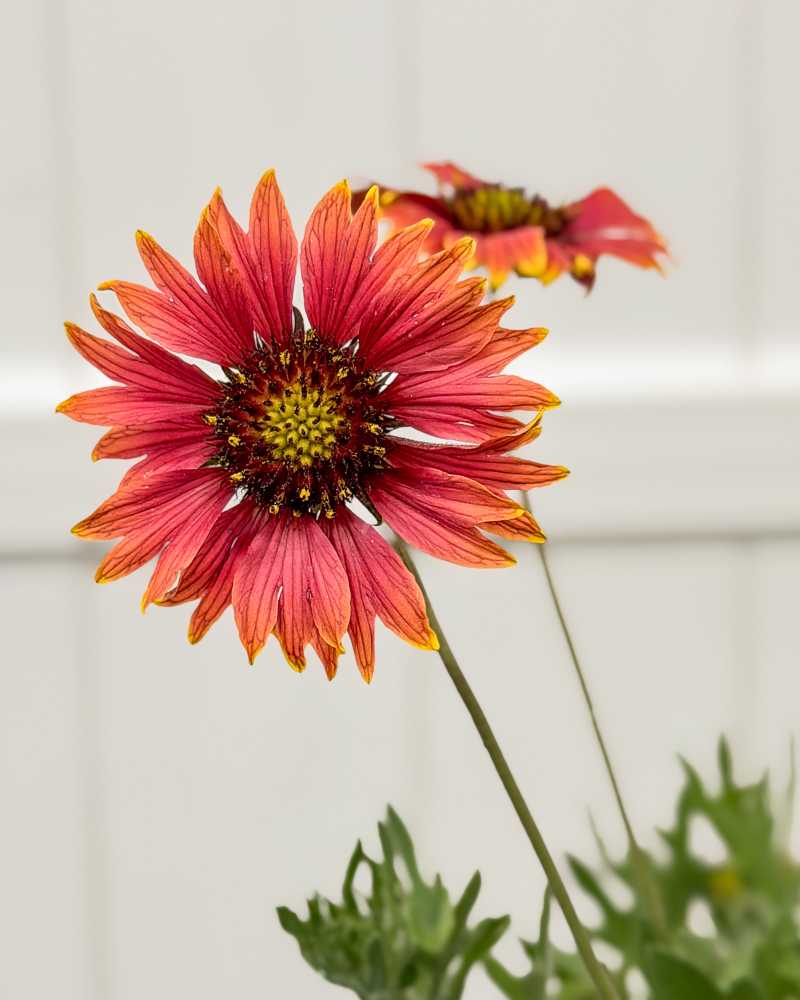
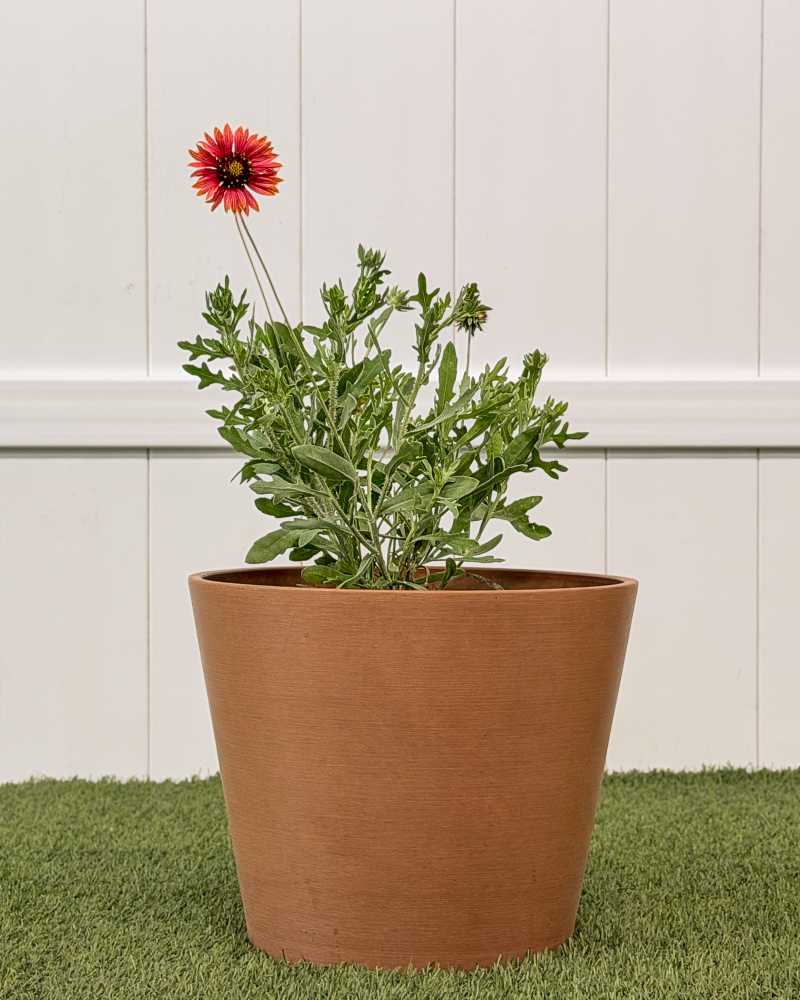
Description
Caring for your Blanket Flower
Light
Gaillardia is an absolute sun-worshipper and demands full sun to look its absolute best. To ensure continuous, vivid blooming from late spring all the way until frost, place it in a spot where it receives at least 6 to 8 hours of direct, unfiltered sunlight daily. Inadequate light will cause the plant to become floppy, weak, and severely reduce the number of flower buds.
Soil
This plant thrives in poor, sandy, or gritty soils and absolutely demands sharp, rapid drainage. It is highly sensitive to rich, heavy, or clay-based soils that trap water. A premium potting mix heavily blended with coarse sand, perlite, or pumice is ideal. Gaillardia actually prefers low fertility, so avoid nutrient-loaded or heavily composted soils.
Water
Once established, the Blanket Flower is remarkably drought-tolerant. Water thoroughly only when the soil has dried out completely down a few inches. It prefers to be underwatered rather than overwatered; keeping the soil constantly damp or allowing the pot to sit in standing water will quickly lead to the decline of the plant.
Fertilizer
Gaillardia performs best with zero to minimal feeding. Do not use heavy or slow-release fertilizers, as too many nutrients—especially nitrogen—will trigger rapid, leggy foliage growth while drastically reducing or completely stopping flower production. If desired, a single application of highly diluted, low-nitrogen liquid fertilizer in early spring is more than enough.
Common Issues
The most common issue is floppy, sprawling stems that split open in the center, which is a classic indicator that the plant is either receiving too much water, too much fertilizer, or not enough direct sunlight. While it is a perennial, keep in mind that individual Gaillardia plants are naturally short-lived (often lasting 2 to 3 years), though they frequently self-seed to create fresh new plants.
Pests
Blanket Flowers are highly resilient and naturally resistant to deer and rabbits. However, they can occasionally attract aphids, thrips, or leafhoppers. Leafhoppers are the main pest to watch out for, as they can sometimes transmit plant diseases. Treat any early signs of pests immediately with organic neem oil or insecticidal soap.
Disease
The primary threat to Gaillardia is root rot, which is caused exclusively by soggy soil, heavy potting mediums, or pots lacking adequate drainage. It can also occasionally fall victim to “aster yellows,” a chronic disease spread by leafhoppers that causes flowers to turn green and deformed. If a plant catches aster yellows, it cannot be cured and should be removed to protect your other plants. Always water at the base to keep foliage dry.
Pruning
Regular deadheading is the secret to keeping your Blanket Flower blooming non-stop. Use sharp, sanitized shears to snip off faded flower heads down to the nearest stem node to encourage immediate reblooming. In late summer, giving the entire mound a light trim back by one-third can refresh the foliage and stimulate a massive second flush of autumn flowers.
Potting / Repotting
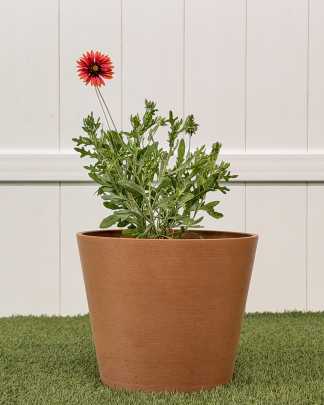
Thanks to its tough nature and compact, mounding habit, Gaillardia is a stellar candidate for medium-sized patio containers and decorative pots. Plan to repot every 1 to 2 years in early spring to refresh the gritty soil mix and ensure the drainage holes haven’t become clogged by the roots. Always use a pot with excellent drainage.