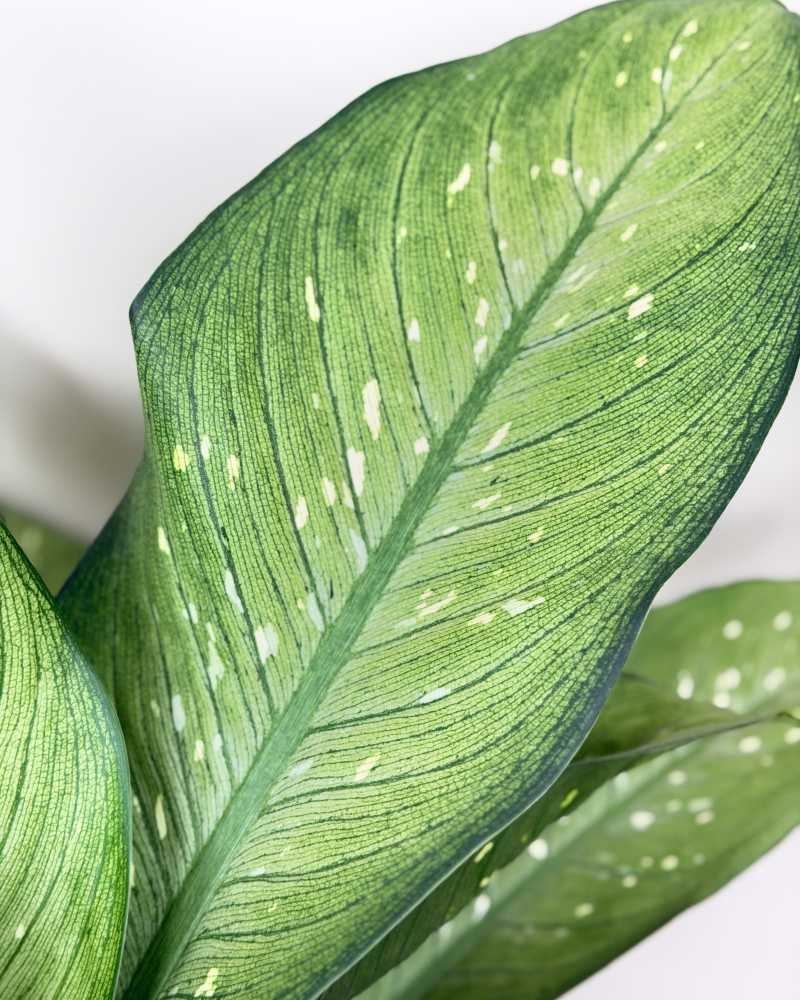
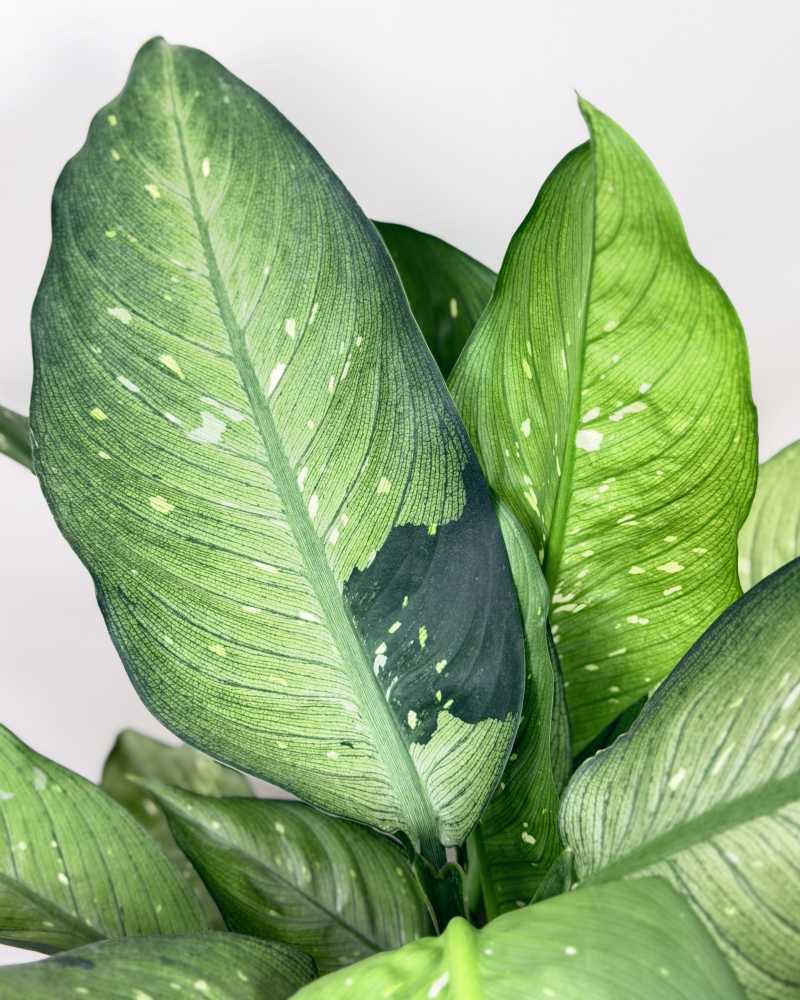
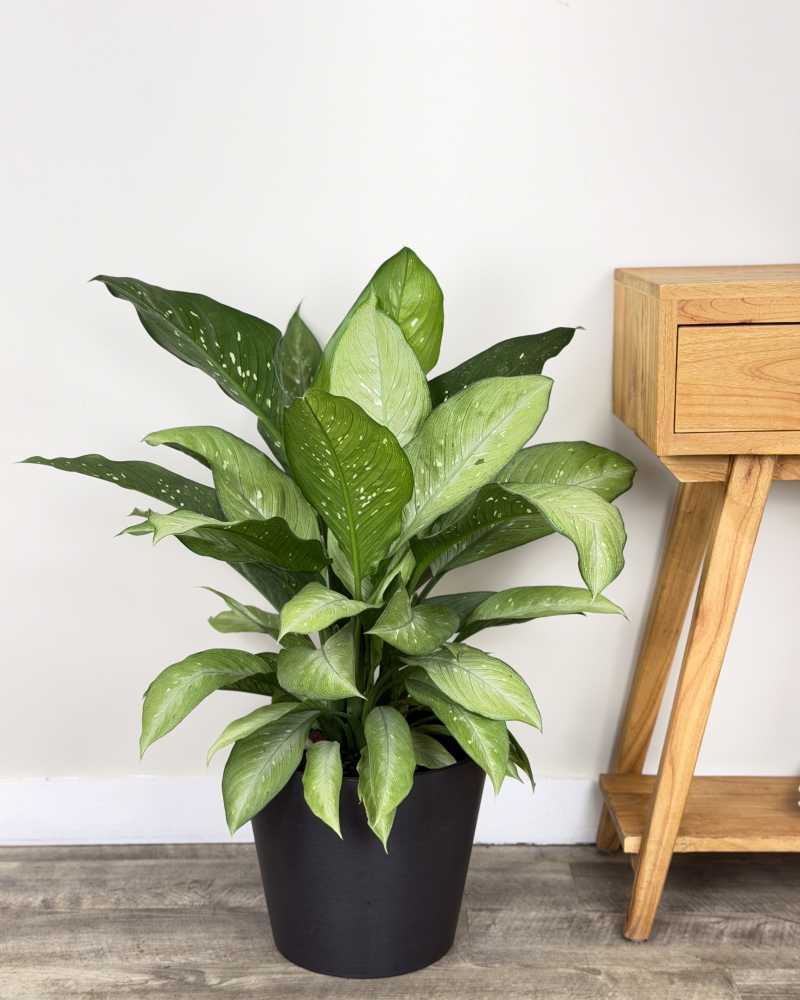
Description
Caring for your Dieffenbachia Snow
Taking good care of any plant is essential to ensure it grows appropriately and thrives. You need to take care of several things, such as the amount of water you need to give the plant, the best way to propagate it, and the kind of fertilizer you need to use. Here is a complete care guide you can use.
Light
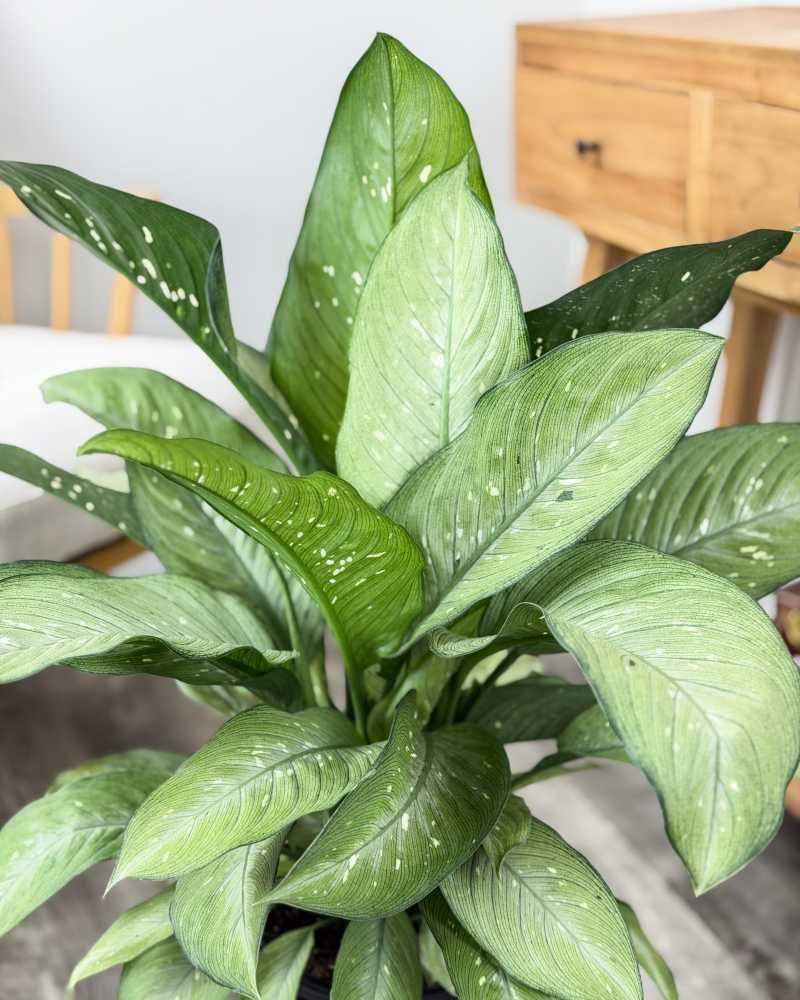
This plant performs best in medium to bright, indirect sunlight. Generous amounts of filtered light allow the foliage to develop and maintain its intense, snowy-white variegation. Avoid placing your Dieffenbachia in harsh, direct sunlight, as the thin, heavily variegated tissue can easily burn and develop unsightly bleached spots. While it can tolerate lower light levels, prolonged dim conditions will cause the variegation to fade into dull green, while new leaves will emerge significantly smaller and slower.
Soil
Dieffenbachia Snow requires a rich, loose, and exceptionally well-draining potting medium that retains slight moisture without packing down. An ideal mix consists of standard indoor potting soil blended with peat moss, perlite, and chunky orchid bark or pumice. Avoid dense, heavy potting mixes or untreated outdoor garden soil, as poor drainage will trap water around the thick cane roots and restrict oxygen exchange.
Water
It is vital to give your Dieffenbachia Snow a balanced amount of water. This tropical plant enjoys steady moisture around its roots but is highly vulnerable to standing water. If you do not give the plant enough water, its broad leaves will lose turgidity, droop dramatically, and develop dry, crispy brown margins. If you overwater it, the lower leaves will turn bright yellow, the stalks will soften, and the root system will quickly rot. Allow the top 1 to 2 inches of soil to dry out between waterings. Insert your finger into the soil to check moisture levels before watering thoroughly until excess moisture flows out of the drainage holes. Discard any standing water collected in the saucer immediately. Scale back watering frequency slightly during the slower-growing winter months.
Fertilizer
The Dieffenbachia is a moderate to heavy feeder during its active growth period in spring and summer. To fuel the production of its massive leaves, apply a balanced, water-soluble indoor houseplant fertilizer diluted to half strength every 3 to 4 weeks. It is best to avoid fertilizing in late autumn and winter when the plant rests, as unabsorbed nutrients can accumulate in the soil and burn the sensitive root tips.
Common Issues
If you do not take good care of your Dieffenbachia Snow, it may face issues such as pest infestations and bacterial or fungal infections. Let’s look at all the common problems you must be aware of.
Pests
Spider mites and mealybugs are the most frequent pests to target this plant, especially in warm, dry indoor spaces with low humidity. Aphids and scale insects may also occasionally settle along the central leaf veins and beneath the leaf sheaths. Signs of pests include speckled yellow discoloration on the foliage, sticky honeydew residue, and fine webbing across leaf stems. To control pests, gently wipe down the broad leaves with a damp cloth and spray thoroughly with insecticidal soap or diluted horticultural neem oil, making sure to coat both sides of the foliage.
Disease
Root rot is the most serious disease affecting Dieffenbachia, almost invariably caused by poor soil drainage or overwatering. Infected plants will develop soft, black stems near the soil line and rapidly lose leaves. Additionally, bacterial leaf spot or Erwinia blight can appear if water splashes onto the foliage and sits for long periods in poorly ventilated environments. This causes dark, water-soaked lesions that spread quickly. To prevent bacterial and fungal diseases, always water directly into the soil rather than overhead, prune away affected leaves with sterilized shears, and maintain adequate airflow.
Pruning
This plant does not demand aggressive pruning, but routine grooming will keep it looking vibrant and healthy. Trim away older, yellowing bottom leaves as they naturally age by slicing the leaf stem close to the main cane. If your plant grows overly tall or leggy over time, you can prune the central cane back in the spring to encourage fresh, bushier shoots from the base. Always wear protective gloves when pruning, as the plant’s sap contains calcium oxalate crystals that can irritate sensitive skin.
Propagation
You can propagate Dieffenbachia Snow through stem or cane cuttings during the spring or early summer. Cut a 4- to 6-inch healthy tip cutting or a bare cane segment with at least two viable nodes. Allow the cut ends to dry and callous over for 24 hours, then insert them upright or horizontally into a moist mix of peat moss and perlite or directly into water. Keep the cuttings in a warm spot with bright, indirect light until robust roots form.