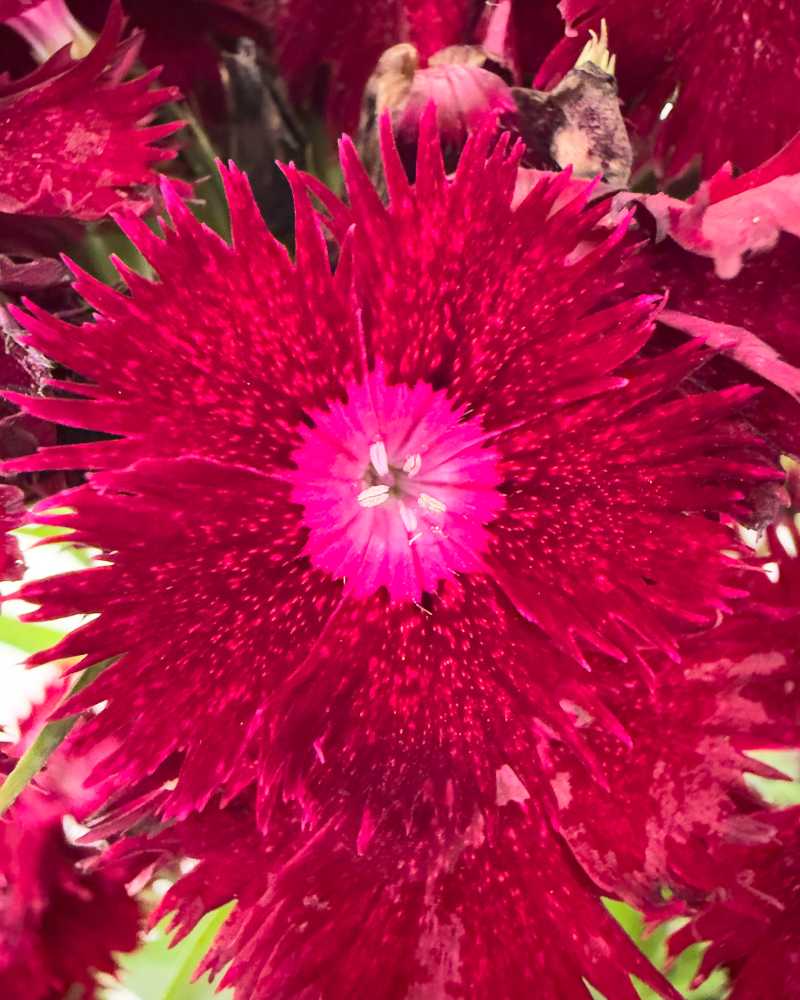
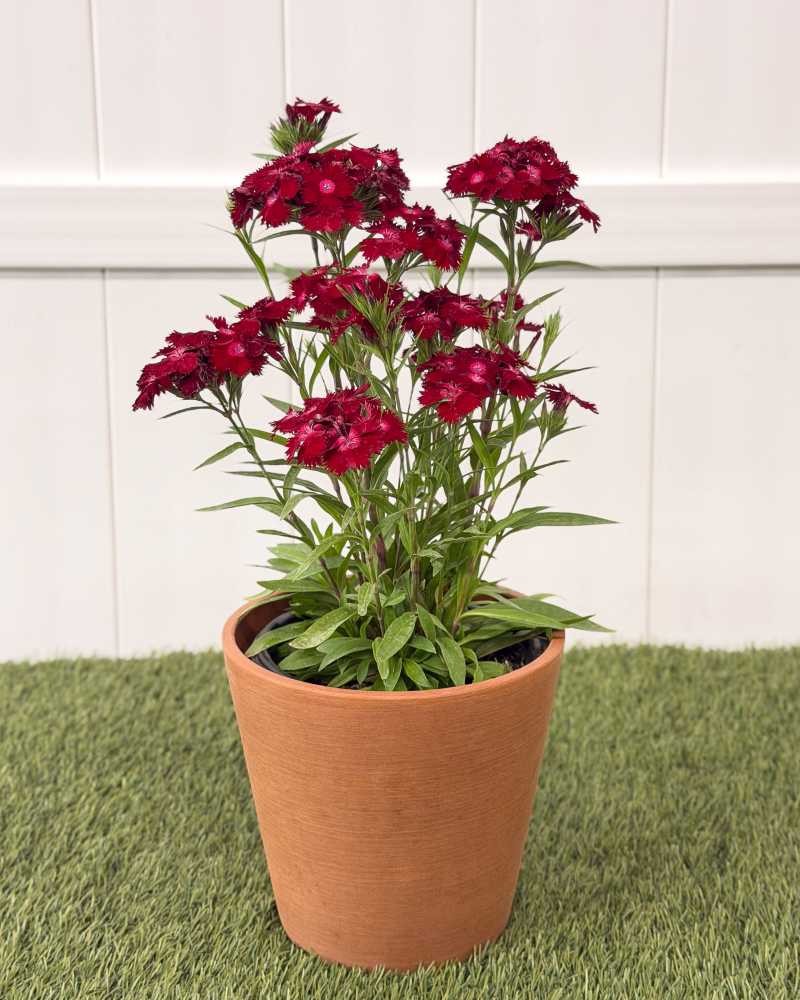
Description
Caring for your Dianthus Red
Light
The Dianthus Red is a true sun-lover that performs best in full sun to very bright, indirect sunlight. To ensure continuous blooming and keep the blue-green foliage tight and healthy, aim for at least 6 hours of direct light daily. It can survive in light partial shade, but the flower production will drop significantly.
Soil
Sharp, rapid drainage is the most critical factor for this plant. Dianthus cannot tolerate heavy, waterlogged, or clay-heavy soils. A loose, gritty potting mix with a neutral to slightly alkaline pH is ideal. Combine quality indoor potting soil with a generous amount of perlite, pumice, or coarse sand to keep the root zone perfectly aerated.
Water
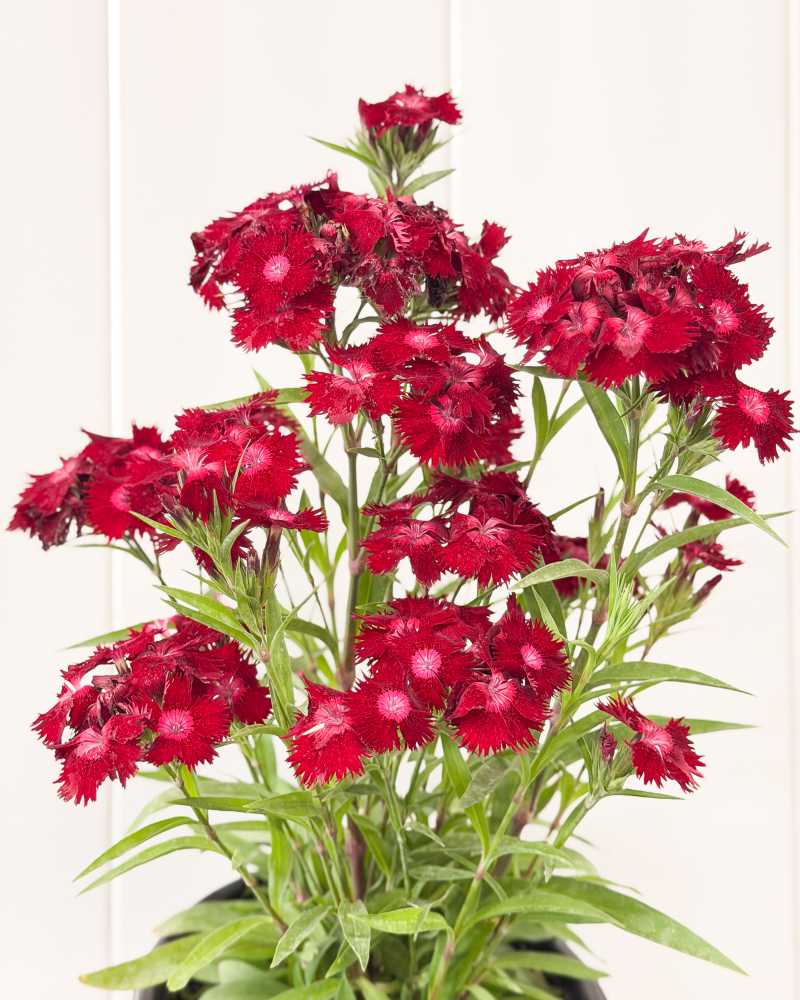
Water thoroughly only when the top 1 to 2 inches of the soil have dried out completely. Dianthus is naturally drought-tolerant once established and prefers staying slightly dry over being waterlogged. Always pour water directly onto the soil base to keep the dense foliage and rich red petals dry.
Fertilizer
This variety is a light feeder but appreciates steady nutrients to fuel its heavy flowering cycles. During the active spring and summer months, apply a balanced, water-soluble fertilizer diluted to half-strength once a month. Avoid high-nitrogen blends, as they cause rapid leaf growth but will stunt your flower buds.
Common Issues
If your Dianthus stops pushing out fresh red buds, it is usually a sign that it needs more direct sunlight or that old, spent flowers need to be pruned off. Yellowing or mushy lower leaves are a classic warning sign that the soil is holding onto too much moisture.
Pests
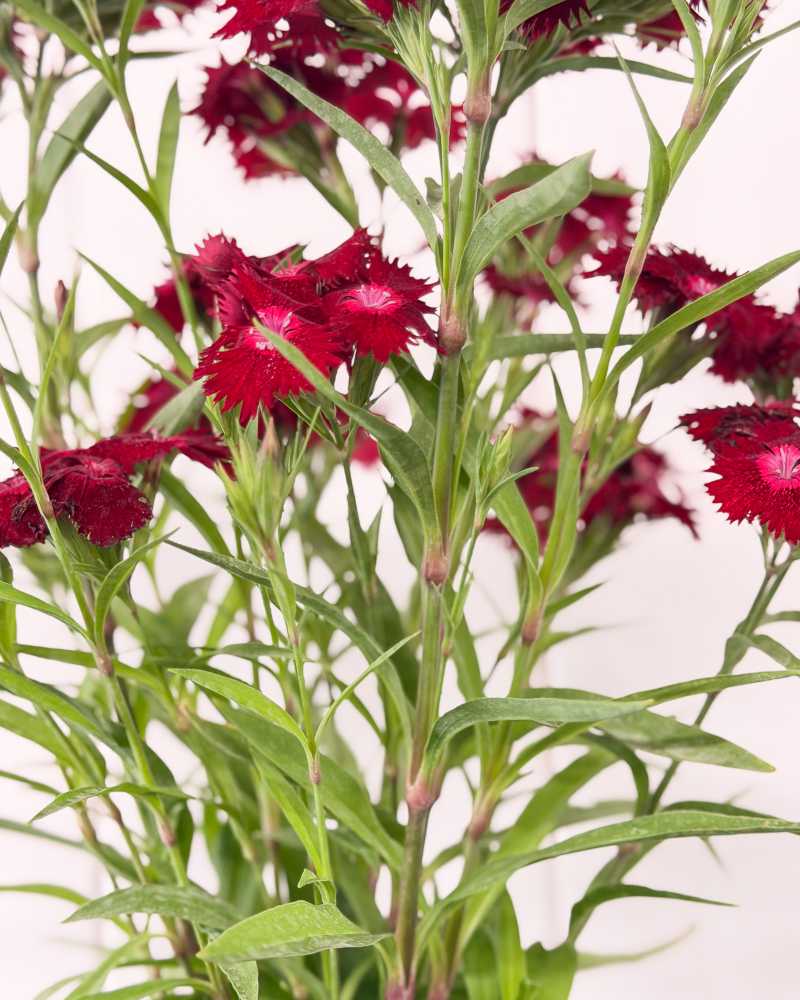
Dianthus Red is remarkably tough and pest-resistant. However, during hot, dry summer stretches, common sap-suckers like aphids or spider mites can occasionally try to settle in. Check the lower stems routinely and treat any early signs with organic neem oil or a gentle insecticidal soap spray.
Disease
The primary threat to this plant is root or crown rot, brought on exclusively by overwatering, poor drainage, or heavy soil. Fungal issues like powdery mildew can also occur if water sits on the dense leaves or if air circulation is restricted. Keep the plant in a well-ventilated spot and always use pots with drainage holes.
Pruning
Regular deadheading is the secret to non-stop color. Use sharp, sanitized shears to cleanly clip off faded flower stems down to the next leaf node; this signals the plant to instantly channel its energy into producing a fresh wave of velvety red buds. Give the entire clump a light trim after the heavy summer flush to keep it round and tidy.
Potting / Repotting
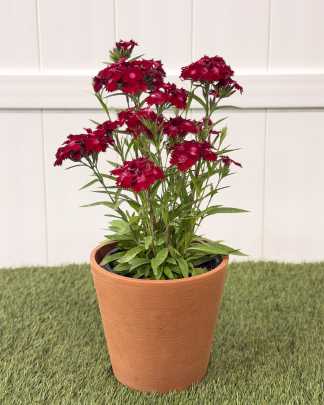
Thanks to its compact, mounding growth habit, the Dianthus Red is perfectly suited for small to medium decorative containers. Plan to repot every 1 to 2 years in early spring to refresh the worn-out soil mix and give the roots an oxygen-rich boost right before the heavy blooming season begins.