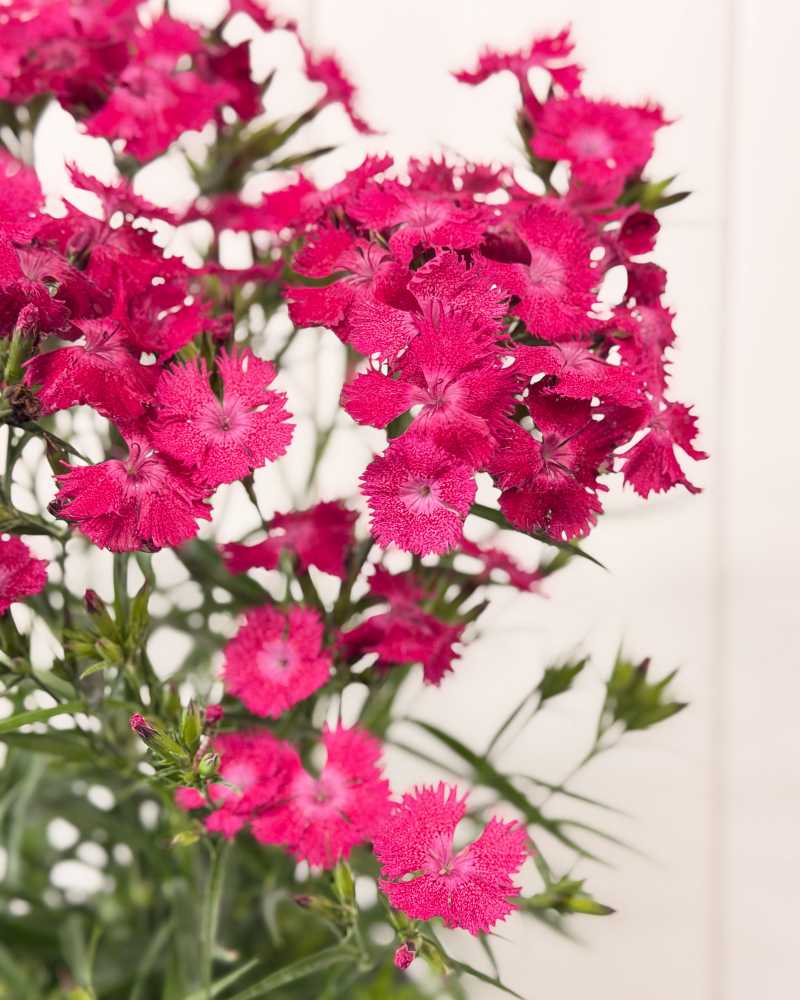
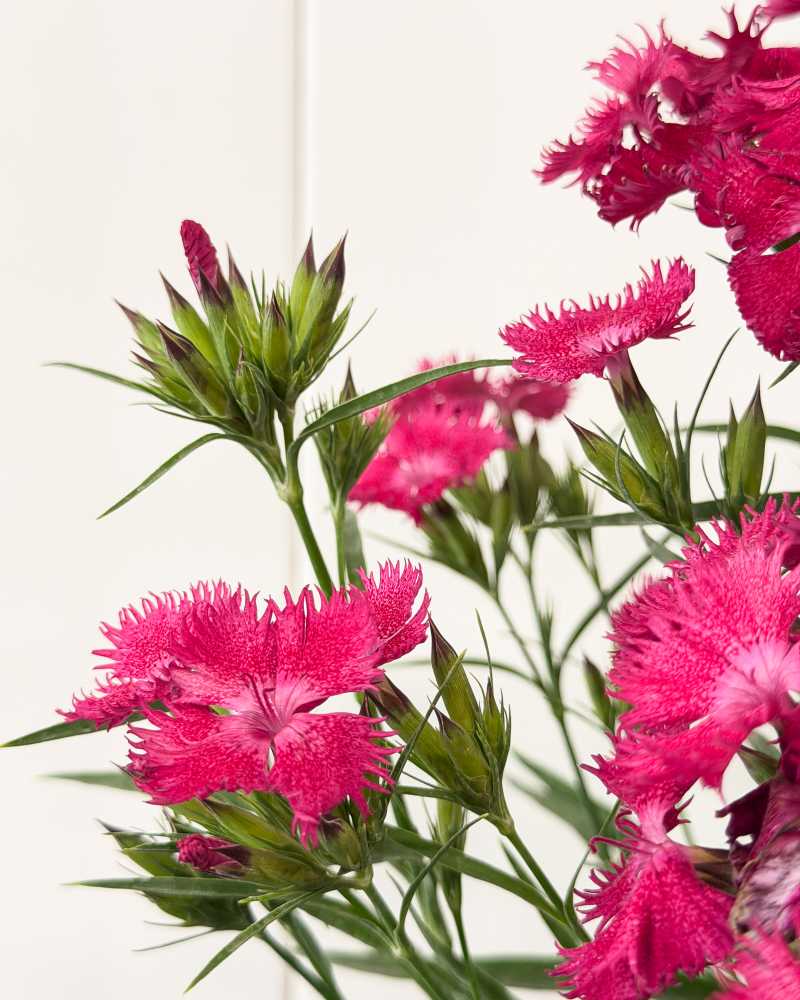
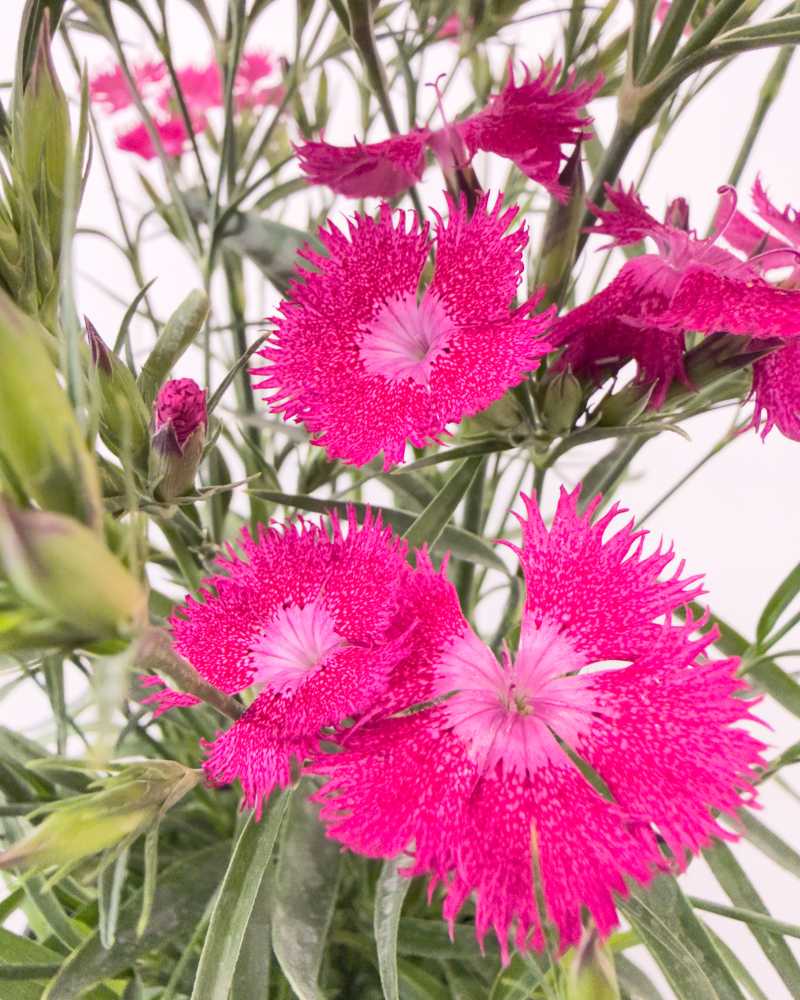
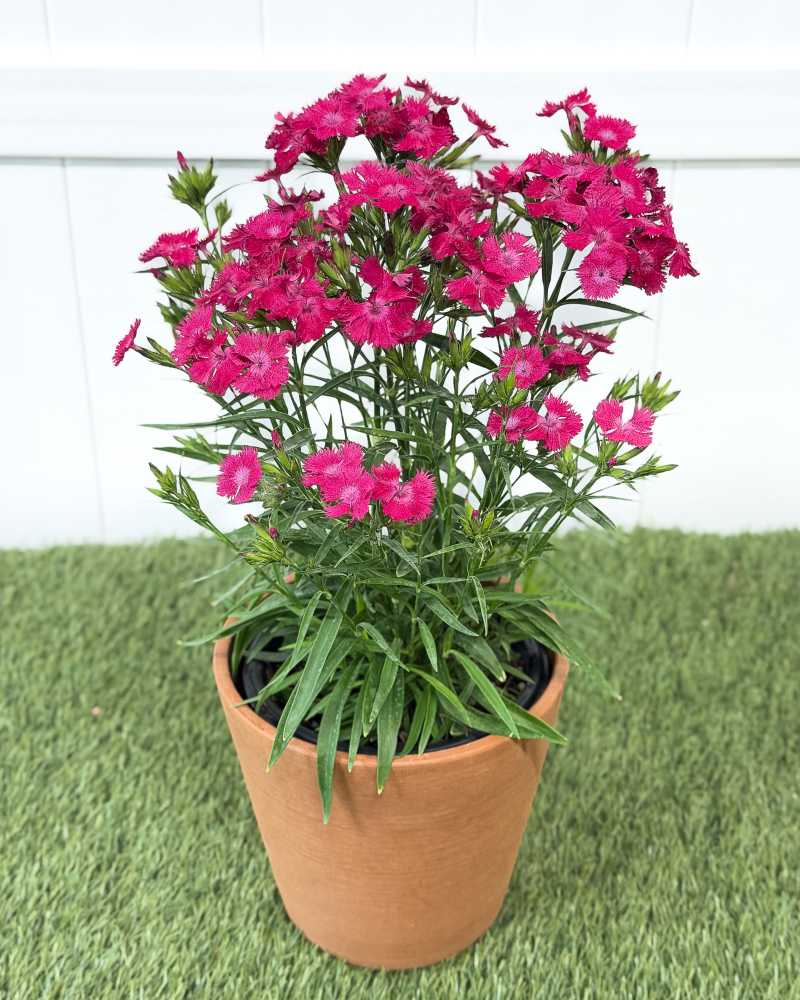
Description
Caring for your Dianthus Magenta
Light
The Dianthus Magenta absolutely loves the sun and thrives best in full sun to very bright, indirect sunlight. For the most abundant blooming cycles and tight, compact foliage, ensure it receives at least 6 hours of direct light daily. While it can tolerate light partial shade, a lack of sufficient light will result in fewer flowers and leggy stems.
Soil
Excellent drainage is the absolute golden rule for this plant. Dianthus will not tolerate heavy, waterlogged soil. A premium, loose, and gritty potting mix with a neutral to slightly alkaline pH is ideal. Combine quality potting soil with plenty of perlite or coarse sand to ensure water flows through rapidly and the root zone stays aerated.
Water
Water thoroughly only when the top 1 to 2 inches of the soil feel completely dry. Dianthus is quite drought-tolerant once established and prefers being slightly underwatered rather than overwatered. Always apply water directly to the base of the plant to keep the foliage and dense flower clusters dry, and ensure the pot drains fully.
Fertilizer
This plant is a light feeder but appreciates a steady boost to fuel its heavy blooming seasons. During the active spring and summer months, feed it once a month with a balanced, water-soluble fertilizer diluted to half-strength. Avoid over-fertilizing, as too much nitrogen will encourage excess foliage at the expense of its beautiful magenta flowers.
Common Issues
The most common issue is a sudden drop in flower production, which is usually caused by leaving old, faded blooms on the plant or a lack of direct sunlight. If the lower foliage starts turning yellow or mushy, it is a direct warning sign that the soil is holding too much moisture.
Pests
Dianthus is naturally tough and rarely suffers from severe pest problems. However, occasional sap-suckers like aphids or spider mites might appear during hot, dry spells. Keep an eye out for fine webbing or sticky residue on the stems, and treat immediately with a gentle insecticidal soap or organic neem oil spray.
Disease
The primary threat to Dianthus is root rot or crown rot, triggered exclusively by soggy soil or poor drainage. Fungal diseases like powdery mildew or rust can also occur if the foliage stays wet or air circulation is restricted. Keep the plant in a well-ventilated spot and water at the soil level to prevent these issues.
Pruning
Deadheading is essential for this variety. Use sharp, sanitized shears to cleanly snip off spent flowers right down to the stem node as soon as they begin to fade; this constantly signals the plant to produce a fresh wave of bright new buds. After the main summer blooming flush slows down, you can give the entire mound a light trim to maintain its neat, round shape.
Potting / Repotting
Because it maintains a compact, mounding habit, the Dianthus Magenta does not require a massive container. Plan to repot every 1 to 2 years during early spring to refresh the soil mix and give the roots a clean, nutrient-rich environment to fuel the upcoming blooming season. Always choose a pot with excellent drainage holes.