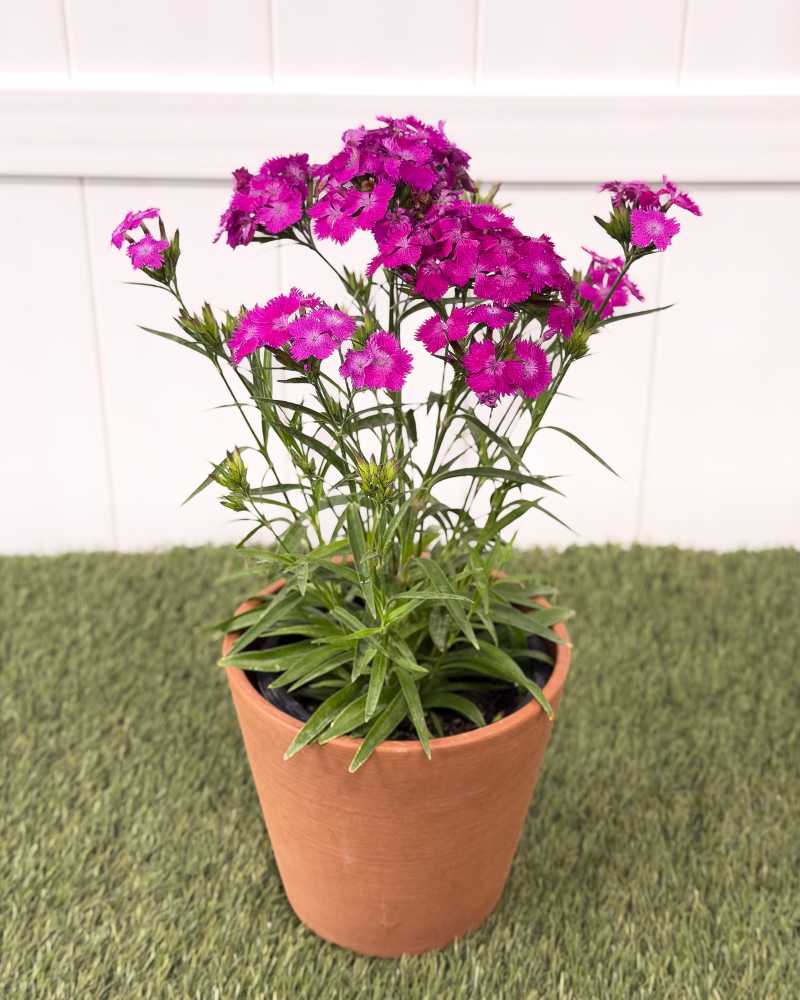
Description
Caring for your Dianthus Fuchsia
Light
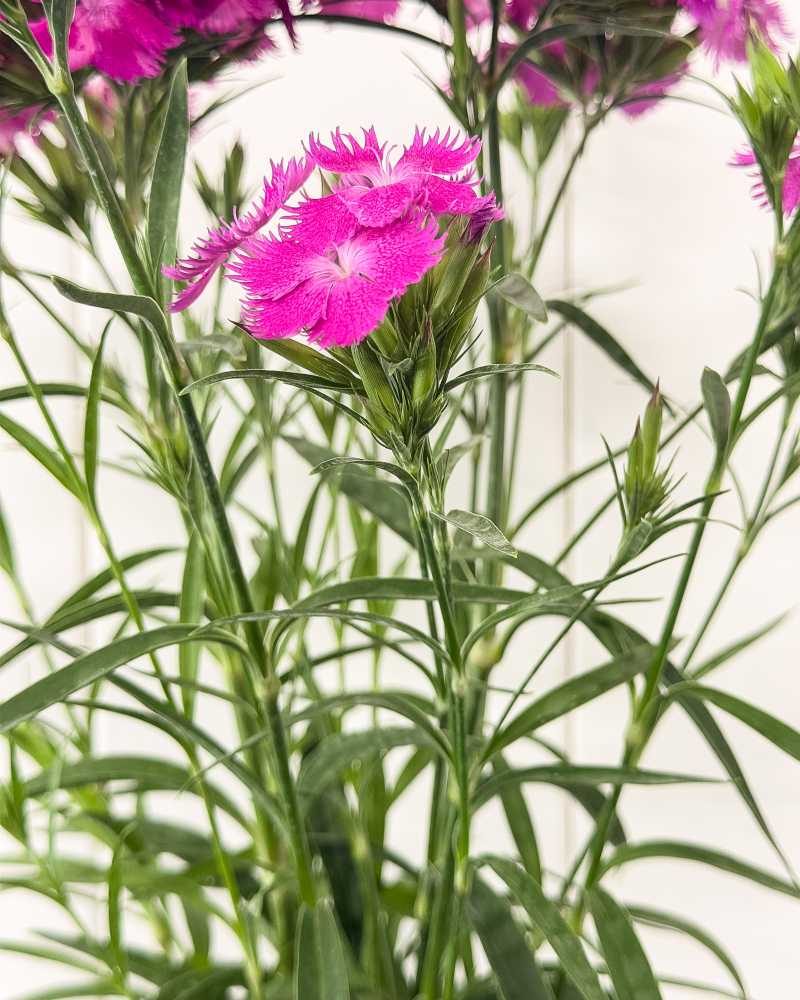
The Dianthus Fuchsia is a sun-worshipper that thrives best in full sun to very bright, indirect sunlight. For maximum bloom production and to prevent the blue-green foliage from becoming loose and leggy, ensure it receives at least 6 hours of direct light every day. It can tolerate light afternoon shade, but fewer flowers will develop.
Soil
Sharp, rapid drainage is absolutely essential for this plant’s survival. Dianthus will quickly decline in heavy, wet, or compacted soils. A loose, gritty potting mix with a neutral to slightly alkaline pH is perfect. Mix standard indoor potting soil with a generous amount of perlite, pumice, or coarse sand to keep the root zone dry and aerated.
Water
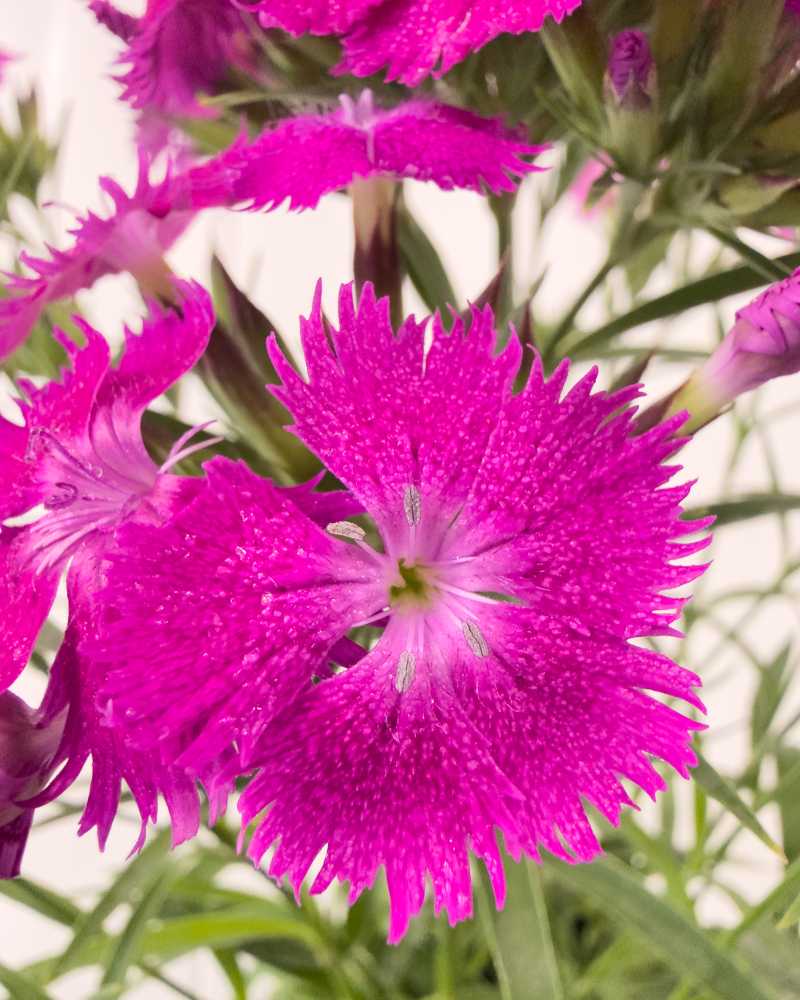
Water thoroughly only when the top 1 to 2 inches of the soil mix have dried out completely. Once established, Dianthus is highly drought-tolerant and prefers staying on the drier side rather than sitting in damp soil. Always water directly at the soil level to keep the compact foliage and delicate fuchsia petals dry.
Fertilizer
This plant does not require heavy feeding but benefits from steady nutrients during its peak flowering cycle. Throughout the spring and summer, apply a balanced, water-soluble fertilizer diluted to half-strength once a month. Avoid high-nitrogen fertilizers, which cause rapid leaf growth but drastically reduce the number of flower buds.
Common Issues
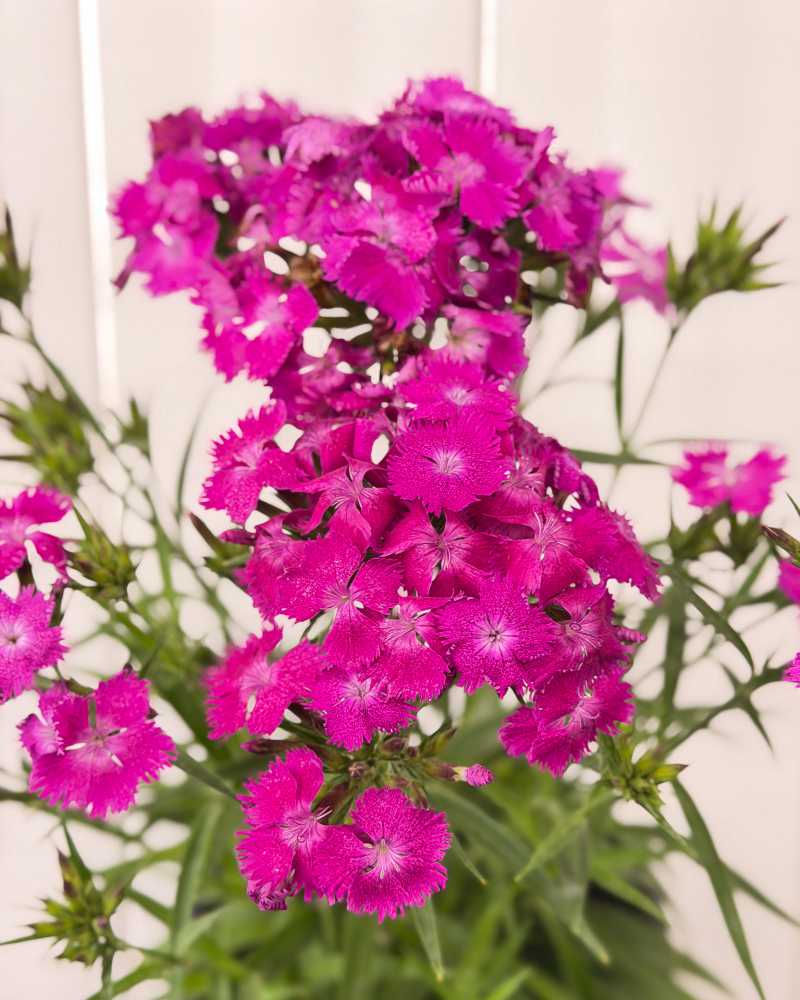
If your Dianthus stops pushing out its brilliant fuchsia flowers, it is usually a sign that it either needs more direct sunlight or that the old, faded flowers need to be clipped off. Yellowing or rotting lower leaves are a clear indication of overwatering or soil that is trapping too much moisture.
Pests
Dianthus Fuchsia is a tough, naturally pest-resistant plant. However, during hot and dry weather, common sap-suckers like spider mites or aphids may occasionally appear. Routinely check the base of the stems and treat any early signs of pests with organic neem oil or a gentle insecticidal soap spray.
Disease
The single biggest threat to this plant is root or crown rot, which is caused exclusively by overwatering or stagnant, poorly draining soil. Fungal issues like powdery mildew can also develop if water sits on the dense leaves or if air circulation is poor. Ensure excellent ventilation and always use pots with drainage holes.
Pruning
Regular deadheading is the secret to non-stop color. Use sharp, sanitized shears to snip off spent flower stems down to the next leaf node as soon as they fade; this tells the plant to instantly divert its energy into creating a fresh wave of bright fuchsia buds. Give the entire clump a light trim after the summer flush to keep it round and tidy.
Potting / Repotting
Thanks to its naturally compact and mounding growth habit, the Dianthus Fuchsia does well in small to medium decorative containers. Plan to repot every 1 to 2 years in early spring to refresh the worn-out soil mix and give the roots a nutrient-rich boost right before the heavy blooming season begins.