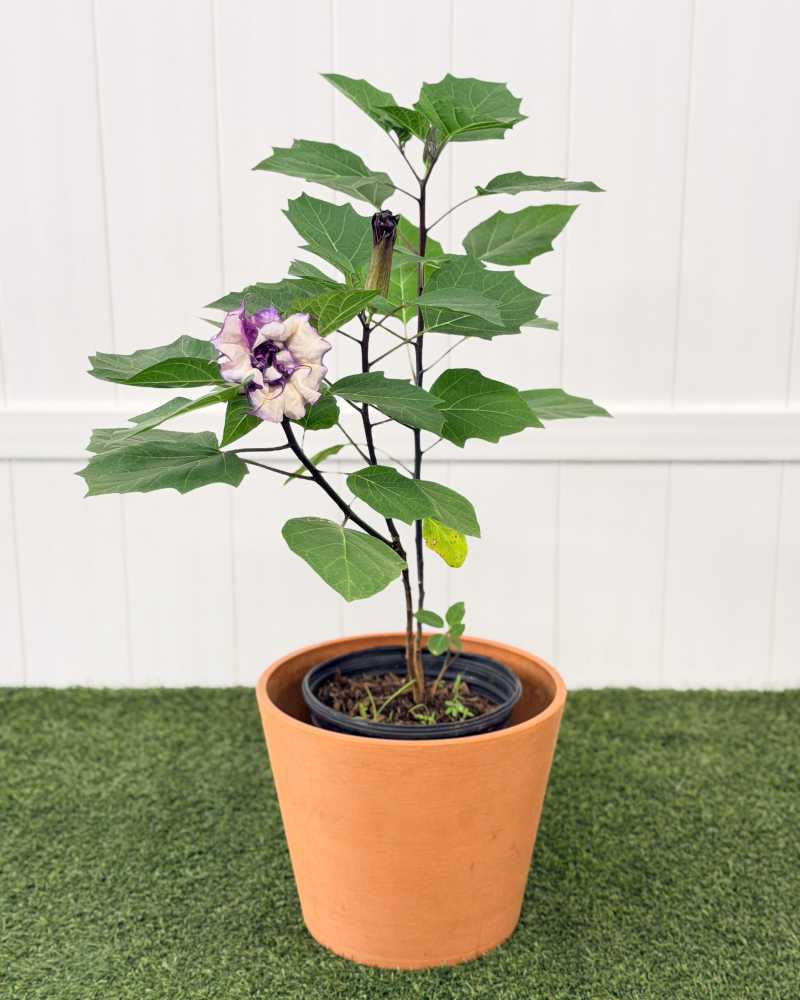
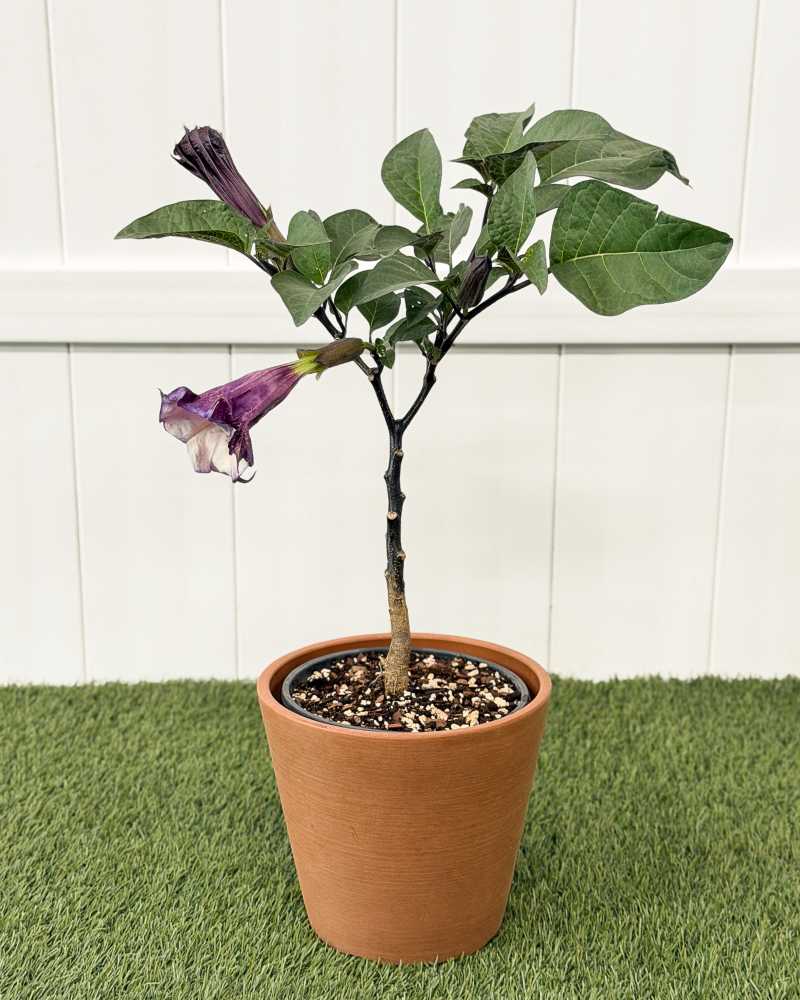
Description
Caring for your Devil’s Trumpet
Light
The Devil’s Trumpet is a passionate sun-worshipper that thrives best in full sun to very bright, indirect sunlight. To fuel its rapid growth and ensure a continuous production of massive trumpet blooms, it requires at least 6 hours of direct sunlight daily. While it can tolerate partial shade, a lack of intense light will lead to sparse flowering and weaker, leggy branches.
Soil
This plant is a vigorous grower that needs a rich, fertile, yet exceptionally well-draining soil medium. It cannot tolerate heavy, compacted soils that trap stagnant moisture. A high-quality organic potting mix heavily blended with perlite, peat moss, or coarse sand is ideal to keep the root zone well-aerated while providing the nutrients necessary for heavy blooming.
Water
Devil’s Trumpet prefers a consistent watering schedule to keep up with its large, moisture-evaporating leaves. Water thoroughly whenever the top 1 to 2 inches of the soil feel dry to the touch, pouring evenly until it exits the drainage holes. While established plants can handle brief bouts of drought, chronic underwatering will cause the flower buds to drop before opening. Never let the pot sit in standing water.
Fertilizer
Because it grows rapidly and produces massive floral displays, the Devil’s Trumpet is a heavy feeder. Throughout the active spring and summer growing seasons, feed it every two weeks with a balanced, water-soluble liquid fertilizer diluted to half-strength. Suspend fertilizing entirely during the late fall and winter months when the plant enters its natural resting phase.
Common Issues
The most frequent issue is a sudden dropping of un-opened flower buds. This is usually a classic sign of environmental stress, typically caused by severe underwatering, extreme temperature fluctuations, or a sudden drop in direct sunlight. Yellowing lower leaves generally point to overwatering or poor soil drainage.
Pests
As a member of the Solanaceae (nightshade) family, the large, velvety leaves can occasionally attract typical garden sap-suckers like spider mites, whiteflies, and aphids, as well as tomato hornworms. Check the undersides of the foliage regularly. Treat any early signs of pests promptly with organic neem oil or an insecticidal soap spray.
Disease
The primary threat to Devil’s Trumpet is root rot, brought on exclusively by overwatering, poor drainage, or heavy potting soils. It can also be susceptible to fungal leaf spot if water is allowed to sit on the wide leaves in humid, stagnant environments. Always water directly at the soil level and ensure the plant enjoys excellent air circulation.
Pruning
Pruning is highly effective for keeping this vigorous plant in a neat, bushy shape. Use sharp, sanitized shears to pinch back the growing tips in early spring to encourage heavy branching (more branches mean more flowers). Always wear gloves when pruning to protect your skin from the toxic sap. Deadhead spent flowers immediately if you want to prevent the plant from forming its heavy, spiky thornapple seed pods, which saves energy for new blooms.
Potting / Repotting
Due to its robust and fast-expanding root system, the Devil’s Trumpet requires a large, sturdy container with excellent drainage holes to prevent it from becoming root-bound too quickly. Plan to repot every spring into a container that is 2 to 3 inches larger in diameter, refreshing the organic soil mix completely to give the plant a nutrient-dense foundation for the upcoming summer show.