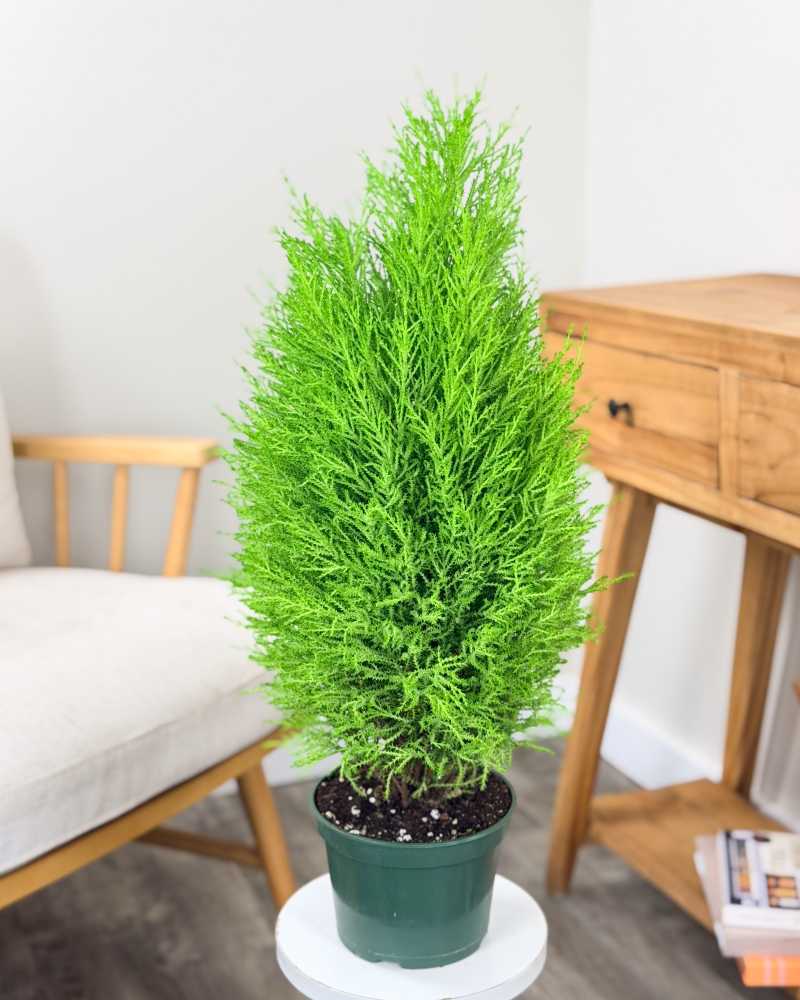
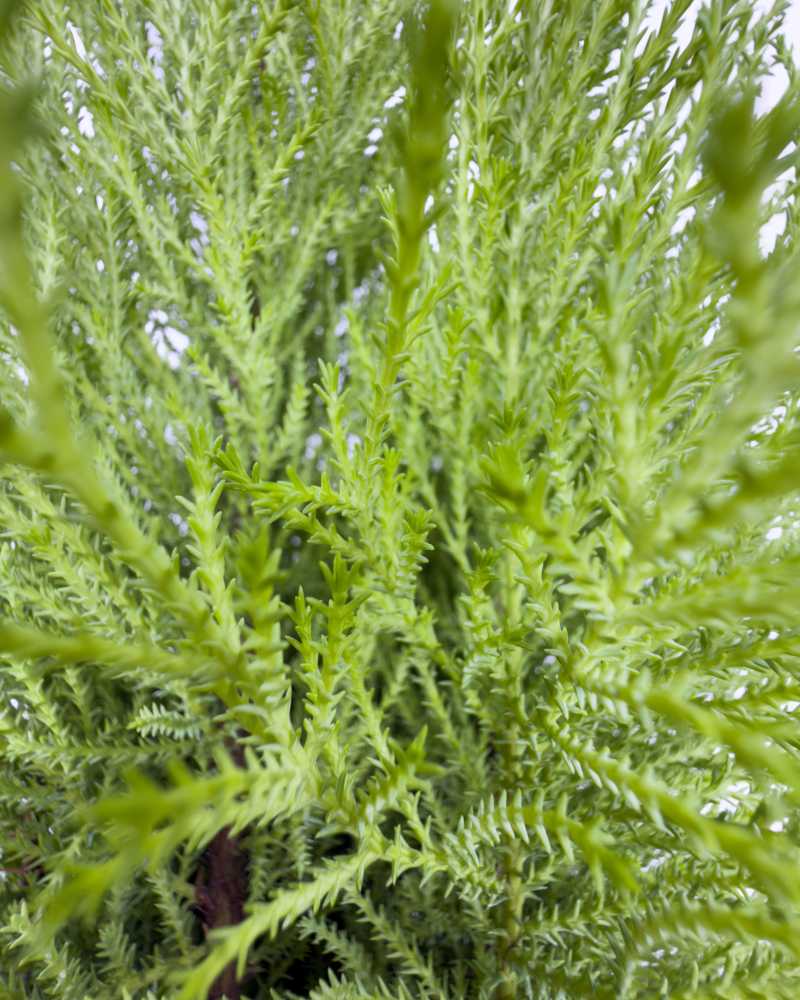
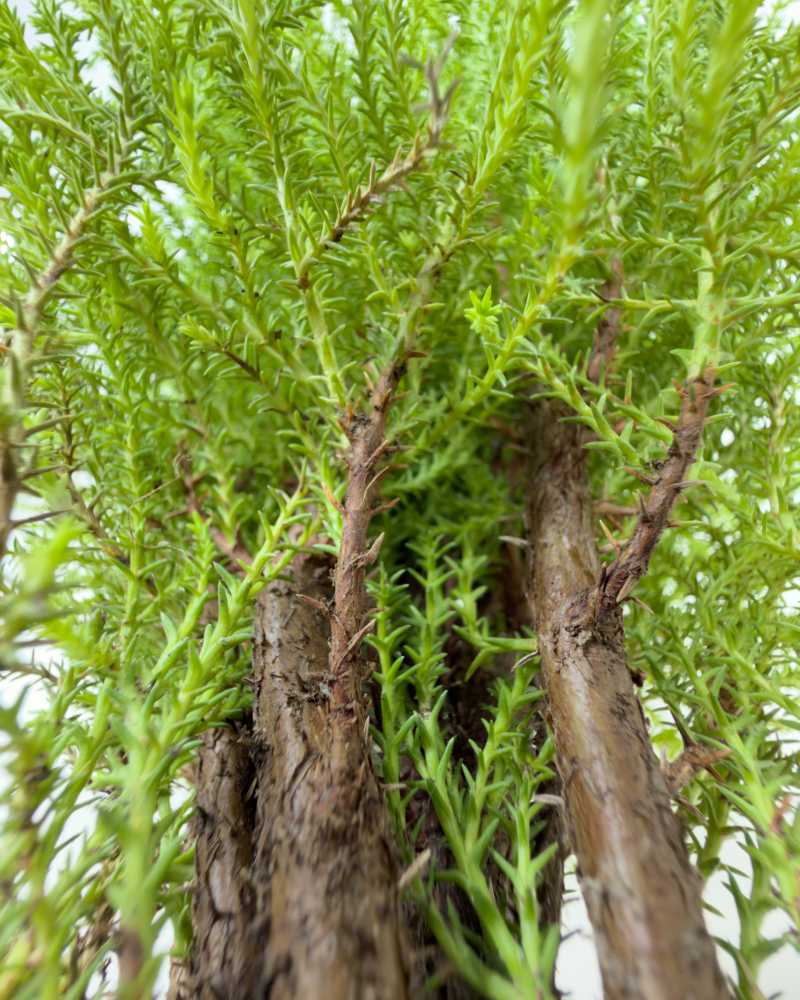
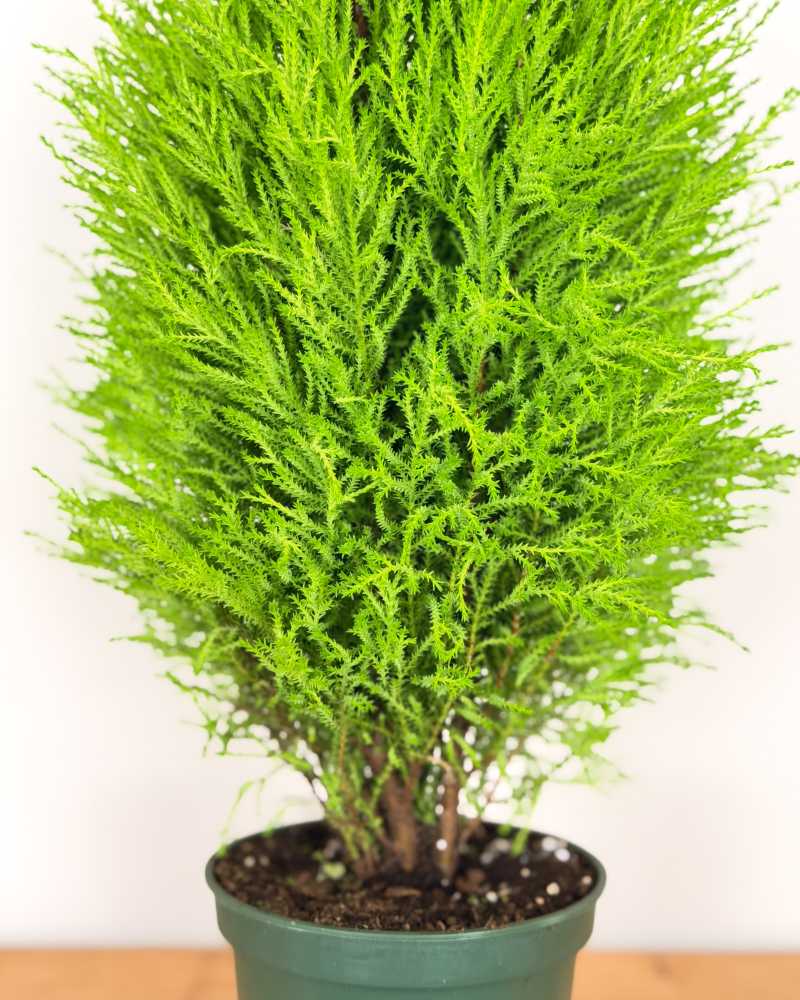
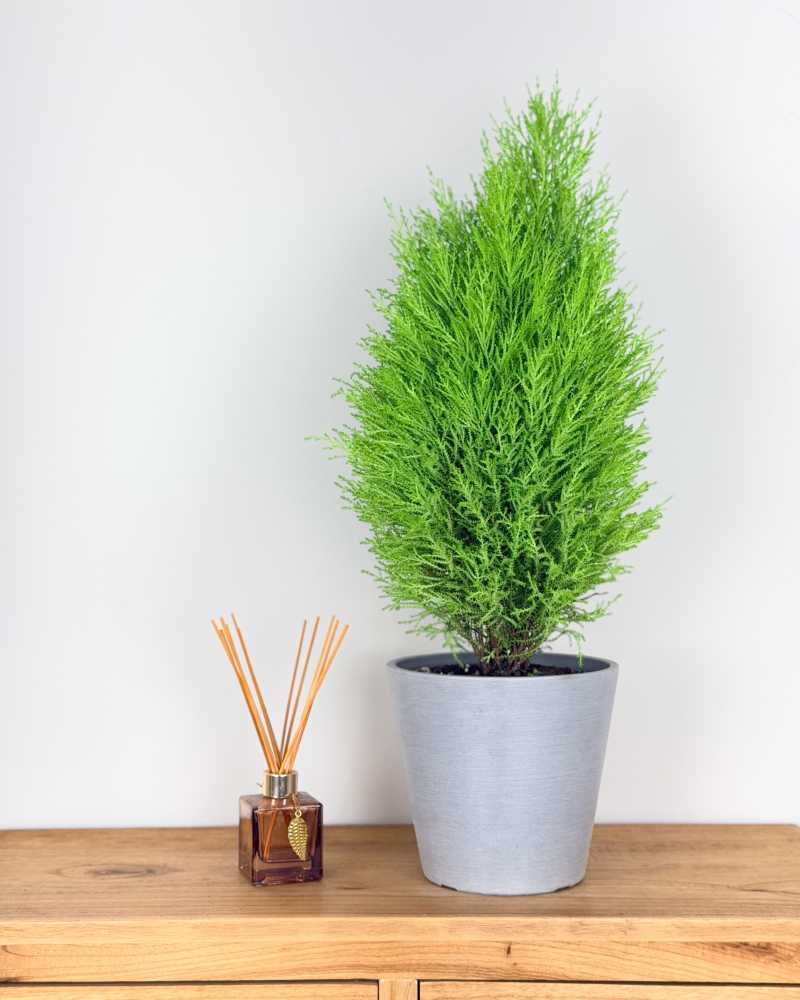
Description
Caring for your Lemon Cypress
Taking good care of any plant is essential to ensure it grows appropriately and thrives. You need to take care of several things, such as the amount of water you need to give the plant, the best way to propagate it, and the kind of fertilizer you need to use. Here is a complete care guide you can use.
Light
This plant requires plenty of bright, direct sunlight to maintain its signature golden-chartreuse color and compact, conical form. It thrives best when receiving at least 5 to 6 hours of direct sun daily. If kept indoors, place it directly in front of your sunniest south- or west-facing window. Insufficient sunlight will cause the foliage to lose its vibrant yellow-green brilliance, turning a dull pale green, while the inner branches become thin, leggy, and sparse.
Soil
Lemon Cypress requires a loose, fast-draining potting mix that allows excess moisture to run off freely while retaining light, consistent dampness. A blend of high-quality potting soil, coarse sand, and perlite or pumice creates an ideal growing medium. Avoid dense, poorly draining garden soils or heavy peat mixes, as compacted ground restricts oxygen to the roots and drastically increases the risk of fungal issues.
Water
It is vital to give your Lemon Cypress a balanced amount of water, as moisture consistency is the most critical factor in keeping it healthy. Unlike many other conifers, the Lemon Cypress does not tolerate drying out completely. If the root ball dries out entirely, the foliage will quickly become crispy, turn brown, and cannot be revived. Conversely, leaving the plant sitting in standing water will quickly suffocate the roots. Keep the soil evenly moist like a wrung-out sponge. Check the soil frequently with your finger; as soon as the top inch feels dry, give it a deep, thorough watering until water drains from the bottom. Water requirements will increase during hot summer months and decrease during the cooler winter rest period.
Fertilizer
The Lemon Cypress is a moderate feeder during its active growth period. You can apply a balanced, water-soluble evergreen or general houseplant fertilizer diluted to half strength once a month throughout spring and early summer. Alternatively, apply a balanced slow-release granule fertilizer once at the start of spring. Stop feeding entirely during late autumn and winter when growth naturally slows down.
Common Issues
If you do not take good care of your Lemon Cypress, it may face issues such as needle browning, pest infestations, and fungal complications. Let’s look at all the common problems you must be aware of.
Pests
Spider mites are the most common and persistent pests to target Lemon Cypress, particularly in warm, dry indoor environments with low humidity. Aphids and scale insects can also occasionally attach themselves to the inner stems. If infested, you may notice fine, dusty webbing among the needles, followed by yellowing and premature shedding of the foliage. To eradicate pests, treat the entire plant thoroughly with insecticidal soap or horticultural neem oil spray, paying close attention to the dense inner stems and lower branches.
Disease
Root rot is the most dangerous disease affecting Lemon Cypress, almost always triggered by overwatering, poor drainage, or allowing the container to sit in a saucer of water. Once root rot takes hold, branches will turn dull, limp, and brown from the interior outward. Additionally, fungal needle blight or canker can develop if the foliage remains wet in stagnant air. Always water at the base of the plant to keep the foliage dry, and ensure adequate airflow around the container.
Pruning
This plant naturally develops a neat, symmetrical conical shape, but it responds exceptionally well to light pruning. You can gently shear the outer tips in late spring or mid-summer to maintain a tight conical or spiral topiary silhouette and encourage bushier growth. Always avoid cutting deeply back into old, woody stems devoid of green foliage, as old wood will not produce new buds. Regularly clear out any brown or dead needles from the interior of the tree to promote optimal airflow.
Propagation
You can propagate Lemon Cypress by taking semi-hardwood cuttings in late summer. Cut 4- to 5-inch shoots from healthy new growth, strip the lower foliage, and dip the base in rooting hormone powder. Insert the cuttings into a pre-moistened mixture of sand and perlite. Cover them with a clear plastic dome to preserve high humidity, place them in bright indirect light, and keep the medium damp until root systems develop over several weeks.