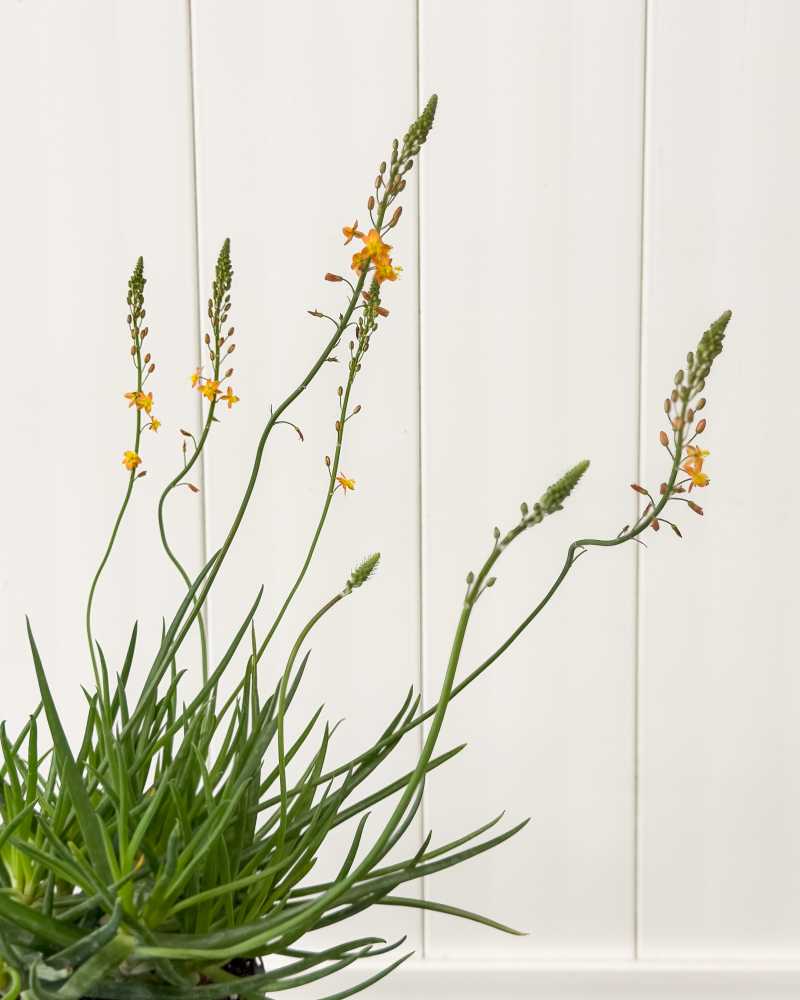
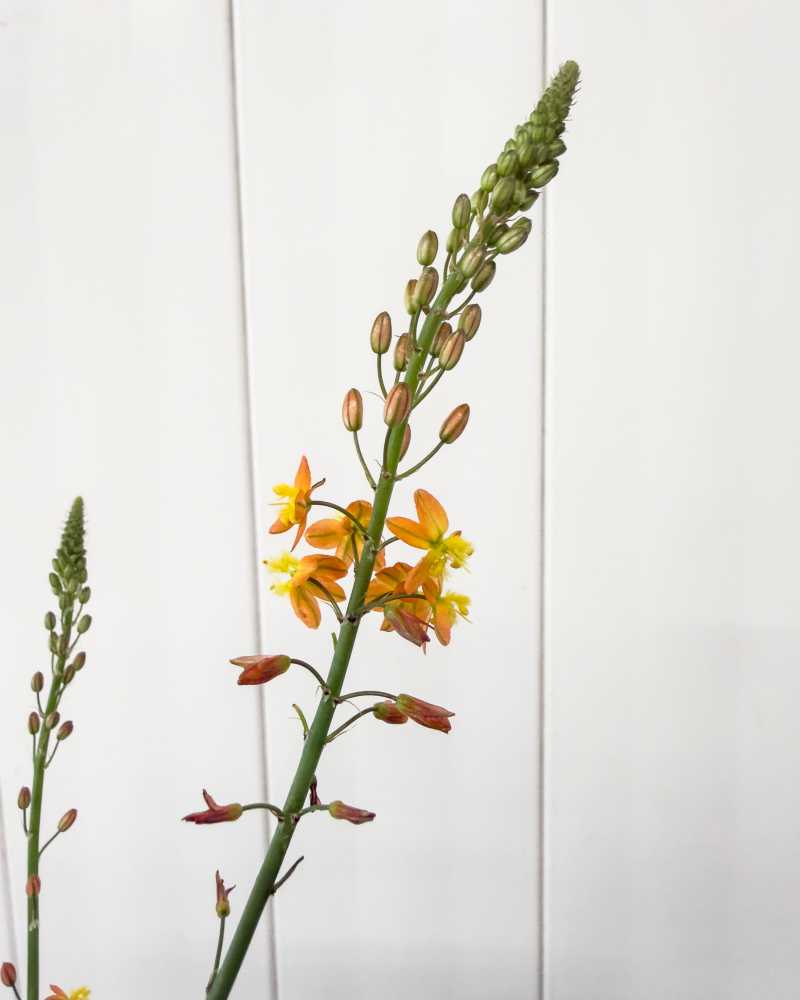
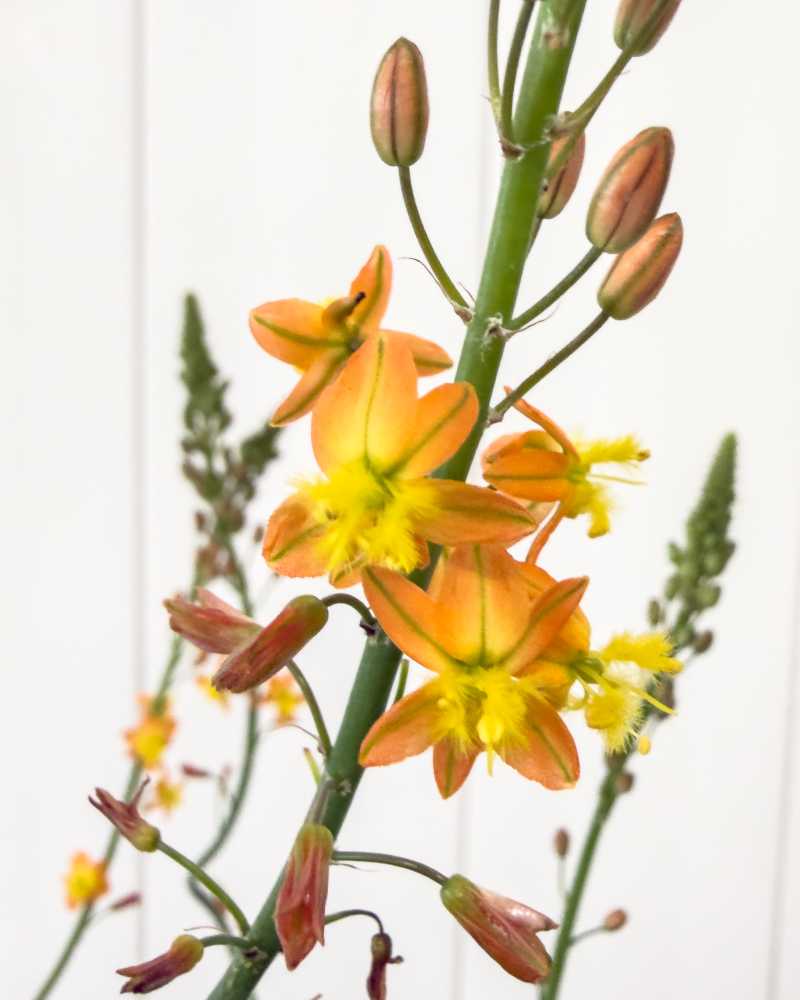
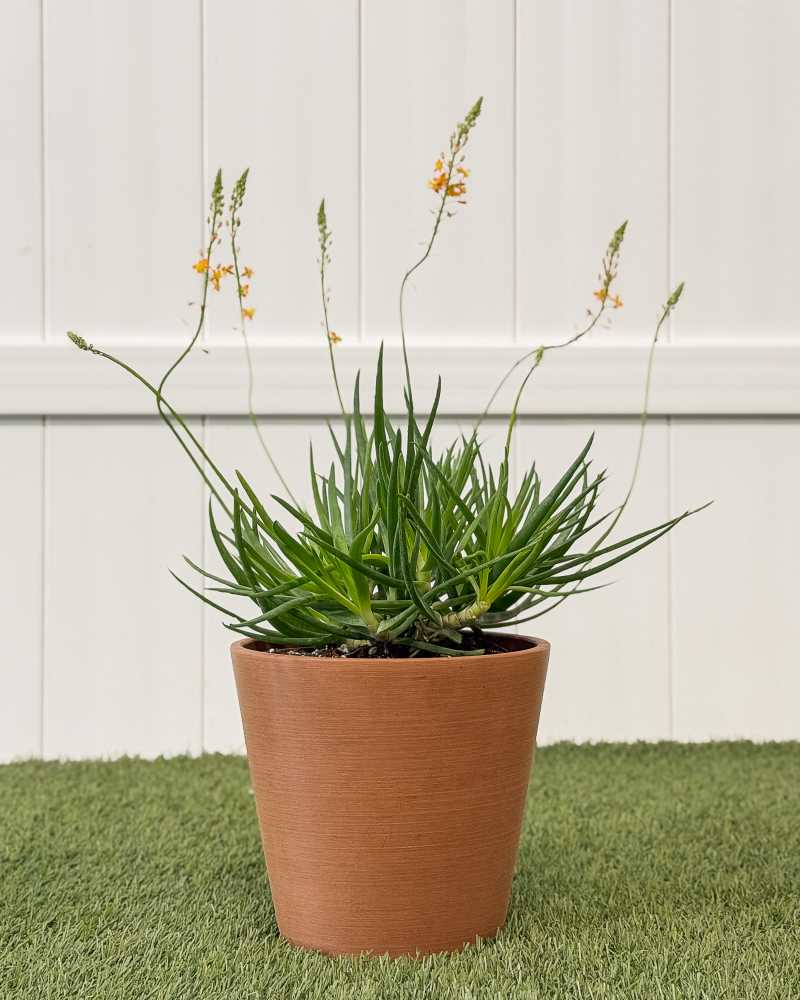
Description
Caring for your Bulbine Orange
Light
This plant loves the heat and performs best in full sun. To ensure a continuous blooming cycle and to keep the foliage upright and tight, it needs at least 6 to 8 hours of direct sunlight daily. While it can tolerate partial shade, too much shade will result in fewer flower spikes and a more “floppy” appearance.
Soil
The most important factor for Bulbine is excellent drainage. It thrives in sandy, loamy, or even rocky soils. If planting in a container, use a succulent or cactus mix. It is very adaptable to soil pH but cannot tolerate “wet feet,” so avoid heavy clay soils that retain water for too long.
Water
Bulbine is exceptionally drought-tolerant once established. During its first growing season, water it regularly to help the root system develop. Once established, it requires very little supplemental water. In fact, overwatering is the most common mistake with this plant. Allow the soil to dry out completely between waterings.
Fertilizer
It is a light feeder and generally does not require much fertilizer. A light application of a balanced, slow-release fertilizer in early spring is more than enough to support its growth. Avoid high-nitrogen fertilizers, as they can promote foliage at the expense of its beautiful orange flowers.
Common Issues
The main issue owners face is root rot, which is almost always a result of overwatering or poor-draining soil. If the leaves start to feel mushy or turn yellow at the base, reduce watering immediately.
Pests
Bulbine is remarkably pest-resistant. Occasionally, it may attract scale or mealybugs if kept in crowded, low-airflow conditions, but this is rare. Its sap and succulent nature make it unappealing to most common garden pests.
Disease
It is virtually disease-free. The only concern is fungal issues that arise from excessive moisture or high humidity with poor air circulation. Keeping the foliage dry when watering will prevent any potential spotting.
Pruning
Maintenance is simple: deadheading (removing spent flower stalks) will encourage the plant to produce new blooms more quickly. You can also trim back the foliage in late winter if it becomes too crowded or to rejuvenate the plant for the spring.
Propagation
Propagation is very easy through clump division. As the plant grows, it forms offsets or “pups.” Simply dig up a section of the plant with roots attached and replant it elsewhere. It can also be grown from seed, though division is much faster.
Potting / Repotting
Because it spreads through clumping, you may need to repot or divide your Bulbine every 2 to 3 years. When repotting, choose a container that is 2 inches wider and ensure it has large drainage holes. Use a gritty, well-draining soil mix to keep the roots healthy.