
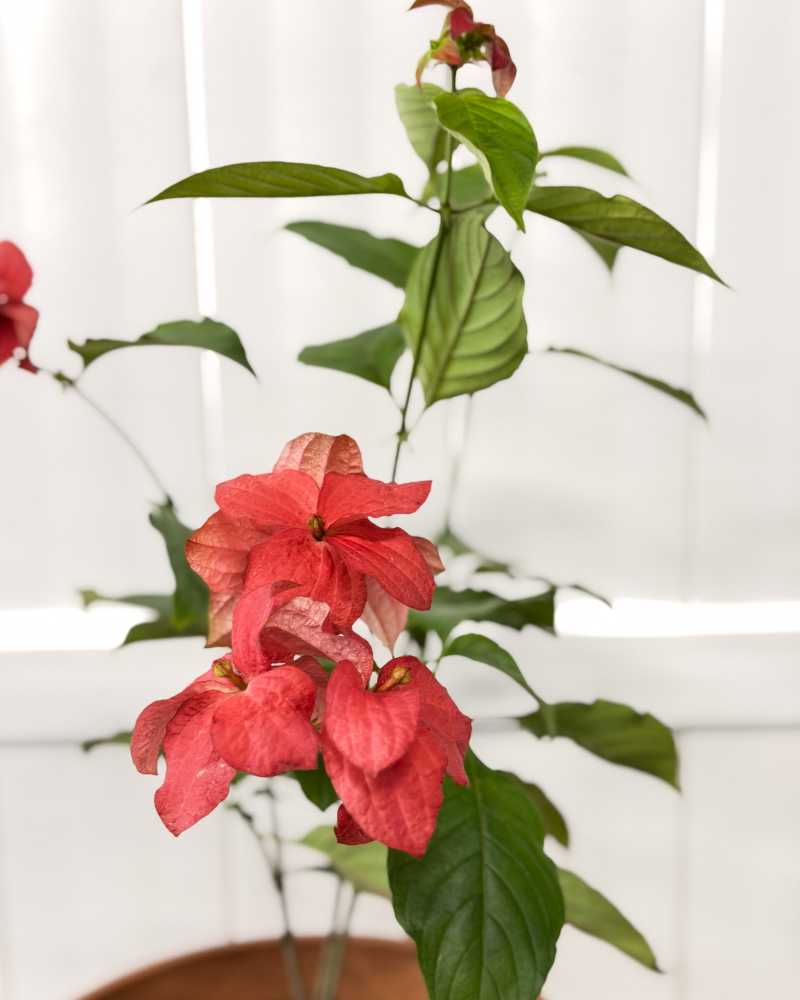
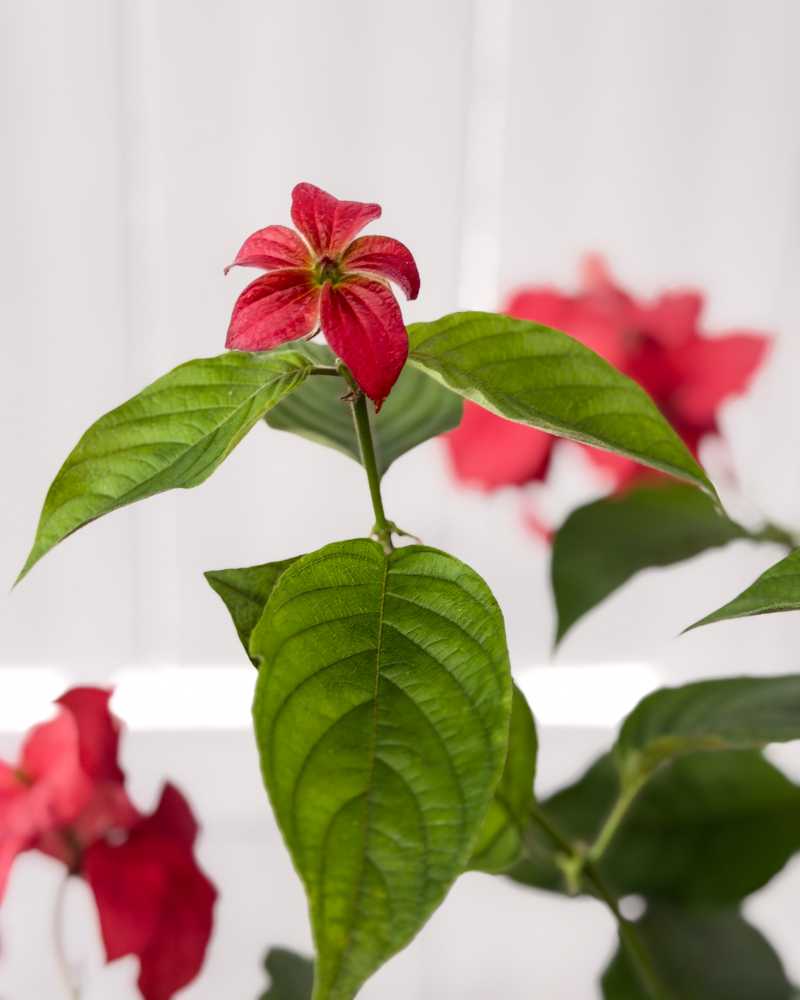
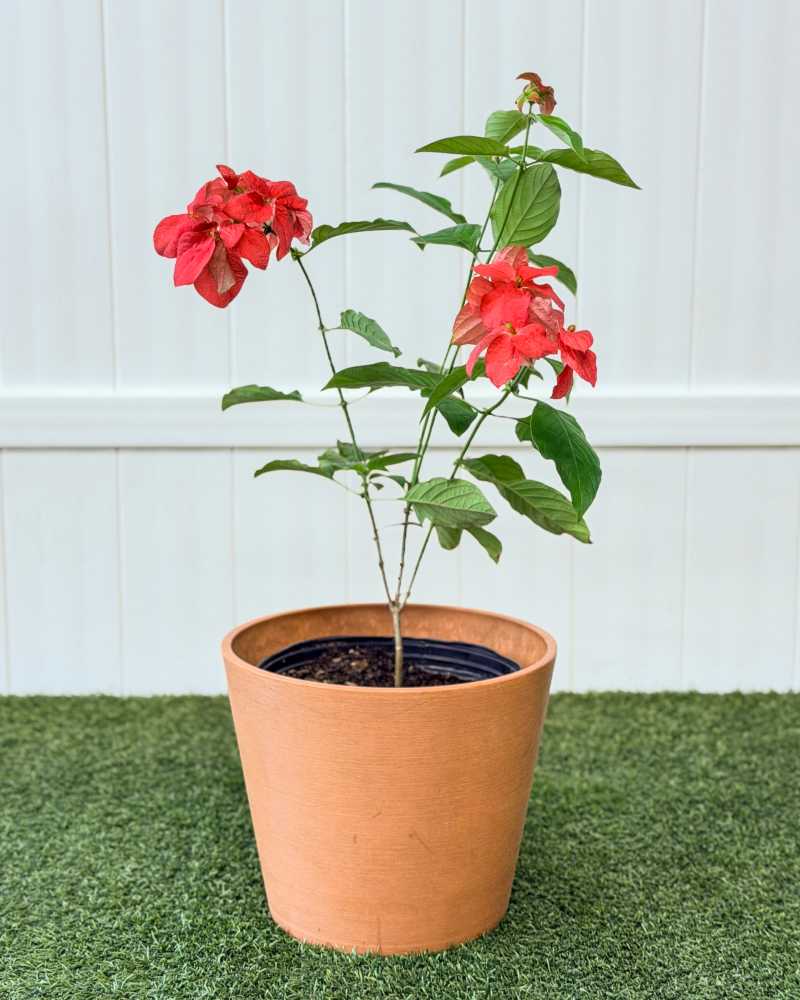
Description
Caring for your Mussaenda Red
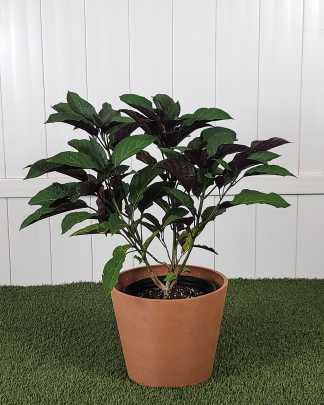
Mussaenda erythrophylla, commonly known as Red Mussaenda or Ashanti Blood, is a stunning tropical evergreen shrub belonging to the Rubiaceae family. Native to West Africa, it is renowned for its spectacular displays of large, vivid crimson-red, petal-like sepals (bracts) that surround small, star-shaped creamy white flowers. Fast-growing and vibrant, it thrives in warm, humid outdoor gardens or sunny patios, adding a brilliant, long-lasting splash of tropical color to the landscape.
Light
Thrives in full sun to partial shade. For the most abundant blooming and vibrant red color in its sepals, place the plant where it receives at least 6 to 8 hours of direct sunlight daily. While it can tolerate light shade, too little sun will result in sparse flowering and leggy growth.
Soil
Requires rich, well-draining soil that retains moisture. A mixture of loamy garden soil amended with compost or organic matter works best. If planting in containers, use a high-quality, fertile potting mix with good drainage to prevent waterlogging.
Water
Water regularly to keep the soil evenly moist, especially during the hot summer months. Allow the top 1 to 2 inches of soil to dry out between waterings, but do not let the root ball dry out completely, as this can cause wilting and dropping of bracts. Reduce watering slightly during the cooler winter months when growth slows.
Fertilizing
Feed every 2 to 4 weeks during the active spring and summer growing season using a balanced, water-soluble fertilizer or a bloom-boosting fertilizer (higher in phosphorus) to encourage prolific flowering. Pause or drastically reduce fertilizing during the winter dormancy period.
Pruning and Maintenance
Prune regularly after the main blooming cycle to encourage bushier growth, control the plant’s size, and promote more flowers, as blooms appear on new wood. Remove dead or crossed branches and pinch back young tips to shape the shrub. If grown in cooler climates, it must be protected from frost or brought indoors before temperatures drop.
Pest and Disease Management
Relatively resistant to major issues, but watch for common pests such as aphids, spider mites, mealybugs, and whiteflies. Treat any infestations promptly with insecticidal soap, neem oil, or horticultural oils. Ensure good air circulation around the foliage to prevent fungal issues like powdery mildew, and avoid overhead watering late in the day.


Stanley (verified owner) –
Plant received in good order. I am looking forward to planting it in my front yard. So far there are no issues.