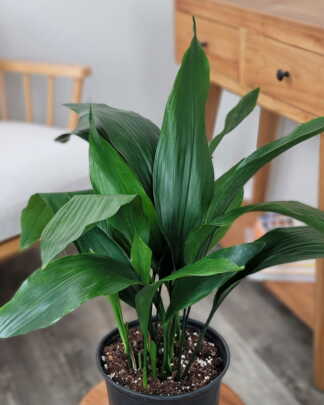
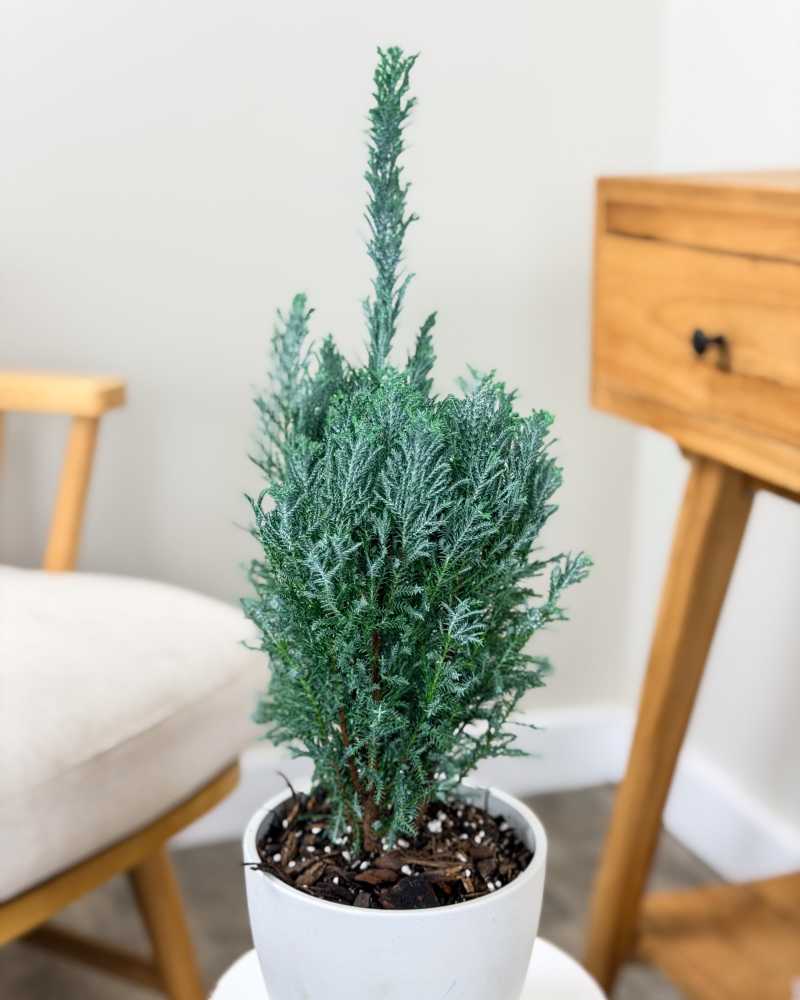
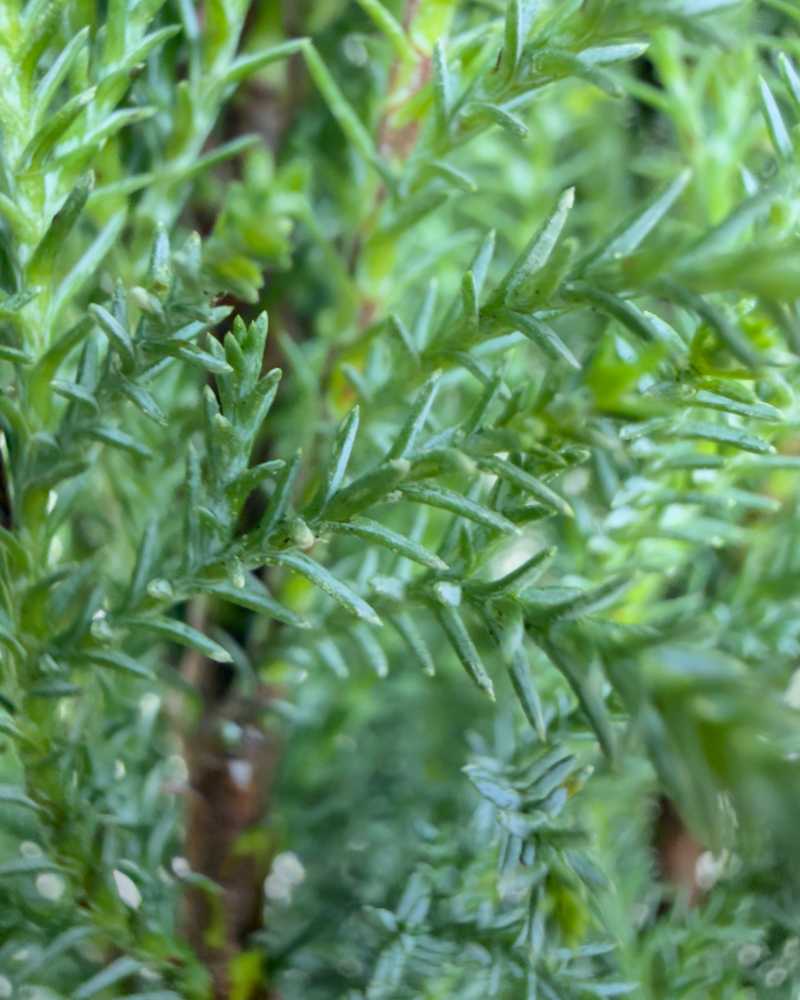
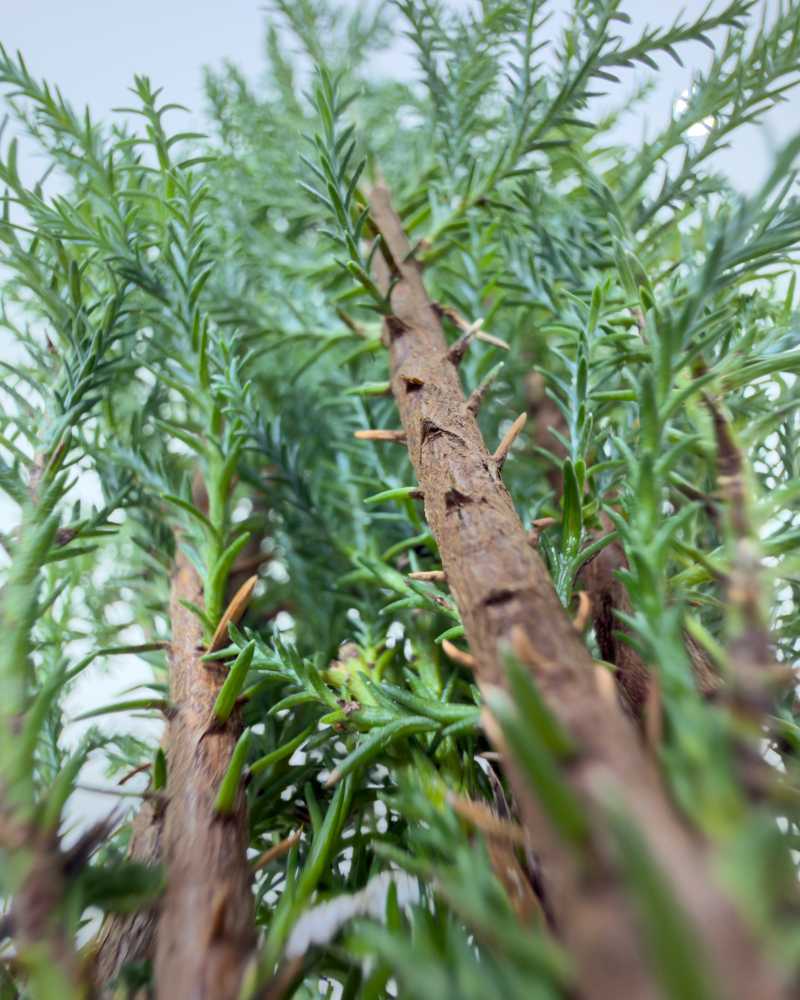
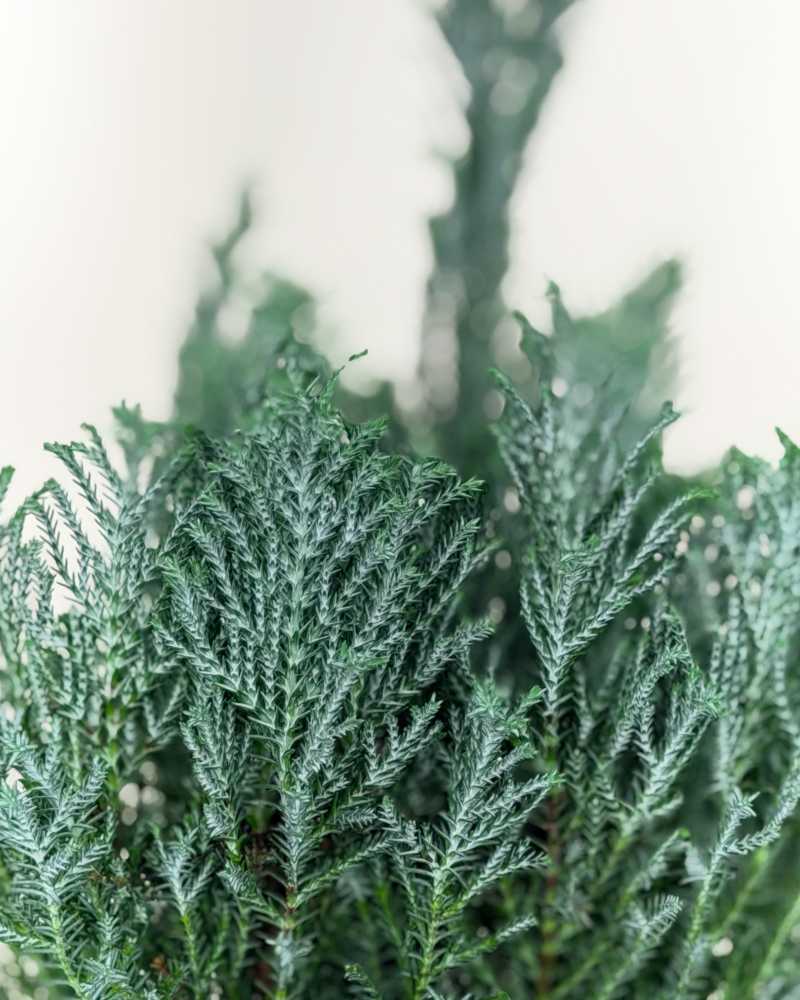
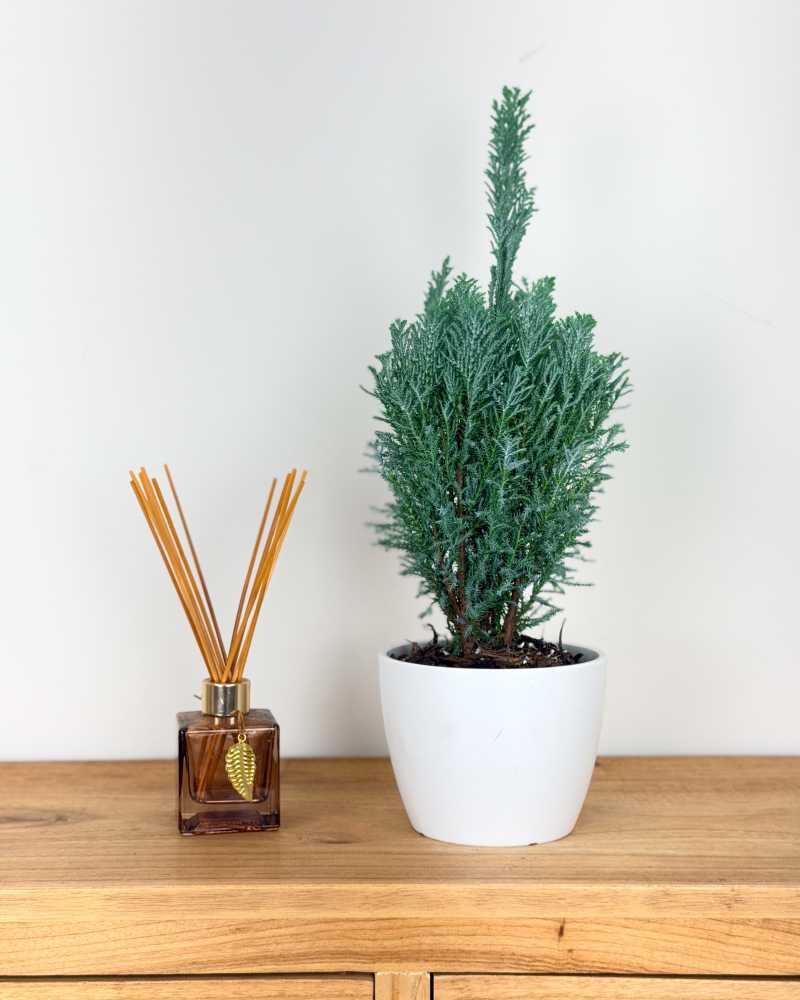
Description
Caring for your Lawson Cypress
Taking good care of any plant is essential to ensure it grows appropriately and thrives. You need to take care of several things, such as the amount of water you need to give the plant, the best way to propagate it, and the kind of fertilizer you need to use. Here is a complete care guide you can use.
Light
This plant thrives best in full sun to partial shade. To maintain its dense, vibrant foliage and healthy growth, it should receive at least 4 to 6 hours of direct or bright filtered sunlight daily. While it can tolerate light afternoon shade in hotter regions, placing it in too much shade will cause sparse foliage, slow growth, and dull needles. Make sure to set your plant in an open, bright location where it receives ample light throughout the day.
Soil
Lawson Cypress enjoys a rich, well-draining soil that retains moderate moisture without becoming soggy. A well-balanced mixture of potting soil, peat moss, perlite, and coarse sand works exceptionally well. Experts recommend avoiding heavy, dense clay soils as they retain excess moisture and restrict airflow around the root system. A slightly acidic to neutral soil pH is ideal for optimal nutrient absorption.
Water
It is vital to give your Lawson Cypress a balanced amount of water. While mature, established outdoor trees have moderate drought tolerance, container-grown plants are sensitive to moisture fluctuations. If you do not give the plant enough water, its feathery fronds will turn brittle and dry out. If you overwater it, the roots will quickly suffocate and rot, which can cause the plant to decline rapidly. The soil should remain evenly moist, but never waterlogged. Check the moisture by inserting your finger 1 to 2 inches into the soil; if it feels dry, water thoroughly until it drains out of the bottom. Increase watering frequency during hot summer days, and scale back during winter dormancy.
Fertilizer
The Lawson Cypress requires regular feeding during its active growth period in the spring and early summer. You can apply a balanced, slow-release evergreen fertilizer or an all-purpose organic plant food once in early spring as new growth starts. It is best to avoid applying fertilizer during late fall and winter, as feeding during dormancy can stimulate tender new shoots vulnerable to frost damage.
Common Issues
If you do not take good care of your Lawson Cypress, it may face issues such as pest infestations and fungal diseases. Let’s look at all the common problems you must be aware of.
Pests
Spider mites are the most common pests to target the dense, feathery foliage, particularly in hot, dry conditions. Other pests that may appear include scale insects, cypress aphids, and bagworms. Infested plants may show fine webbing between branches, yellowing needles, and premature needle drop. To control pest infestations, thoroughly spray the foliage with insecticidal soap or horticultural neem oil, ensuring you coat both the outer branches and inner stems.
Disease
Root rot caused by Phytophthora fungi is the most critical threat to the Lawson Cypress. If you overwater the plant or plant it in poorly draining soil, the roots will rot, causing the foliage to turn dull gray-green, wilt, and die from the bottom up. To avoid root rot, ensure containers have functional drainage holes and water only when the topsoil is dry. Additionally, fungal needle blight or twig cankers can cause individual branches to turn brown. To manage this, prune away diseased branches with sterilized tools and avoid overhead watering that keeps the foliage continuously wet.
Pruning
This plant does not require frequent pruning because it naturally maintains an attractive, symmetrical pyramidal form. All you need to do is keep an eye out for dead, broken, or diseased branches and remove them promptly. Lightly shear the outer foliage in late spring if you wish to maintain a specific height or shape, but avoid cutting deep into old, bare wood, as it will not regenerate new green growth.
Propagation
You can propagate Lawson Cypress by taking semi-hardwood cuttings in late summer or hardwood cuttings during late autumn. Take 4- to 6-inch branch tip cuttings, remove the lower needles, and dip the cut base in rooting hormone. Plant the cuttings in a moist mix of peat and perlite, maintain high humidity, and keep them in bright, indirect light until roots establish.