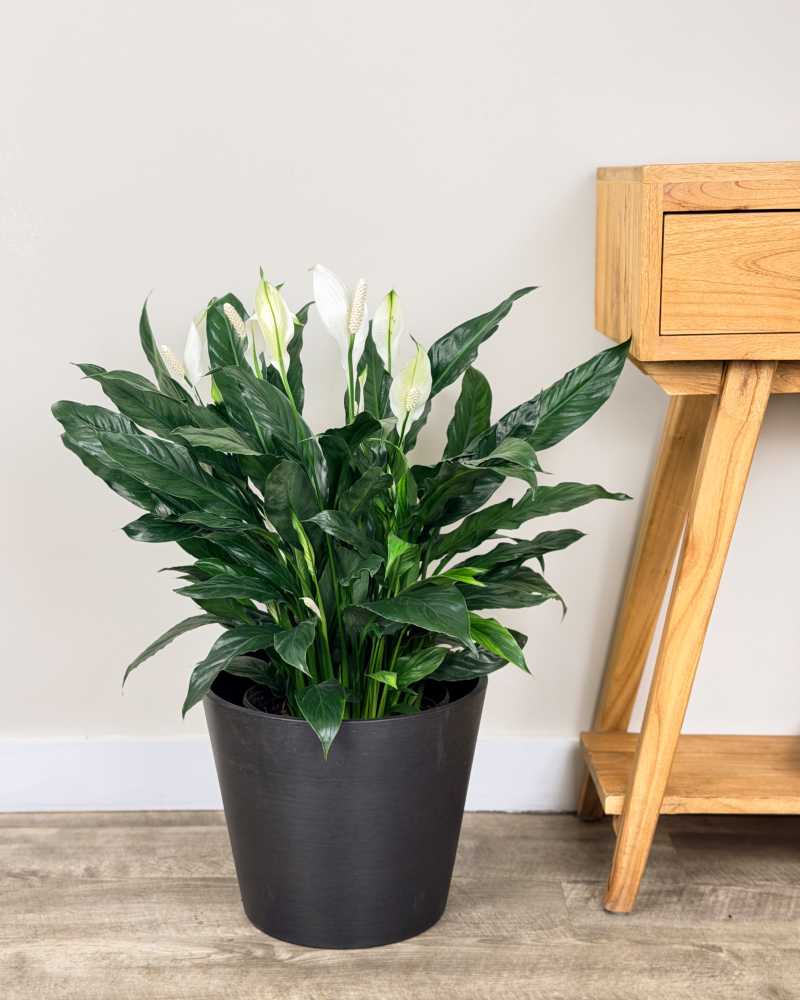
Description
Caring for your Spathiphyllum (Peace Lily)
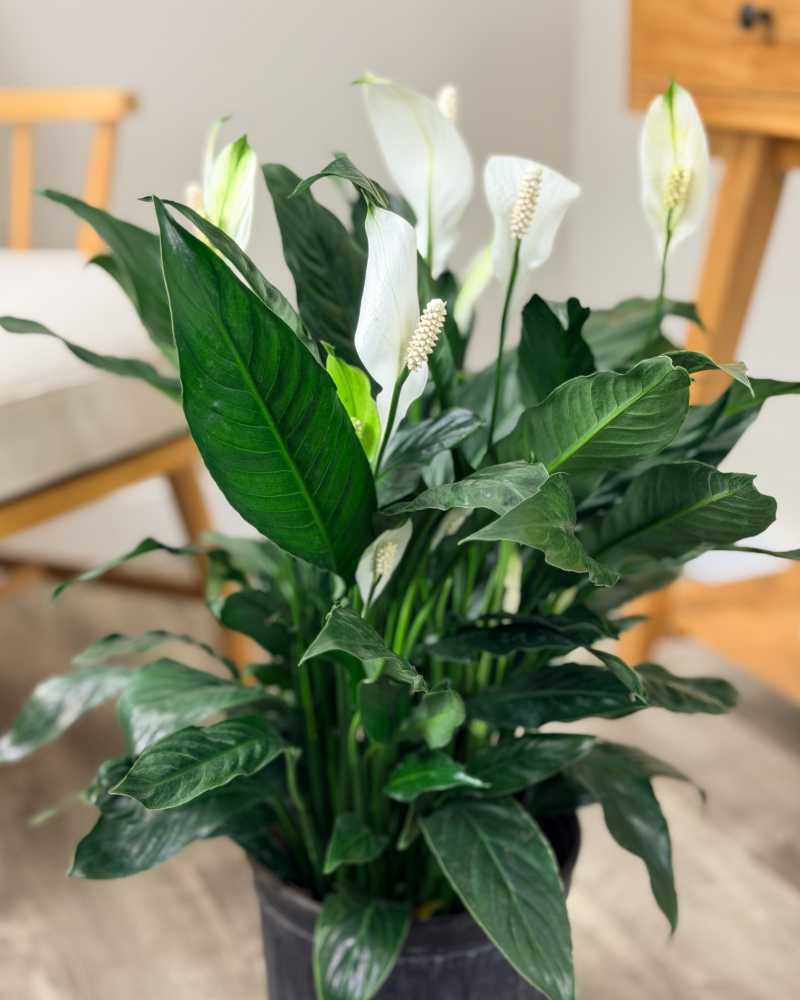
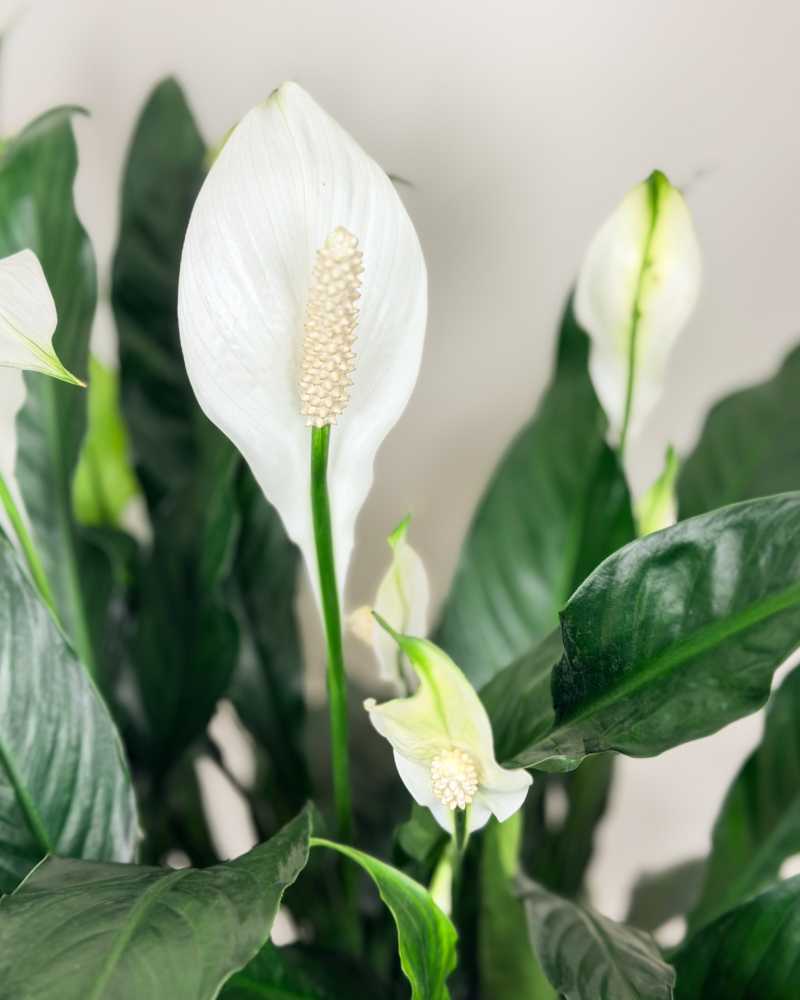
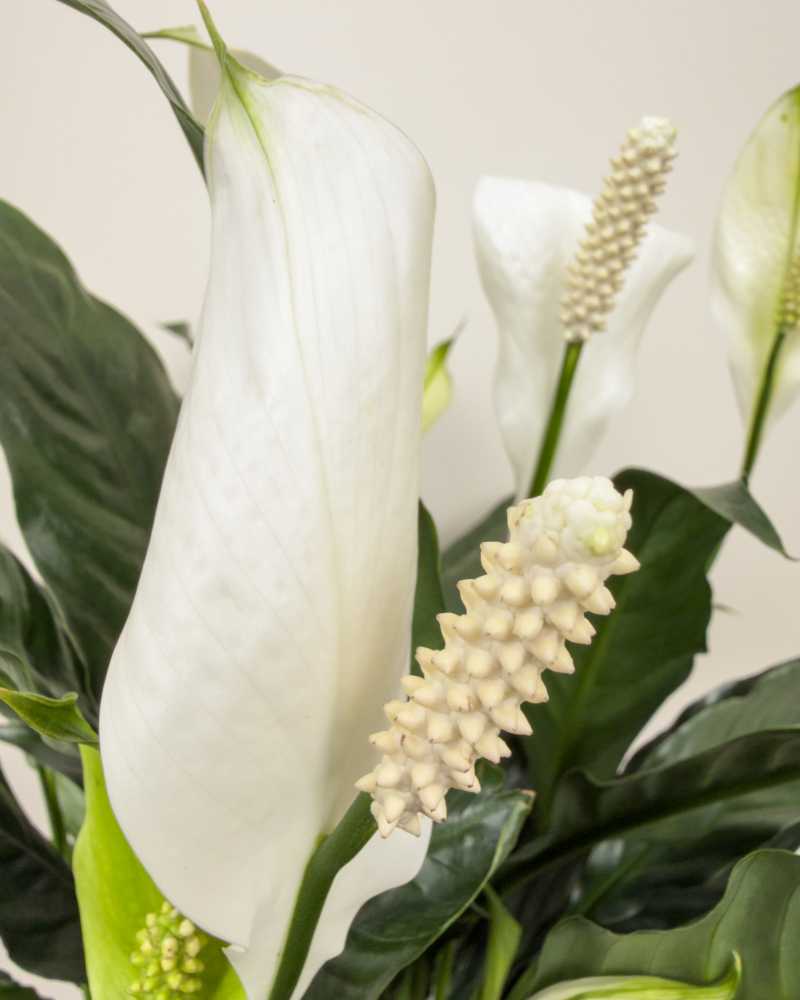
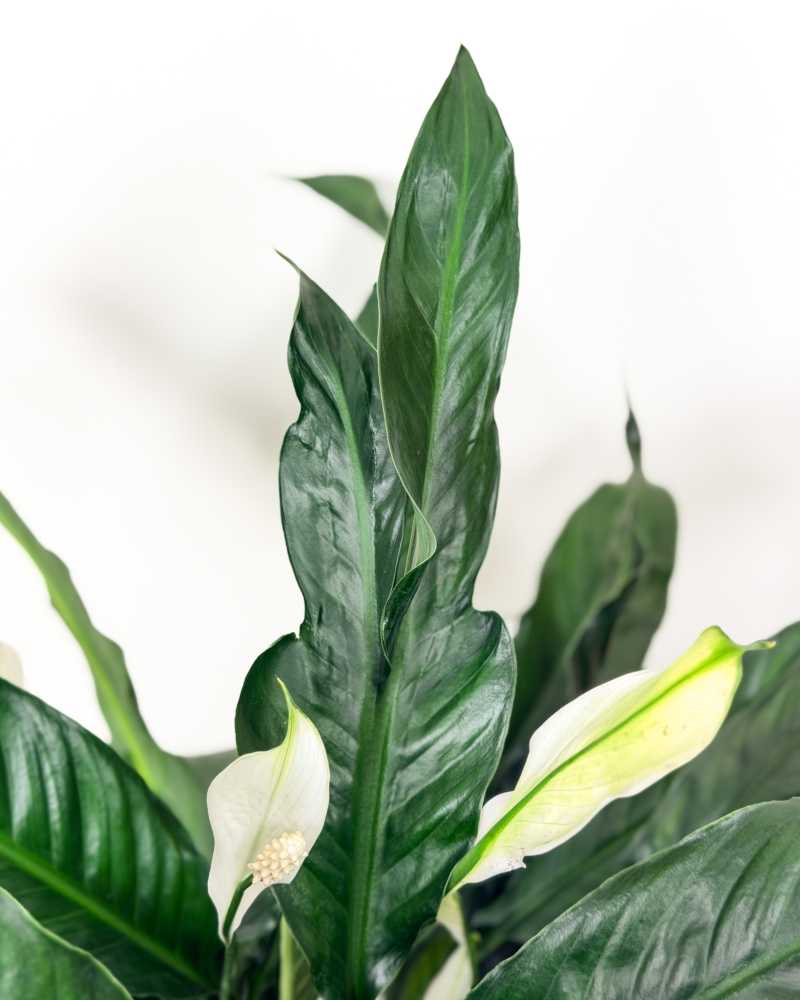
Spathiphyllum, universally known as the Peace Lily (and frequently referred to or searched as “Peach Lily”), is an iconic indoor staple celebrated for its deep emerald, glossy foliage and elegant, sail-like white spathes. Renowned for its resilience, air-cleaning capabilities, and dramatic way of signaling when it needs hydration, this classic tropical plant brings a calming, refined aesthetic to any living room, office desk, or shaded patio.
Light
Thrives best in medium to bright, indirect sunlight. While it is famous for surviving in lower light conditions, keeping it in filtered bright light encourages significantly more blooms and faster growth. Protect the foliage from harsh, direct sunlight, which can quickly scorch the leaves and bleach the white spathes.
Soil
Prefers a loose, aerated, and moisture-retentive potting mix rich in organic material. A standard indoor potting soil amended with perlite, peat moss (or coco coir), and a small amount of fine orchid bark creates the ideal balance—retaining needed moisture while allowing excess water to drain away freely.
Water
Keep the soil evenly moist, but never soggy. The Peace Lily is a famous “drama queen” that visibly droops its leaves when thirsty, perking right back up shortly after being watered. Water thoroughly when the top inch of the soil feels dry to the touch, and empty the drainage tray to prevent standing water. Sensitive to fluoride, chlorine, and minerals found in municipal tap water, it benefits greatly from filtered, distilled, or rainwater to avoid browning leaf tips.
Fertilizer
Feed once a month during spring and summer using a balanced, water-soluble houseplant fertilizer diluted to half or quarter strength. Avoid over-fertilizing, as excess mineral salts will cause leaf burn. Suspend feeding entirely during the fall and winter months.
Pruning and Maintenance
Wipe the broad leaves down periodically with a soft, damp cloth to remove dust and maximize light absorption. As individual blooms fade and turn green or brown, trim the flower stalks as close to the base of the plant as possible. Snip away any older, yellowing leaves at the soil line to keep the plant neat and encourage vigorous new shoots.
Pest and Disease Management
Resilient and generally pest-resistant, but keep an eye out for mealybugs, scale, and spider mites, especially in drier indoor environments. Treat infestations early with insecticidal soap or neem oil. The most common threat is root rot from overwatering or poorly draining soil; ensure the container has functional drainage holes.
Potting / Repotting
Peace Lilies prefer being slightly root-bound to bloom reliably. Repot every 1 to 2 years in spring only when roots fill the pot or begin creeping out of the drainage holes. Step up to a container just 1 to 2 inches larger in diameter and refresh the surrounding soil.