Description
Caring for your Spathiphyllum ‘Maracay’
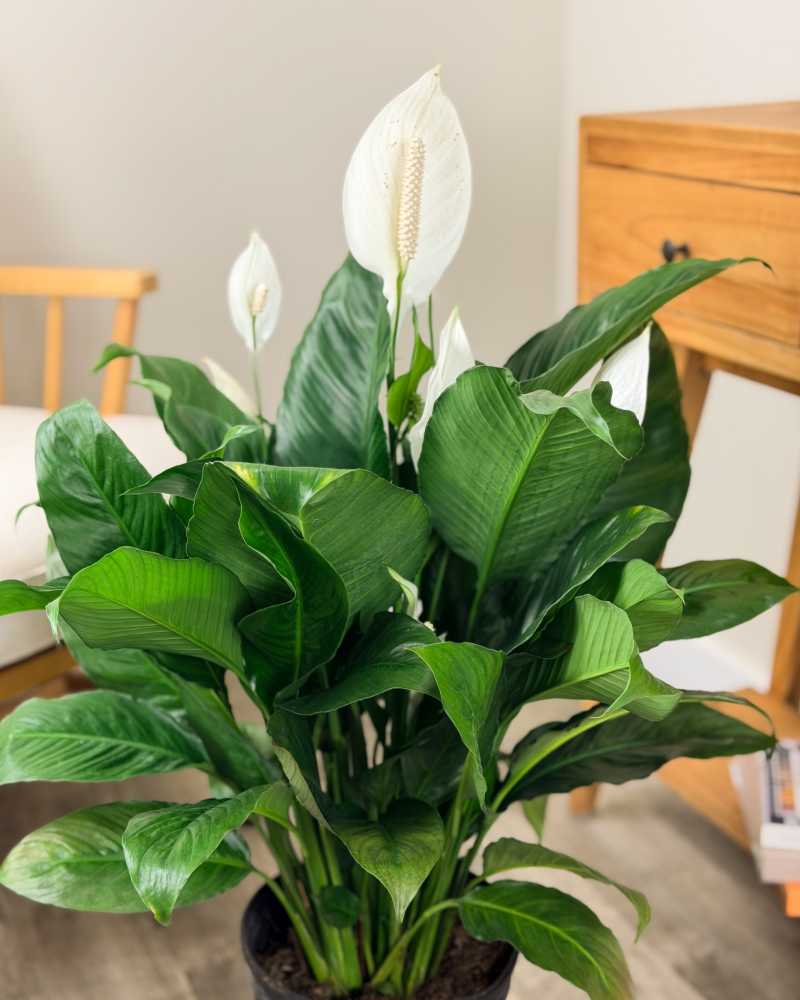
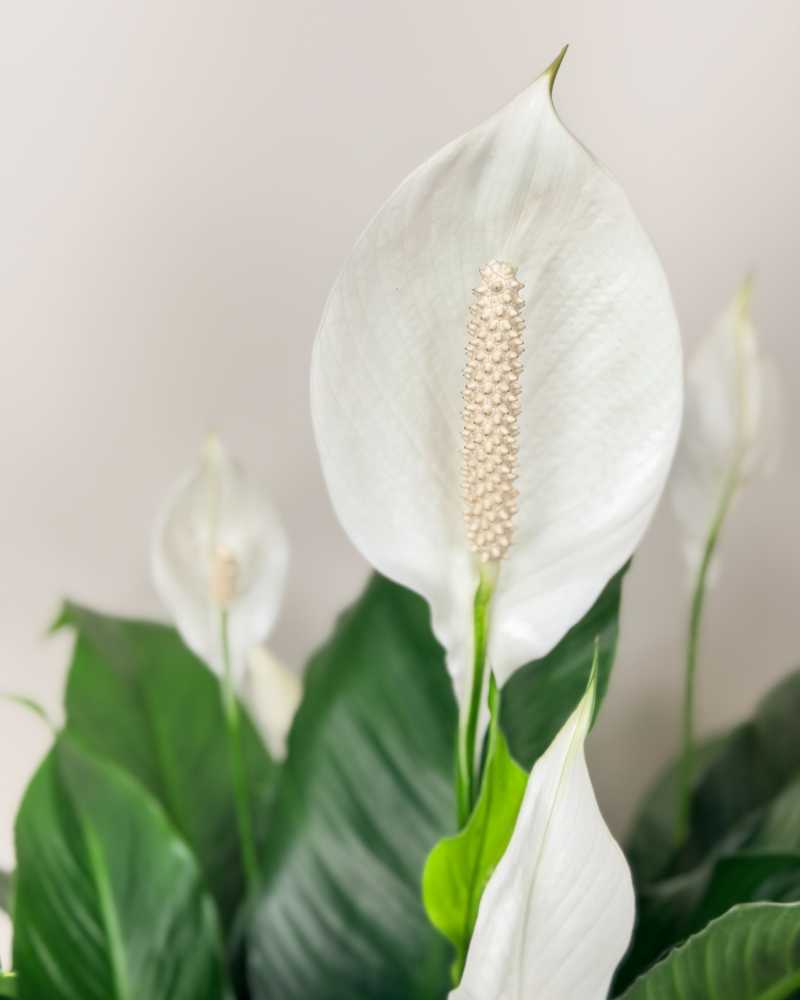
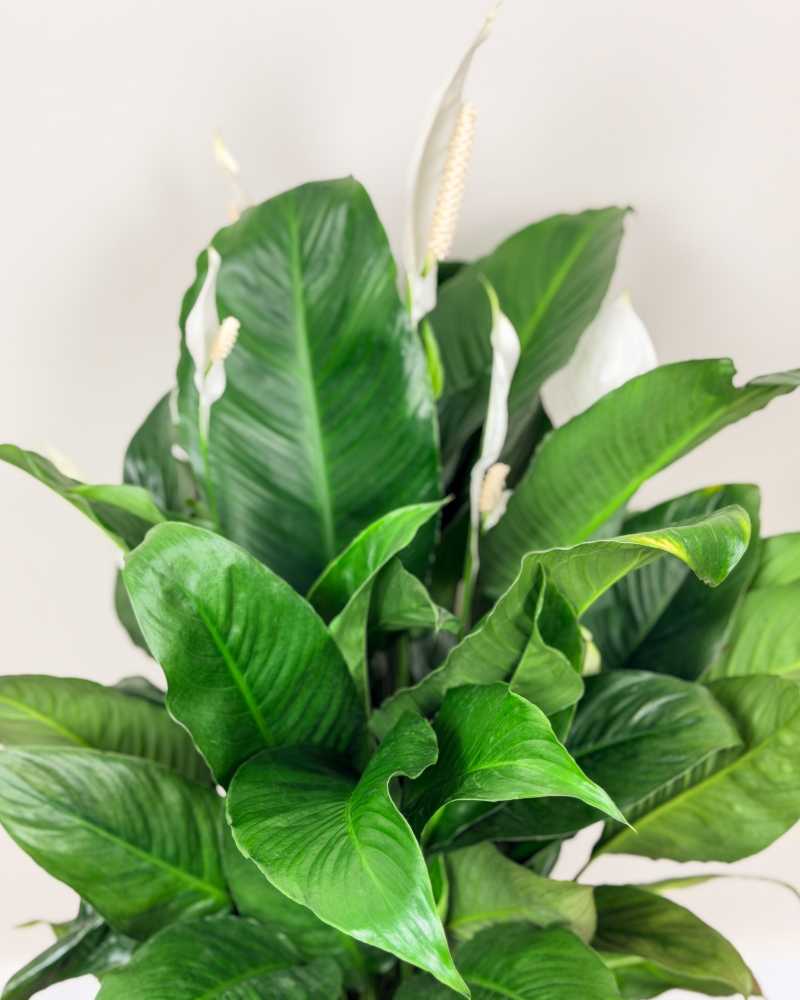
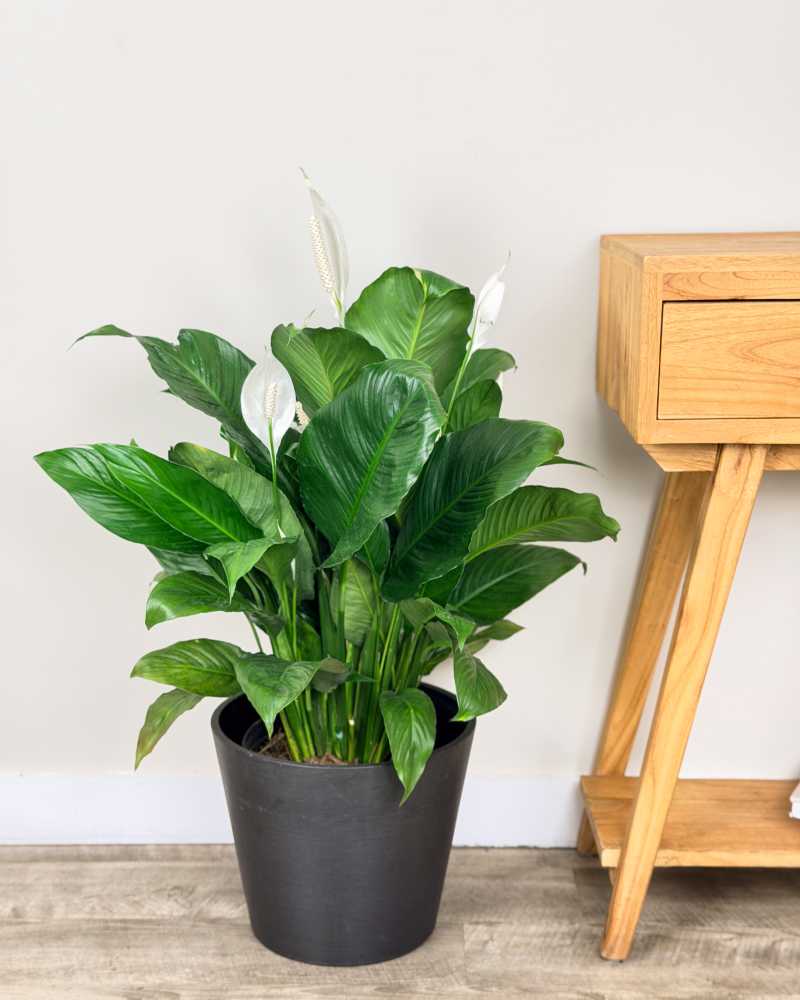
Spathiphyllum ‘Maracay’ is an impressive, broad-leaved Peace Lily cultivar celebrated for its lush, deeply corrugated dark-green foliage and striking pure-white spathes. Larger and more substantial than standard peace lilies, ‘Maracay’ acts as both an architectural floor plant and an elegant flowering accent. Highly regarded for its exceptional air-purifying capabilities, it brings an immediate sense of serenity, clean lines, and lush tropical density to any indoor environment.
Light
Thrives best in medium to bright, indirect sunlight. Bright, filtered light encourages frequent, long-lasting white blooms and keeps the deep green foliage vibrant. While it is famously tolerant of low-light conditions, flowering will slow down significantly if kept in dim spaces. Strictly avoid direct afternoon sunlight, which will bleach the broad leaves and scorch the delicate white spathes.
Soil
Requires an aerated, moisture-retentive, yet exceptionally well-draining potting mix rich in organic material. A blend of peat moss or coco coir, perlite, and fine horticultural bark provides the ideal moisture balance, allowing the roots to access consistent hydration without suffocating or sitting in waterlogged mud.
Water
Keep the soil consistently and evenly moist, but never waterlogged. As a dramatic communicator, the plant will visibly droop its leaves when it needs water, quickly rebounding once hydrated. Water thoroughly when the top inch of soil begins to feel dry to the touch, allowing excess water to drain out completely. Peace Lilies can be sensitive to excess minerals, salts, and chlorine in municipal tap water—using filtered, distilled, or rainwater helps prevent crispy brown leaf margins.
Fertilizer
Feed every 4 to 6 weeks during the active spring and summer growing season with a balanced, water-soluble houseplant fertilizer diluted to half-strength. Refrain from over-fertilizing, which can cause leaf tips to burn, and cease feeding entirely during the cooler fall and winter months.
Pruning and Maintenance
Wipe the broad, textured leaves regularly with a soft, damp cloth to remove dust, maximize light absorption, and deter pests. As blooms fade and turn green or brown, snip the flower stalks off cleanly at the base of the plant to redirect energy into fresh foliage and future flower production. Trim away any naturally aging lower leaves near the soil line.
Pest and Disease Management
Generally hardy, but occasionally susceptible to mealybugs, scale, and spider mites, particularly in dry indoor environments. Treat promptly with insecticidal soap or neem oil. The primary threat to Peace Lilies is root rot resulting from poor drainage or standing water in cachepots and saucers; always ensure proper drainage holes are clear.
Potting / Repotting
Repot every 1 to 2 years in spring when roots begin crowding the container or emerging from drainage holes. Choose a pot 2 to 3 inches wider with good drainage, refreshing the surrounding soil to supply fresh aeration and organic nutrients.