
Description
Caring for your Dracaena Lemon Lime (4-3-2-1 Cane)
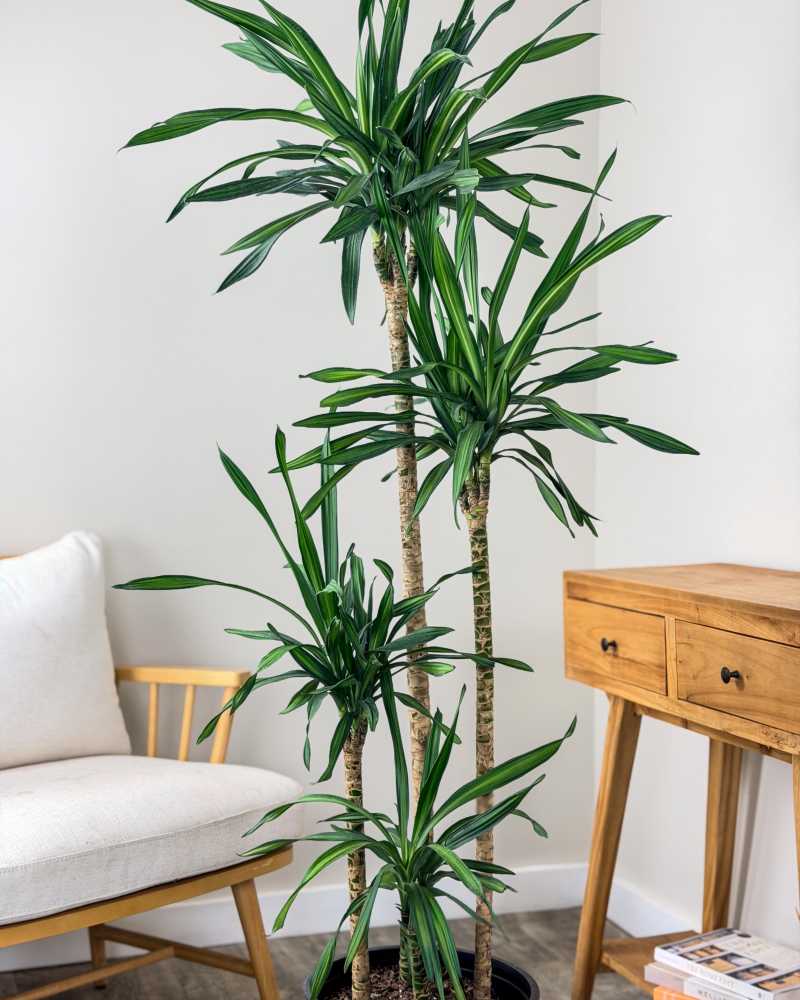
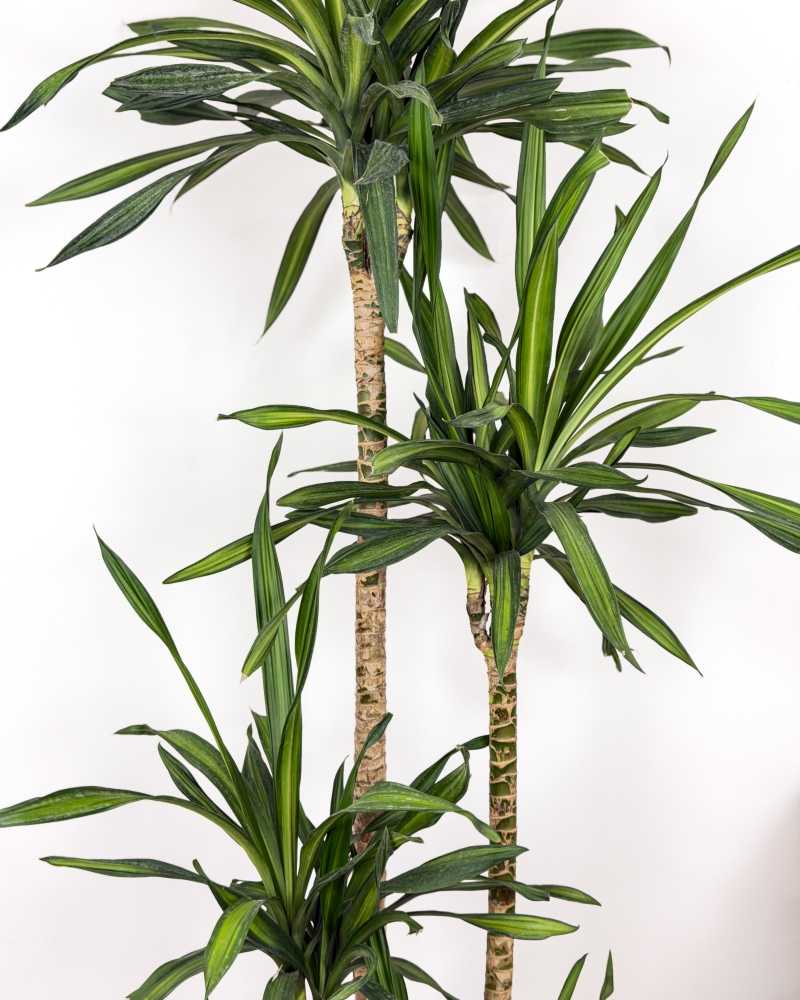
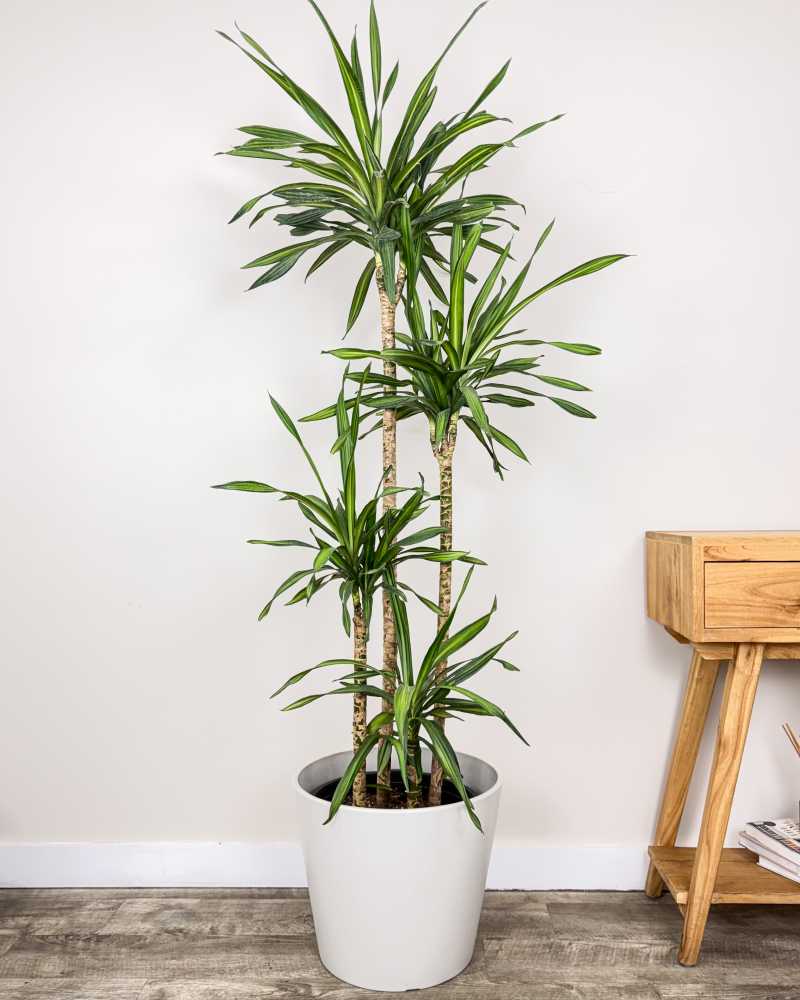
Dracaena fragrans ‘Lemon Lime’ in a 4-3-2-1 cane configuration is an impressive, tiered architectural statement plant. Featuring four staggered canes of varying heights planted in a single pot, it delivers a dense, multi-level canopy of vibrant foliage from base to crown. Its broad, arching ribbon-like leaves are brilliantly patterned with a rich emerald center, slender white accent stripes, and electric chartreuse margins, making it one of the brightest and most dynamic tropicals for modern indoor spaces.
Light
Thrives best in moderate to bright, indirect sunlight. Generous, filtered light is essential to keep the neon-lime variegation crisp, vibrant, and defined. Protect the foliage from harsh, direct sunlight, which will quickly scorch and bleach the tender leaves. While it can adapt to lower light settings, prolonged low-light exposure will cause the lime margins to fade to dull green and slow down new cane shoot development.
Soil
Requires a loose, aerated, and well-draining potting medium rich in organic matter. A standard peat-based potting soil amended with perlite and pumice works exceptionally well. Excellent drainage is vital to ensure oxygen flow to all four root zones and prevent root rot.
Water
Allow the top 50% of the soil to dry out completely before watering thoroughly. Water until liquid runs freely out of the drainage holes, and always empty the saucer so the canes never sit in standing water. Dracaenas are notably sensitive to fluoride, chlorine, and excess salts in municipal tap water, which can cause brown tips; using filtered, distilled, or rainwater keeps the leaf margins pristine. Reduce watering frequency in late fall and winter.
Fertilizer
Dracaenas are moderate feeders. Apply a balanced liquid houseplant fertilizer diluted to half-strength once a month during the active growing season (spring through summer). Do not fertilize during fall and winter when the plant is resting.
Common Issues
Brown leaf tips & margins: Often caused by sensitive reactions to chemicals in tap water, low indoor humidity, or under-watering.
Yellowing lower leaves or soft stems: Usually an indicator of overwatering or poor drainage. Ensure the soil is drying out adequately between waterings.
Pests: Keep an eye out for spider mites, mealybugs, and scale. Dust and wipe the broad leaves regularly with a damp cloth to deter pests and maintain maximum photosynthetic efficiency.
Pruning and Maintenance
It is completely normal for the lowest leaves on each cane to yellow and drop over time as new foliage crowns develop above. Gently peel or snip away aged lower leaves close to the cane to keep the stalks clean and architectural. If any individual cane grows too tall for your ceiling, you can cleanly prune the top; fresh leaf clusters will emerge from the nodes just below the cut.
Potting / Repotting
Because the 4-3-2-1 arrangement carries considerable top-heavy foliage, use a sturdy, heavy ceramic or terracotta container with reliable drainage holes to prevent tipping. Repot every 2 to 3 years in the spring, gently stepping up 2 to 3 inches in pot diameter with fresh, chunky potting mix.


