Description
Caring for your Philodendron Black Cardinal
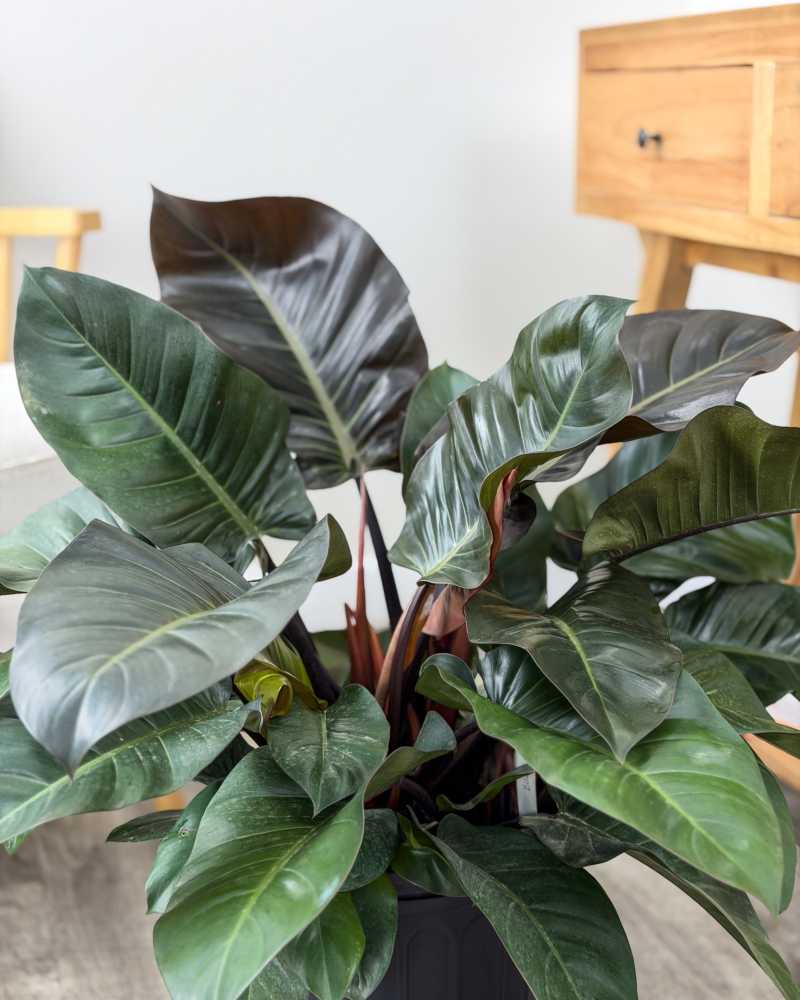
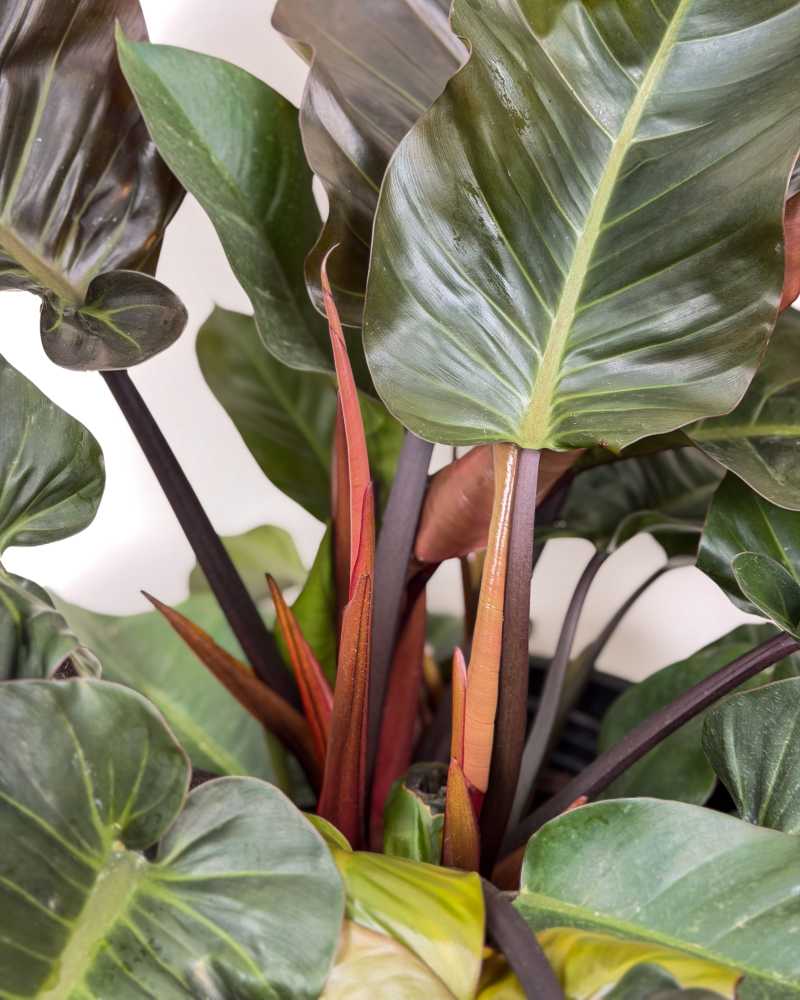
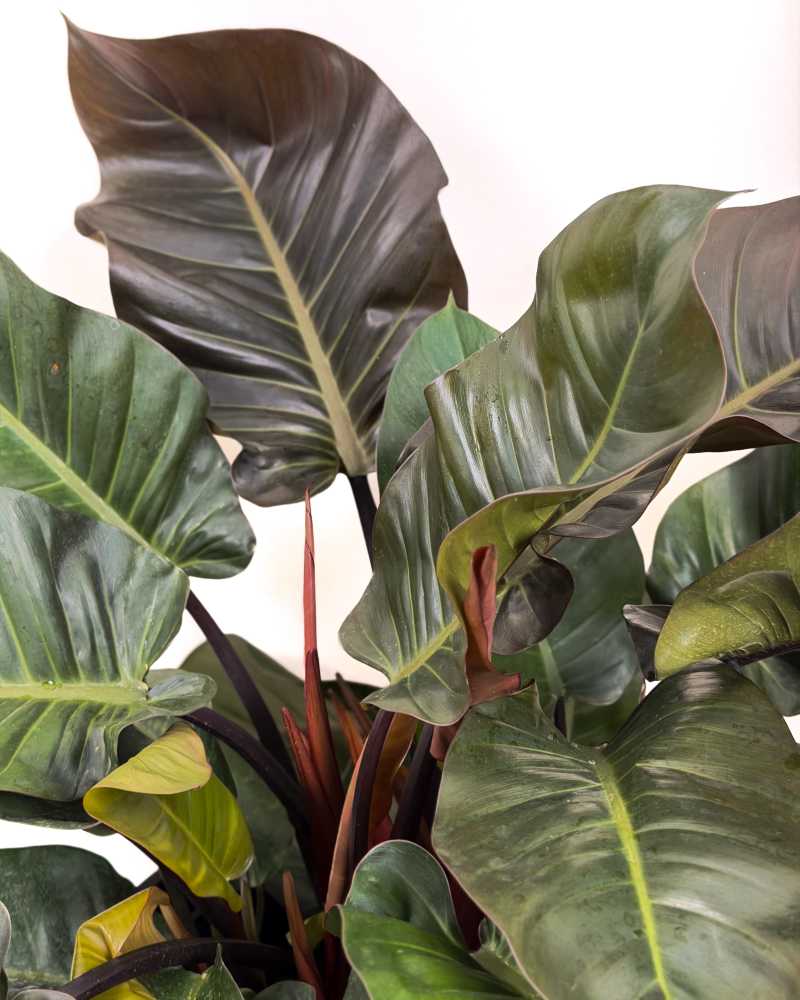
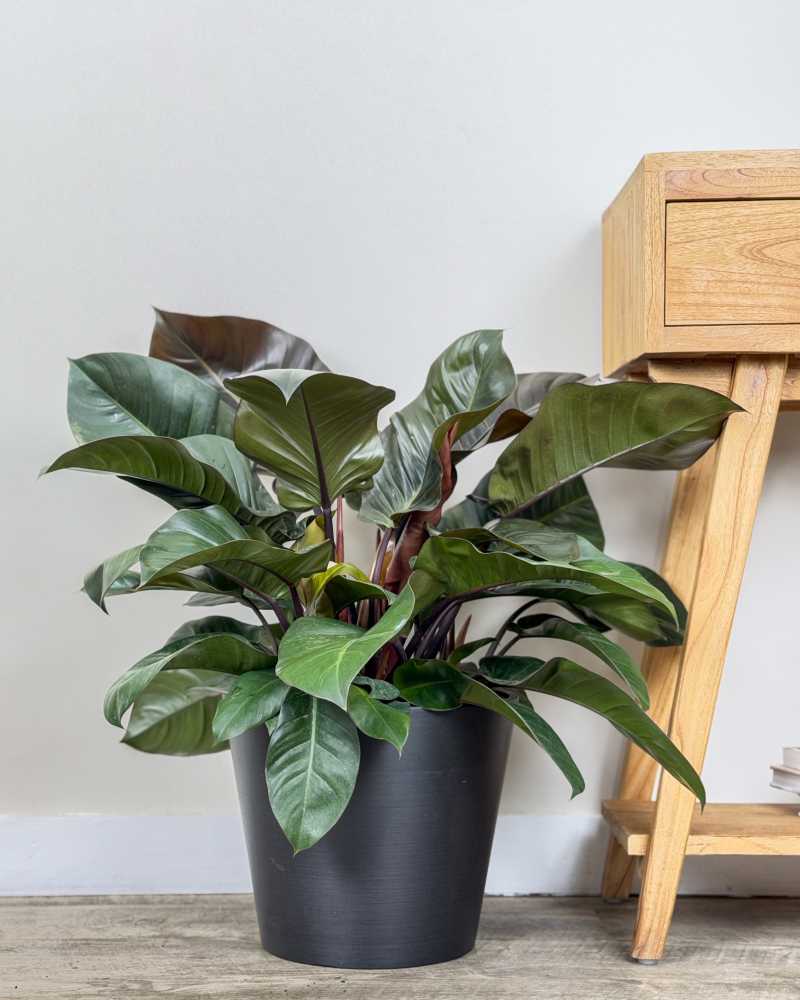
Philodendron ‘Black Cardinal’ is a stunning, self-heading hybrid in the family Araceae, renowned for its dramatic, ultra-dark foliage. New leaves emerge in deep, glowing burgundy-bronze tones before maturing into a rich, near-black chocolate green. Compact and architectural, this low-maintenance cultivar thrives in warm interior spaces with indirect sunlight, serving as a striking contrast piece for any indoor collection.
Light
Thrives in bright, indirect sunlight. Generous, filtered light is essential to sustain its deep, dark coloration and keep its growth compact. Protect the foliage from harsh, direct sunlight, which can burn the glossy leaves, while avoiding deep shade that can cause stems to stretch and dull its rich pigments.
Soil
Requires a chunky, highly aerated, and well-draining aroid substrate. A mixture of coarse orchid bark, perlite or pumice, coconut coir, and a small amount of quality potting soil works best. Excellent drainage is vital to ensure oxygen flow around the roots and prevent rot.
Water
Allow the top 2 to 3 inches of soil to dry out between waterings. Water thoroughly until liquid drains freely from the bottom of the pot, discarding any excess water in the saucer. Reduce watering frequency during late fall and winter as growth naturally slows down. Avoid leaving the pot sitting in standing water.
Fertilizing
Feed every 3 to 4 weeks during the active spring and summer growing season using a balanced, liquid houseplant fertilizer diluted to half-strength. Pause fertilizing during late fall and winter.
Pruning and Maintenance
Prune sparingly to remove older lower leaves at the base as they age. As a self-heading (non-vining) Philodendron, it maintains a neat, bushy form and does not require a moss pole or support. Periodically wipe the broad, glossy leaves with a damp cloth to remove dust and maintain its shine.
Pest and Disease Management
Watch for common pests such as mealybugs, spider mites, and scale, particularly along leaf stems and undersides. Treat any infestations promptly with insecticidal soap or neem oil. Root rot from overwatering or dense soil is the main health risk—ensure proper drainage and allow the substrate to dry moderately between waterings.