Description
Caring for your Cebu Blue Ghost
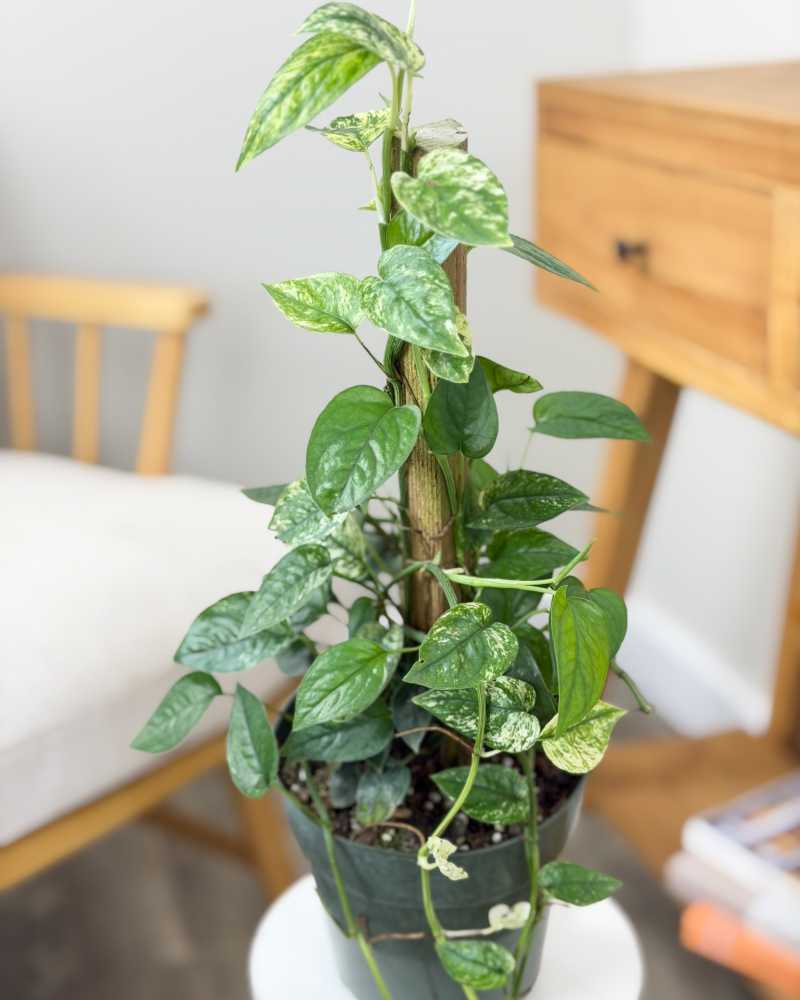
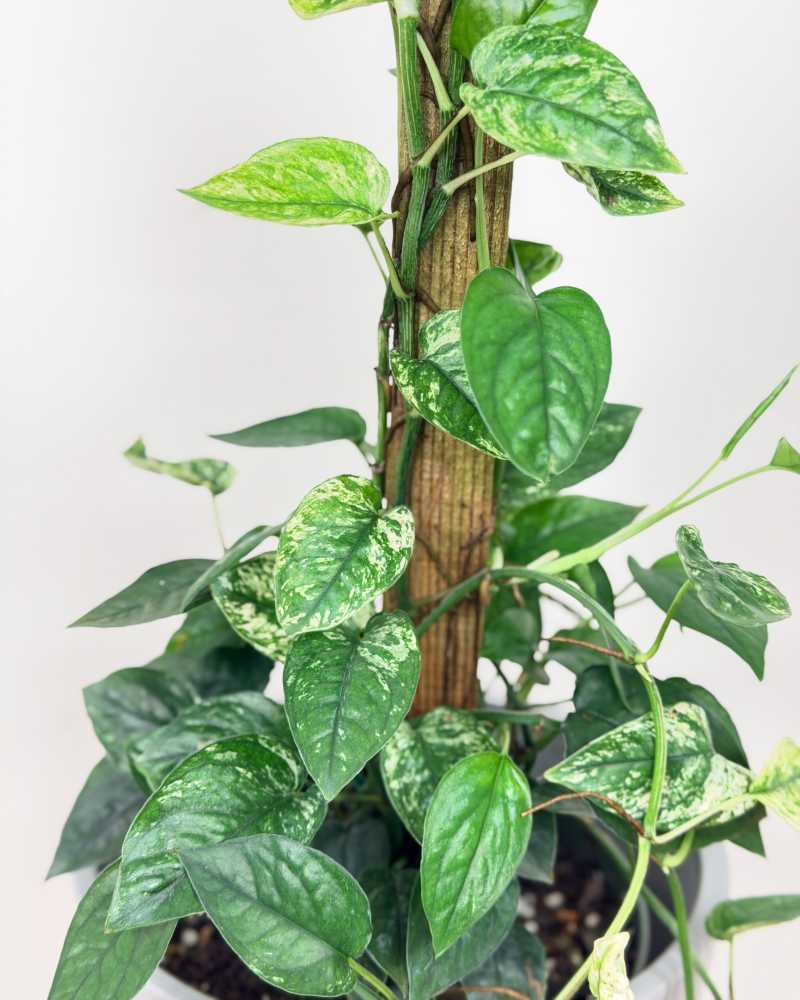
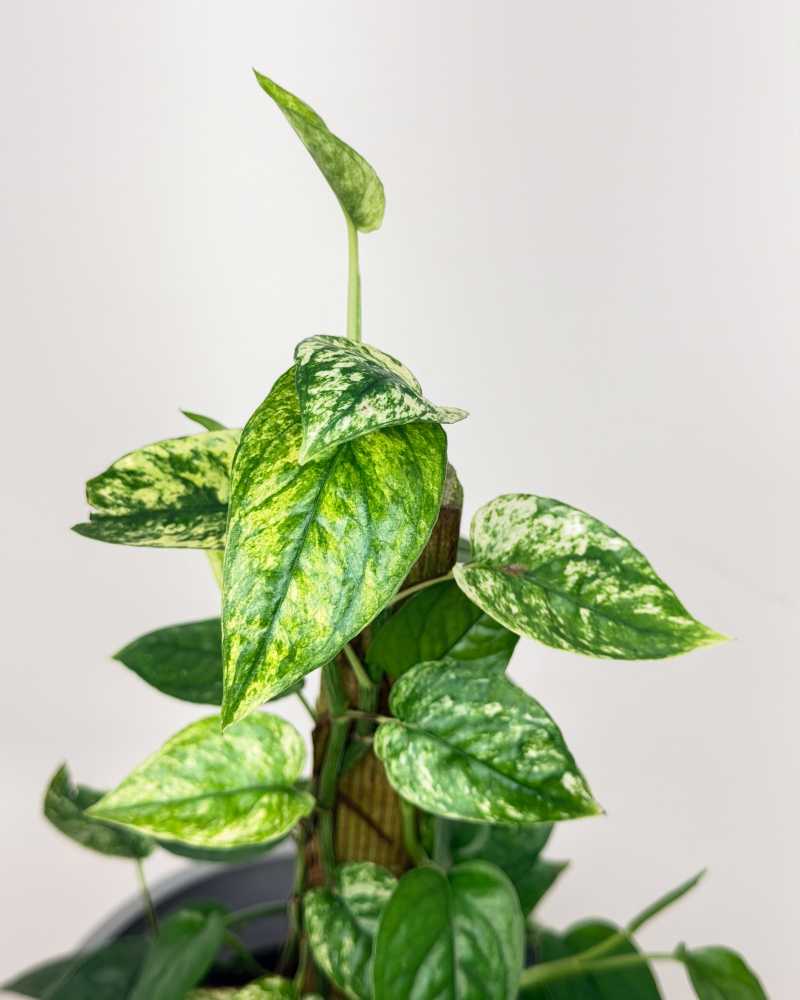
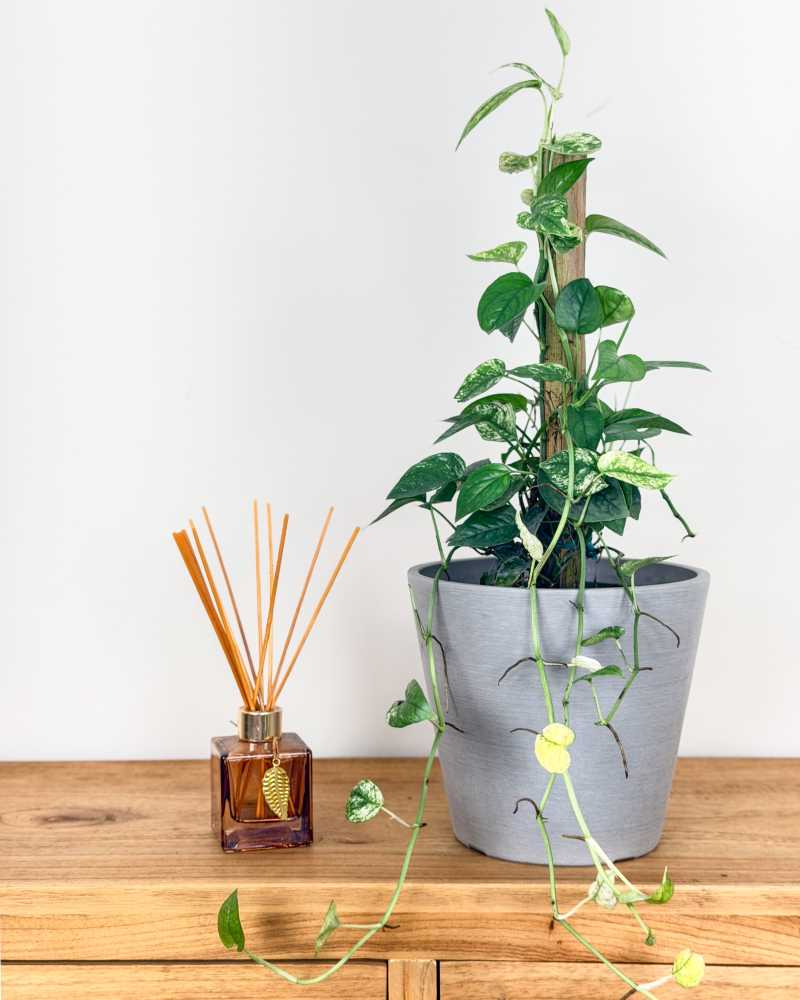
Epipremnum pinnatum ‘Cebu Blue Ghost’ is a striking variegated cultivar in the family Araceae. Native to the Philippines in its species origin, this epiphytic vine is celebrated for combining the classic metallic sheen of ‘Cebu Blue’ with high-contrast minty-white variegation. To retain its unique coloration and encourage large, mature split leaves, it requires bright ambient light, excellent soil aeration, and vertical climbing support.
Light
Thrives in bright, indirect light. Strong, filtered light is crucial to maintain its distinct mint and white ghosting effect without losing its signature blue tones. Protect the foliage from direct, harsh afternoon sunlight, which will quickly burn the delicate variegated tissue.
Soil
Requires a chunky, highly aerated, and fast-draining aroid mix. Combine coarse orchid bark, perlite or pumice, coconut coir chips, and a small amount of quality potting mix. High airflow around the roots is essential to prevent moisture buildup.
Water
Allow the top 2 to 3 inches of soil to dry out completely between waterings. Water thoroughly until liquid drains freely from the bottom of the pot. Reduce watering frequency during late fall and winter when plant growth naturally slows down. Avoid leaving the pot sitting in standing water.
Fertilizing
Feed every 3 to 4 weeks during the active spring and summer growing season using a balanced, liquid houseplant fertilizer diluted to half strength. Pause fertilizing during late fall and winter.
Pruning and Maintenance
Providing a sturdy moss pole, coir totem, or wooden plank is strongly recommended. As aerial roots grip the support, the foliage will rapidly size up and fenestrate. Prune as needed to manage vine length, encourage bushier base growth, or harvest stem cuttings for propagation. Gently wipe the leaves with a damp cloth to keep them free of dust.
Pest and Disease Management
Keep an eye out for common houseplant pests like thrips, spider mites, and mealybugs. Treat any infestations early using insecticidal soap or neem oil. Root rot and browning of the variegated white patches are primary risks caused by overwatering—ensure proper drainage and allow the substrate to dry slightly between waterings.