Description
Caring for your Rhaphidophora Variegated ‘Khaleesi’
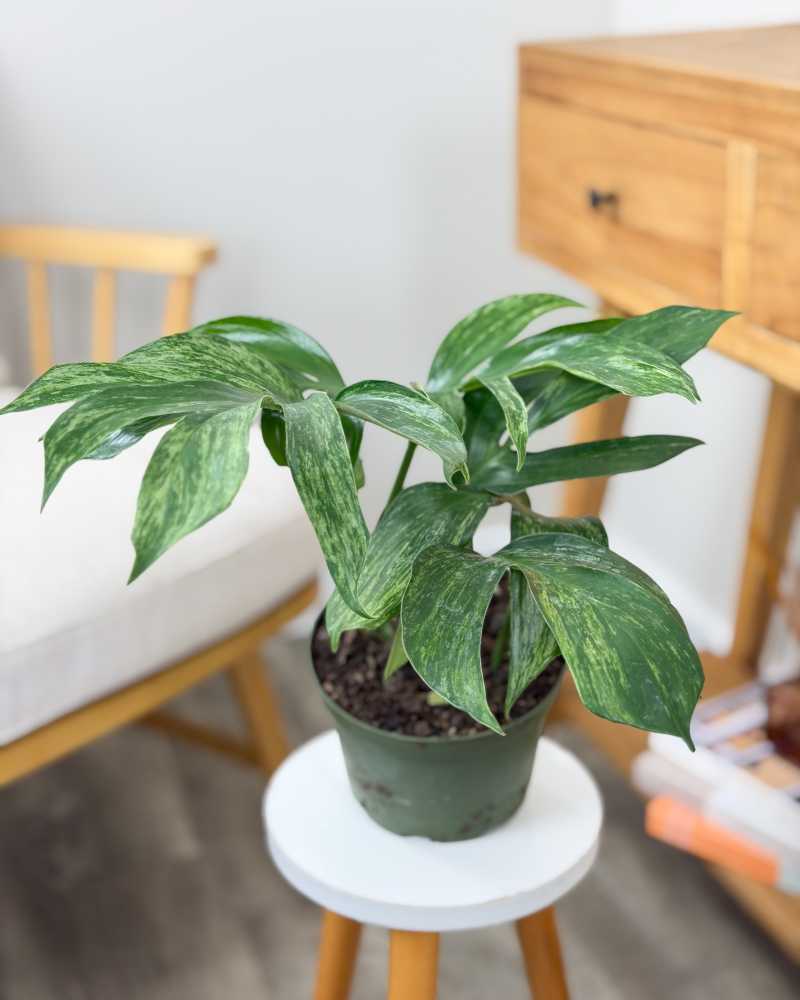
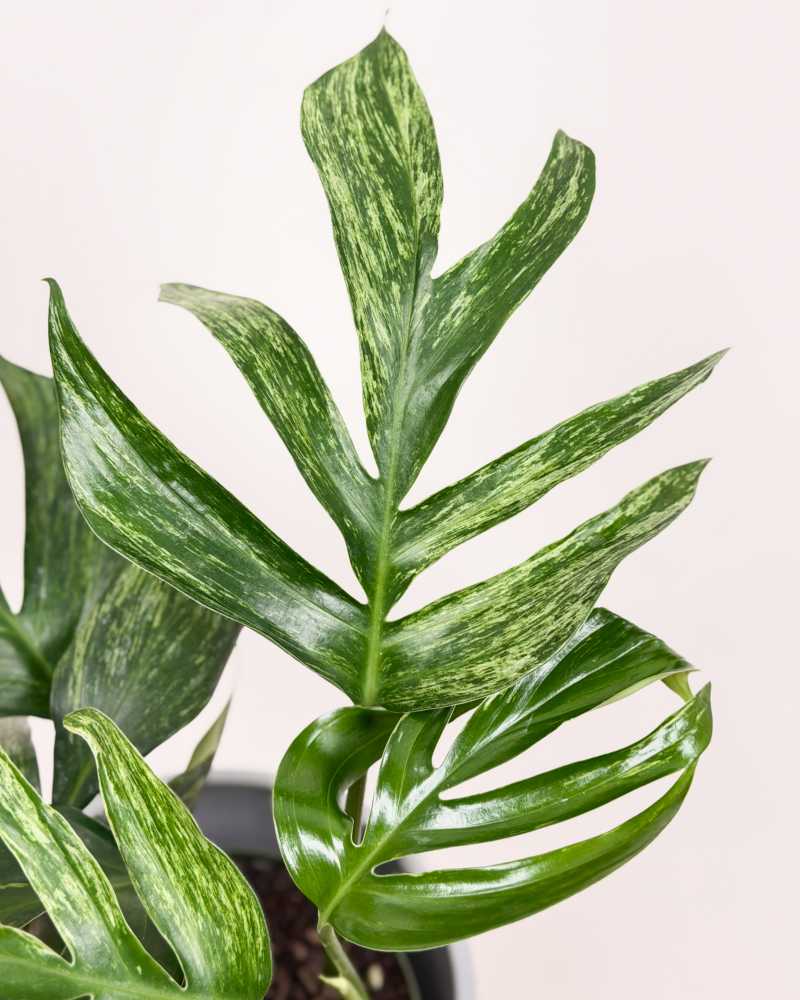
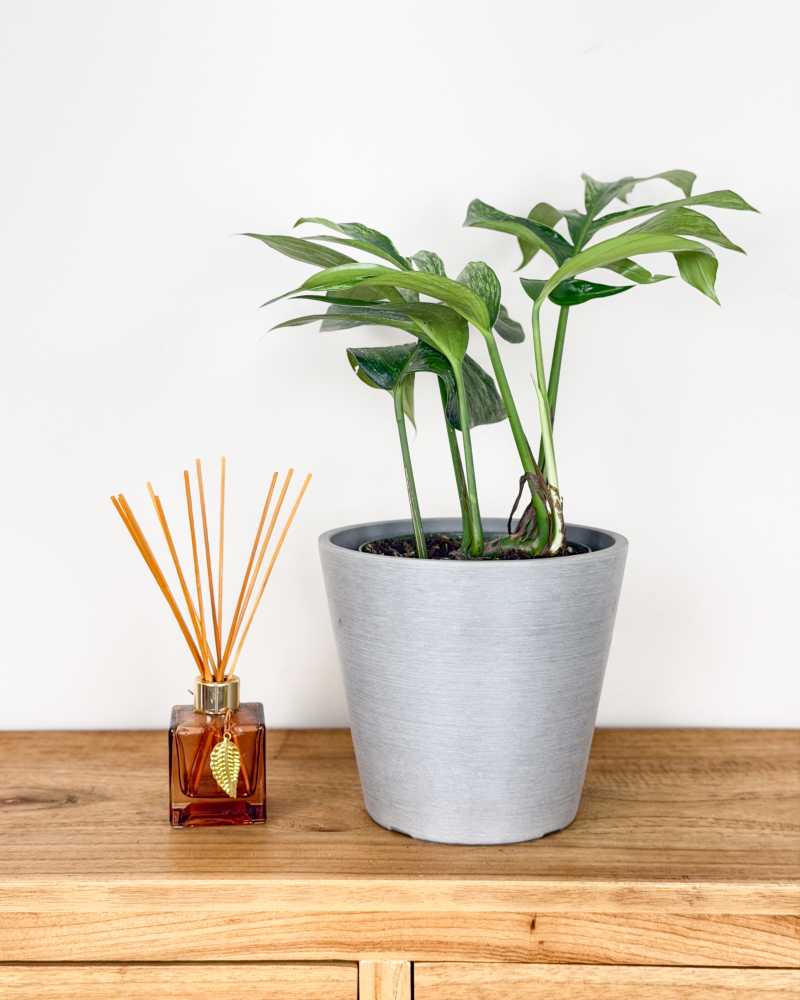
Rhaphidophora tetrasperma ‘Khaleesi’, a prized variegated cultivar in the family Araceae, is an epiphytic climber native to southern Thailand and Malaysia. Renowned for its rapid vining habit and distinct leaf cutouts, this rare selection requires bright conditions and careful moisture control to preserve its delicate white foliage while encouraging robust, healthy growth.
Light
Bright, indirect light is essential to maintain its high level of variegation without scorching the delicate white or cream patches. A location with strong ambient light or gentle morning sun is ideal. Avoid intense, direct afternoon sunlight, which will quickly burn the variegated tissue.
Soil
Requires a chunky, airy, and well-draining aroid mix. Combine coarse orchid bark, perlite or pumice, coconut coir chips, and a small amount of quality potting soil. This structure ensures maximum oxygenation around the root system and prevents water retention.
Water
Allow the top 2 to 3 inches of soil to dry out between waterings. Variegated aroid roots are sensitive to excess moisture; overwatering can lead to brown edges on the white sectors or root rot. Water thoroughly until it drains freely from the pot, and reduce watering frequency in the winter.
Fertilizing
Feed every 3 to 4 weeks during the active growing season (spring and summer) using a balanced liquid houseplant fertilizer diluted to half strength. Avoid over-fertilizing, as nutrient buildup can damage variegated leaves. Suspend feeding during late fall and winter.
Pruning and Maintenance
Provide a sturdy moss pole, coir pole, or wooden plank to support its climbing nature. As the aerial roots attach to the support, the leaves will grow significantly larger and develop deeper fenestrations. Prune occasionally to manage size or to propagate stem cuttings. Gently wipe the leaves with a damp cloth to remove dust.
Pest and Disease Management
Watch for common houseplant pests like thrips, spider mites, scale, and mealybugs. Treat any infestations early using insecticidal soap or neem oil. Root rot is the primary disease risk—ensure excellent drainage, use pots with drainage holes, and never let the plant sit in standing water.