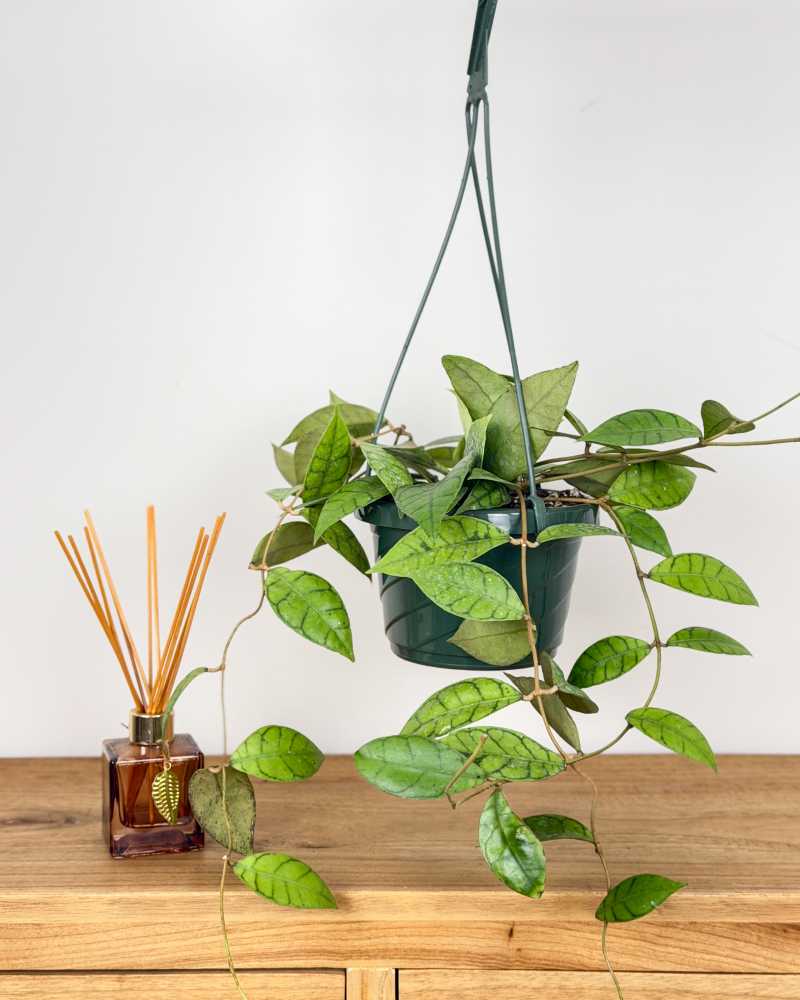
Description
Caring for your Hoya Callistophylla
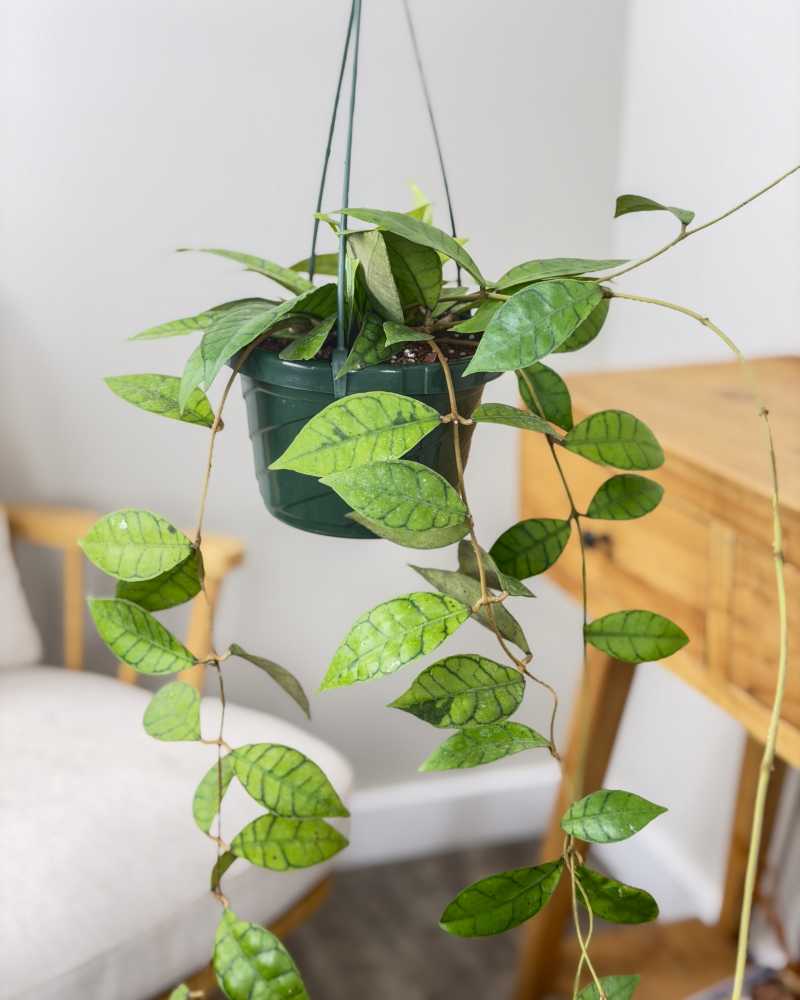
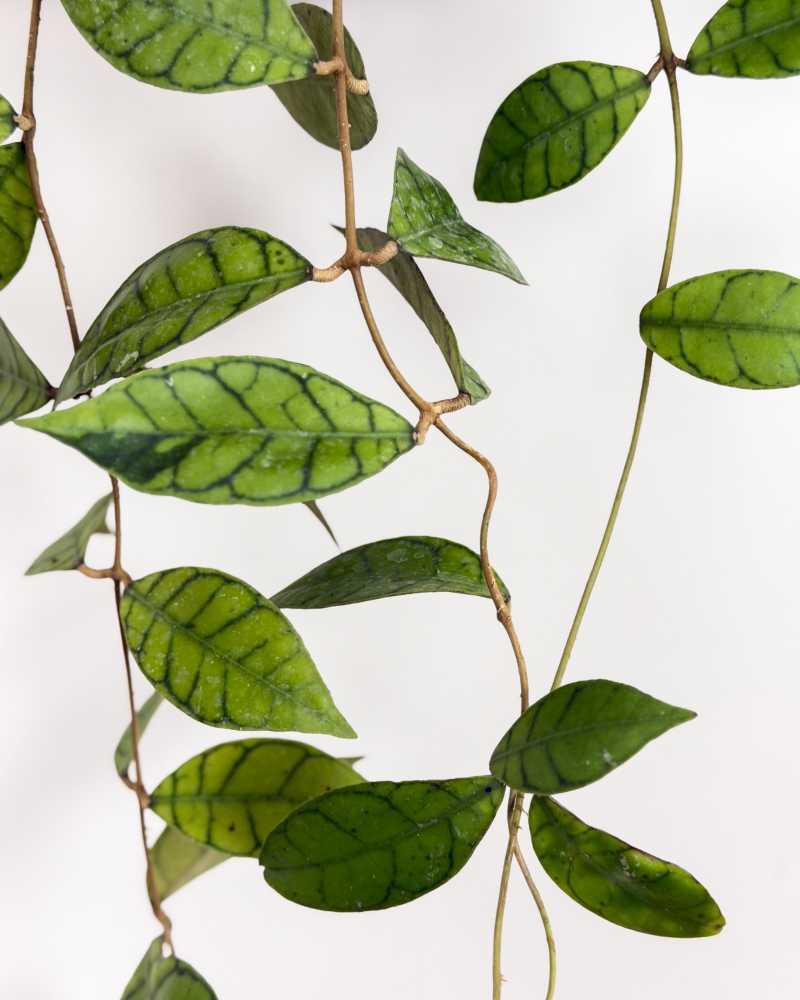
Hoya callistophylla is a captivating tropical epiphytic vine in the family Apocynaceae. Native to the rainforests of Borneo, it is prized primarily for its spectacular foliage, featuring striking dark green leaf skeletons on thick, leathery leaves. Like most epiphytic Hoyas, it naturally grows attached to trees rather than in deep soil, requiring a chunky, airy substrate, moderate-to-high humidity, and careful watering.
Light
Hoya callistophylla thrives in bright, indirect light. A few hours of gentle morning sun can help intensify leaf veining and encourage blooming. Avoid intense, direct afternoon sunlight, which can burn or bleach the thick foliage.
Soil
An airy, coarse, epiphytic mix is critical. Use a blend of chunky orchid bark, perlite or pumice, coconut husk, and a small amount of potting mix or peat moss. The mix must drain almost instantly to provide maximum oxygen to the roots and prevent moisture accumulation.
Water
Allow the potting medium to dry out significantly between waterings. The thick, succulent-like leaves store water, making the plant drought-tolerant but extremely sensitive to overwatering. Water thoroughly until it drains freely from the bottom, and drastically reduce watering during the cooler winter months.
Fertilizing
Feed every 3 to 4 weeks during the active growing season (spring and summer) using a diluted, balanced houseplant fertilizer or a bloom-booster formula. Stop fertilizing in late fall and winter when the plant’s growth naturally slows down.
Pruning and Maintenance
Prune only to shape the vine or remove damaged growth. Never remove the peduncles (flower spurs) after blooms fade, as new clusters of flowers will continuously emerge from those same points for years. Providing a trellis or hoop gives the tendrils support to climb, leading to larger and better-formed leaves.
Pest and Disease Management
Keep an eye out for mealybugs, scale, and spider mites, which often nest at the stem nodes or beneath the leaves. Treat infestations with insecticidal soap, isopropyl alcohol dabs, or neem oil. Root rot caused by overwatering or compacted soil is the primary disease risk—ensure proper drainage and never let the pot sit in excess water.