Description
Caring for your Musa acuminata ‘Nono’
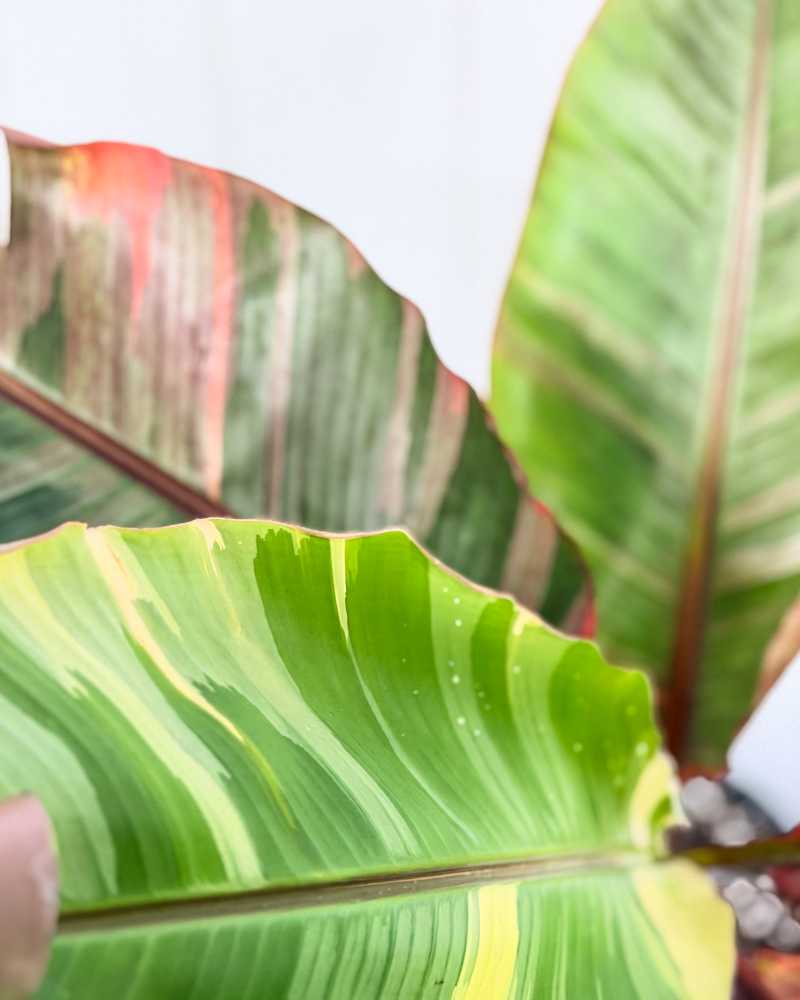
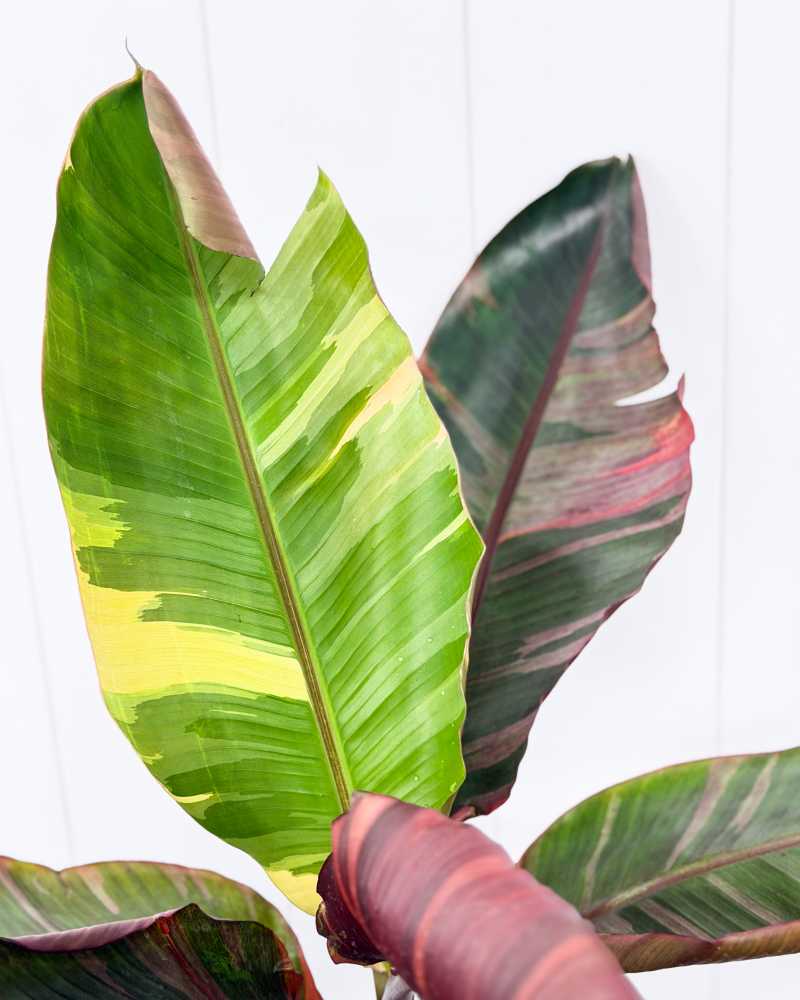
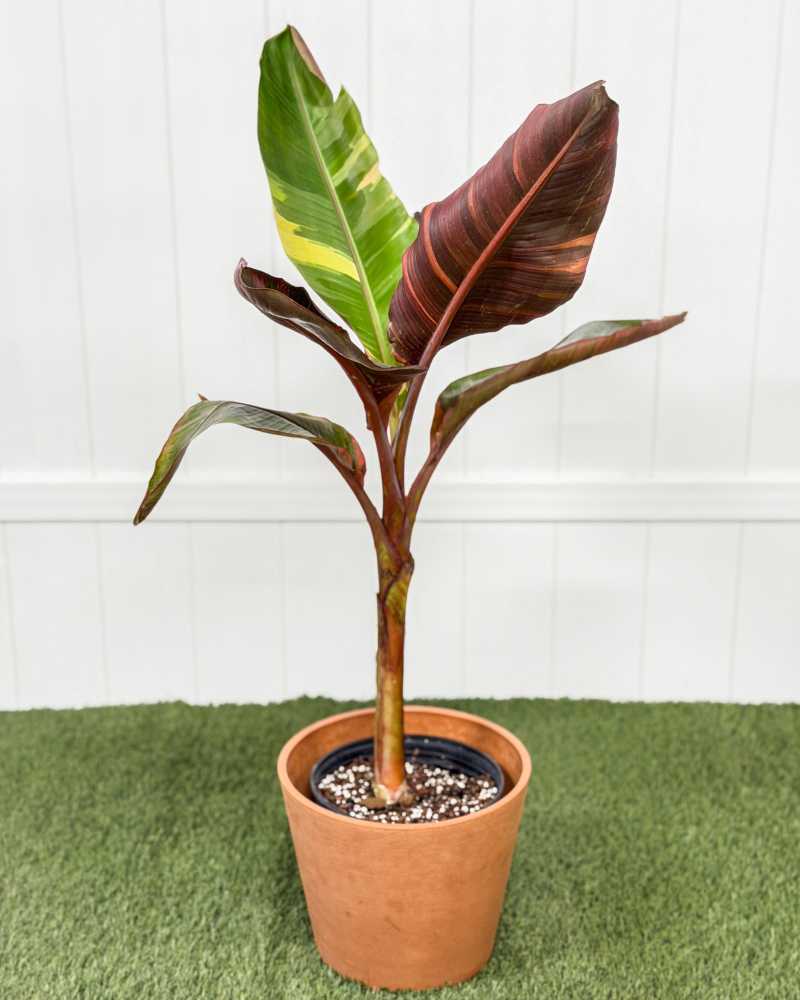
With its breathtaking paddle-shaped leaves painted in high-contrast splashes of vibrant pink, maroon, cream, and deep green, the Musa acuminata ‘Nono’ is a showstopping tropical centerpiece for any plant collection. Paying attention to its primary care needs—bright light, high humidity, and consistent moisture—will keep its striking variegated foliage lush and pristine. Perfect for dedicated collectors and tropical plant enthusiasts, this rare ornamental banana brings unmatched exotic luxury and dramatic flair to bright indoor spaces, sunrooms, or sheltered patios.
Light
Musa acuminata ‘Nono’ requires bright, indirect sunlight to maintain its intense pink and white variegation. A location near a south- or east-facing window with filtered light is ideal. While it appreciates plenty of bright light, protect delicate variegated sections from intense, direct afternoon sun to prevent leaf scorching.
Soil
Use a rich, fertile, and sharply draining potting mix that retains moisture without becoming waterlogged. A blend of high-quality potting soil enriched with peat moss or coco coir, coarse perlite, orchid bark, and organic compost provides the ideal balance of aeration and nutrients.
Water
Banana plants are heavy drinkers, especially during active growth. Keep the soil consistently moist but never soggy. Water thoroughly once the top inch of soil feels dry to the touch, and always ensure proper drainage. Reduce watering frequency slightly in the winter months when growth slows down.
Humidity & Temperature
Thriving in tropical conditions, ‘Nono’ requires high humidity (60% or higher) to prevent leaf edges from crisping. Keep it in warm temperatures between 70°F and 85°F (21°C to 29°C). Protect it from cold drafts, air conditioning vents, and temperatures dropping below 55°F (13°C).
Fertilizing
As a fast-growing, heavy feeder, Musa acuminata ‘Nono’ benefits from regular feeding during spring and summer. Apply a balanced liquid houseplant fertilizer or a potassium-rich formula every 2 to 3 weeks during active growth. Cease fertilizing during fall and winter.
Pruning and Maintenance
Lower leaves will naturally turn brown and dry out as the plant matures and produces new central foliage. Trim yellowed or tattered leaves neatly near the main pseudostem using clean, sharp shears. Banana leaves are delicate; position the plant away from high-traffic zones to prevent leaf tearing.
Pest and Disease Management
Keep an eye out for spider mites and mealybugs, which favor warm, dry indoor environments. Inspect the undersides of broad leaves regularly and treat infestations early with insecticidal soap or neem oil. Ensure good air circulation and avoid soggy soil to prevent root rot.
Propagation
Musa acuminata ‘Nono’ is best propagated by dividing offsets, commonly known as “pups” or suckers, that sprout from the main corm. Once a pup has developed its own root system and several leaves, carefully separate it from the mother plant during spring repotting.