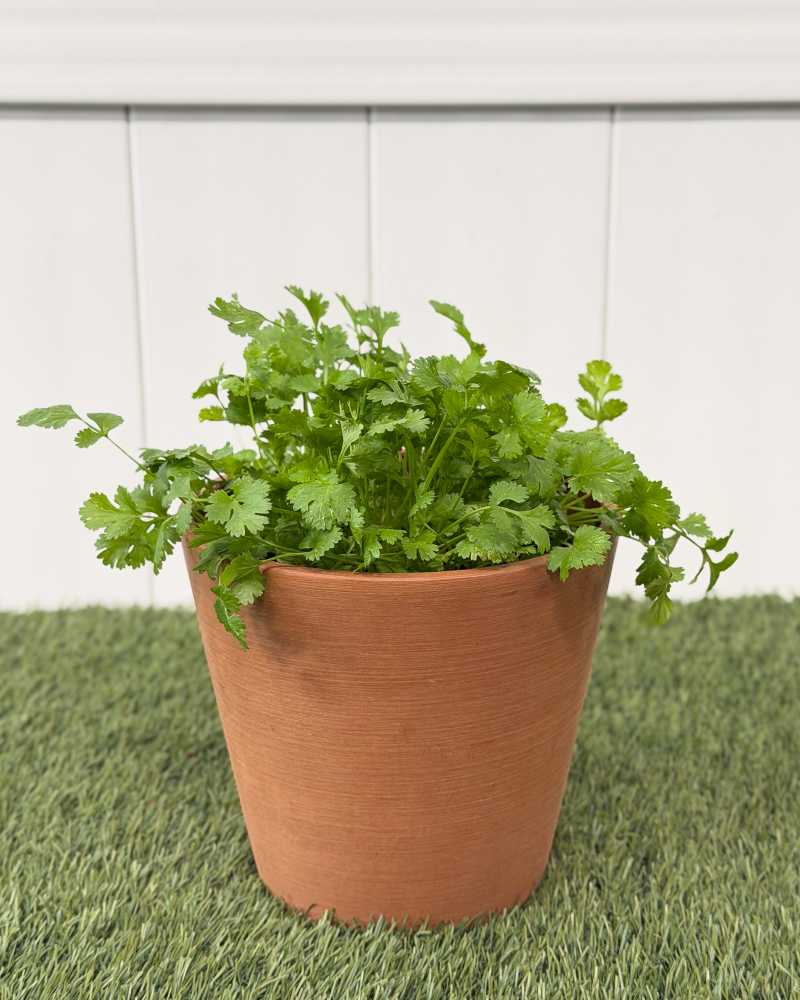
Description
Caring for your Cilantro
With its vibrant, lacy green leaves and crisp, citrusy aroma, Cilantro (Coriandrum sativum) is an essential staple for fresh culinary gardens and sunny kitchen counters. Famous for its bright flavor in global cuisines, this fast-growing herb brings an immediate splash of vibrant green and homegrown convenience to any space. Compact, fragrant, and delightfully productive, it offers a continuous harvest for cooks and plant lovers alike.
Light
Cilantro thrives in bright, full to partial sunlight. Aim for at least 4 to 6 hours of direct sun daily. While it loves bright light, extreme heat and intense afternoon sun can cause the plant to “bolt” (flower prematurely). Outdoors, place it in a spot with morning sun and afternoon light shade during hot summer months. Indoors, position it near a bright east- or south-facing window, or under a grow light.
Soil
A light, fertile, and well-draining potting soil is ideal for Cilantro. Use a quality vegetable or herb potting mix blended with perlite or coarse sand to ensure excess water drains freely while retaining moderate moisture. Cilantro prefers a slightly acidic to neutral soil pH between 6.2 and 6.8. Ensure containers have adequate drainage holes to protect its delicate taproot.
Water
Keep the soil consistently moist but never waterlogged. Water thoroughly when the top inch of soil feels slightly dry to the touch. Avoid letting the soil dry out completely, as drought stress will signal the plant to produce flowers instead of leaves. Always pour off excess water from drainage trays to prevent root rot.
Humidity & Temperature
Cilantro is a cool-season annual that thrives in mild temperatures between 50°F and 75°F (10°C to 24°C). It grows best in low to moderate humidity with good air circulation. High temperatures above 80°F (27°C) encourage the plant to bolt. Protect indoor plants from direct heat vents and cold drafts.
Fertilizing
Feed sparingly. Apply a balanced, water-soluble organic fertilizer diluted to half strength once every 3 to 4 weeks during the active growing season. Avoid heavy nitrogen fertilizers, as excess feeding can dilute the natural essential oils and weaken the signature flavor of the leaves.
Pruning and Maintenance
Frequent harvesting is the best way to prune Cilantro and encourage new growth. Pinch or snip the mature outer stems near the base, allowing the inner leaves to continue growing. Pinch off any flower buds immediately as they appear to delay bolting and prolong the leafy harvest.
Pest and Disease Management
Inspect foliage regularly for common pests such as aphids, whiteflies, and leafminers. Treat minor infestations with a gentle spray of water, neem oil, or food-safe insecticidal soap. Prevent fungal issues like powdery mildew or root rot by avoiding overhead watering and ensuring plenty of airflow around the delicate stems.
Propagation
Cilantro is best grown directly from seeds (coriander seeds). Sow seeds directly into moist, well-draining potting soil during early spring or early fall. Cover lightly with soil and keep moist in a bright area; seedlings will emerge within 7 to 14 days. Stem cuttings are generally not recommended due to the plant’s delicate taproot.