Description
Caring for your Sansevieria ‘New Zeylanica’ (Snake Plant)
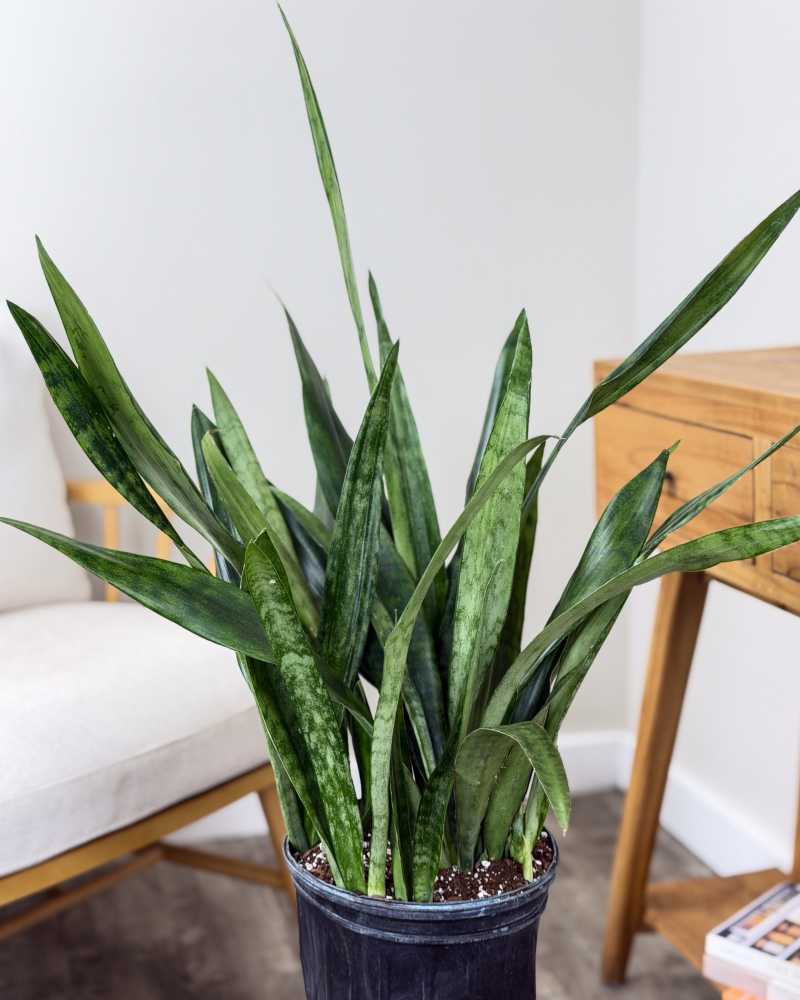
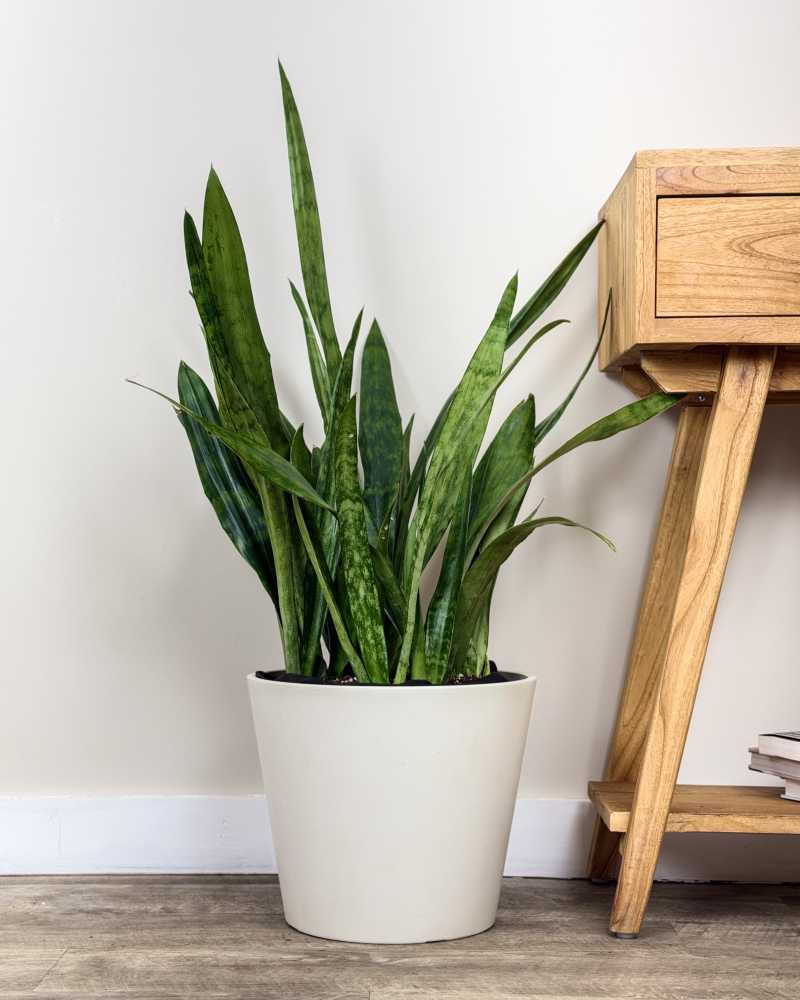
Renowned for its sleek, architectural silhouette and rich forest-green hues, the Sansevieria ‘New Zeylanica’ (Dracaena trifasciata ‘Zeylanica’) is a timeless classic for modern plant spaces. Featuring upright, sword-like leaves pattern-marked with wavy, deep green cross-banding, this striking variety brings effortless texture and structure to any home or office. Beyond its rugged good looks, the ‘New Zeylanica’ is celebrated as one of the most adaptable, low-maintenance, and air-purifying indoor plants available.
Light
Sansevieria ‘New Zeylanica’ is exceptionally versatile when it comes to light conditions. It thrives best in medium to bright, indirect sunlight, which encourages faster growth and richer leaf contrast. However, it is legendary for its ability to tolerate low-light spaces, making it perfect for office desks, darker hallways, or cozy corners. Avoid prolonged exposure to harsh, scorching direct sun, which can bleach or burn the foliage patterns.
Soil
Excellent drainage is essential to keep this succulent-like plant thriving. Plant in a loose, sandy, well-draining cactus or succulent soil mix. Incorporating perlite, pumice, or coarse sand prevents water retention around the thick rhizomatous roots, keeping root rot at bay.
Water
The golden rule for Snake Plants is: when in doubt, underwater. Allow the potting soil to dry out completely between waterings. Pour water thoroughly until it drains out of the bottom, then empty any lingering water from the saucer. During the fall and winter dormant months, reduce watering significantly—often watering only once every 4 to 6 weeks is plenty.
Humidity & Temperature
The ‘New Zeylanica’ is remarkably unfussy about atmospheric moisture and comfortably handles dry indoor air. Standard room humidity is ideal. It prefers warm temperatures ranging between 60°F and 85°F (15°C to 29°C). Protect it from cold drafts, air conditioning blasts, or temperatures dipping below 50°F (10°C).
Fertilizing
Because Snake Plants are light feeders, they require very little fertilization. Feed once or twice during the active growing season (spring and summer) using a balanced, liquid houseplant fertilizer diluted to half strength. Do not fertilize during late fall or winter.
Pruning and Maintenance
Maintain your plant’s polished look by wiping the broad leaves periodically with a soft, damp cloth to clear dust buildup. If an individual outer leaf becomes damaged or overgrown, simply cut it off cleanly at the soil line using sharp, sanitized shears to encourage fresh shoots from the base.
Pest and Disease Management
Sansevieria is exceptionally hardy and rarely bothered by pests. Occasionally, mealybugs or spider mites may appear; wipe them away with a cotton swab dipped in rubbing alcohol or treat with insecticidal soap. The most common issue is root rot caused by soggy soil, which can be easily avoided by letting the soil dry thoroughly between waterings.
Propagation
Propagation is simple and highly rewarding via division or leaf cuttings. During spring repotting, separate dense clumps by gently dividing the underground rhizomes. Alternatively, cut a healthy leaf into 2–3 inch segments, let the cuts callus for a day, and plant them right side up in moist sand or soil until roots form.