Description
Caring for your Variegated Fiddle-Leaf Fig
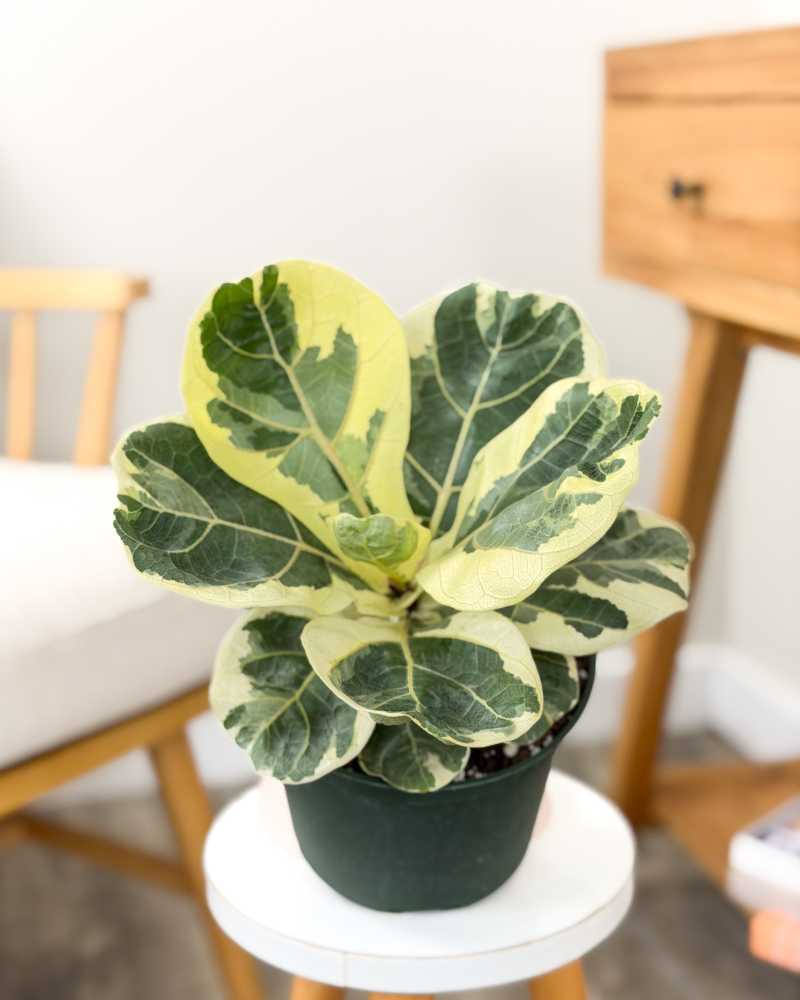
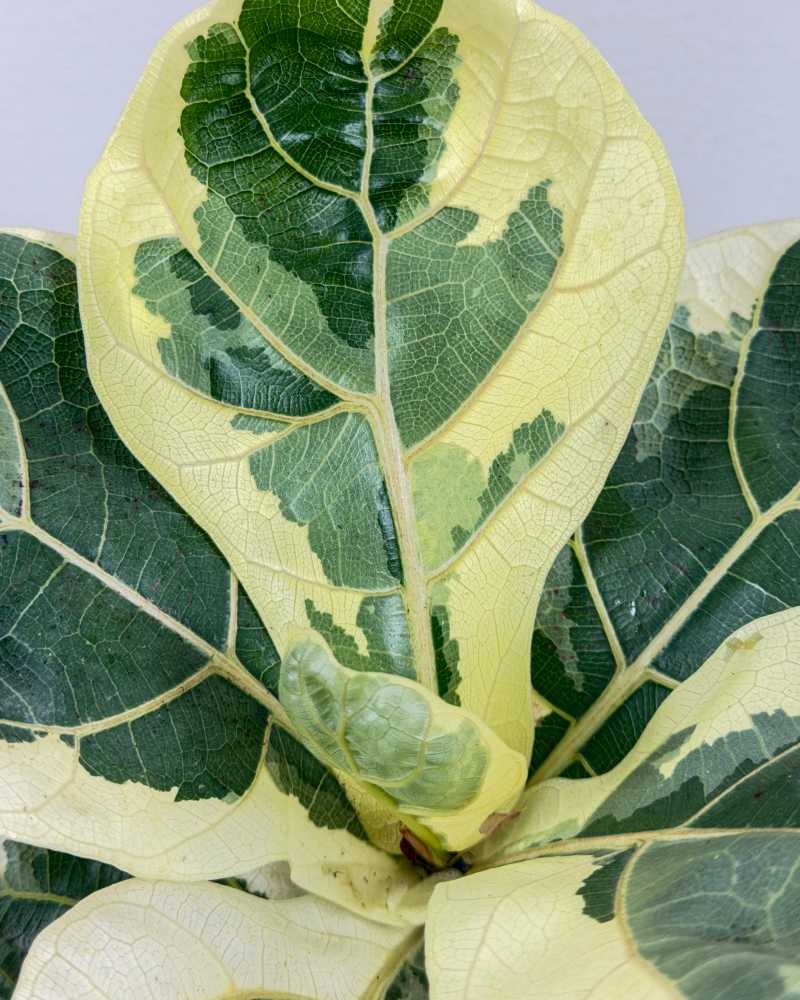
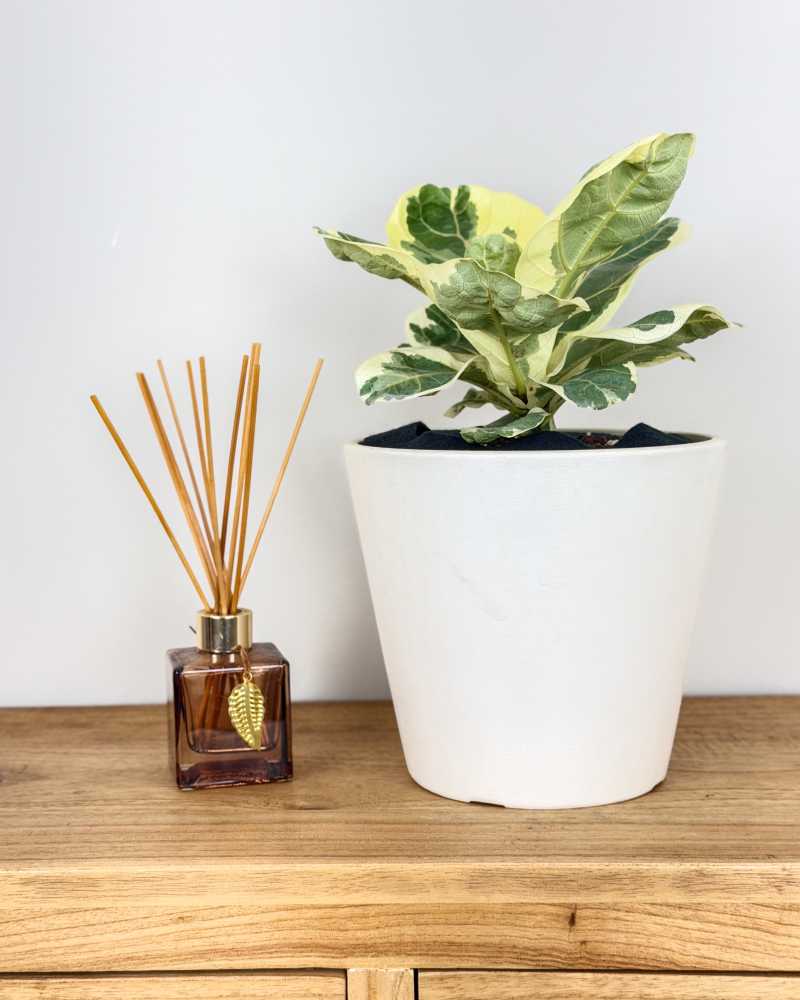
With its iconic fiddle-shaped foliage, bold veining, and breathtaking splashes of cream, butter-yellow, and deep emerald green, the Variegated Fiddle-Leaf Fig (Ficus lyrata ‘Variegata’) is the ultimate crowning jewel for plant collectors. This rare, highly sought-after variety elevates any interior with its architectural silhouette and striking marbling. While it shares the regal presence of the standard Fiddle-Leaf Fig, its variegated leaves require a bit of extra light and consistent care to keep its colors vibrant and healthy.
Light
Variegated Fiddle-Leaf Figs require plenty of bright, indirect light to maintain their stunning cream and white patterning. Place it near a large east-facing or light-filtered south/west-facing window. Because the variegated patches lack chlorophyll, the plant needs more light overall than a solid green Ficus, but guard it against direct, intense mid-day sun, which can scorch the delicate white sections of the leaves.
Soil
A chunky, well-draining potting medium is essential to prevent root rot. Use a high-quality tropical plant mix blended with perlite, orchid bark, and coarse sand or coco coir. This ensures plenty of aeration around the roots while allowing excess water to drain freely. A slightly acidic to neutral pH (6.0 to 7.0) works best.
Water
Water thoroughly only when the top 2 to 3 inches of soil have completely dried out. Thoroughly saturate the soil until water drains out of the bottom, then discard any excess water in the saucer. Ficus Lyrata is notoriously sensitive to overwatering; yellowing lower leaves or dark brown spots often indicate soggy soil, while crisp brown edges indicate underwatering or low humidity.
Humidity & Temperature
Thriving in warm, humid conditions, this plant prefers temperatures between 65°F and 85°F (18°C to 29°C). Keep humidity levels consistently above 50% to prevent edge browning—a dedicated humidifier or humidity tray works wonders. Protect your plant from cold drafts, air conditioning vents, and sudden temperature shifts, which can trigger leaf drop.
Fertilizing
Feed monthly during the active growing season (spring and summer) using a balanced liquid houseplant fertilizer or a specialized Fiddle-Leaf Fig food diluted to half strength. Avoid fertilizing in late fall and winter when the plant’s growth naturally slows down.
Pruning and Maintenance
Dust can build up on the large, broad leaves and block sunlight absorption. Gently wipe the leaves with a damp cloth every few weeks to keep them clean and shiny. Prune any dead, damaged, or undesirable stems in spring using sharp, sanitized shears. Trimming the top node can also encourage branching for a bushier, tree-like form.
Pest and Disease Management
Keep a lookout for common pests like spider mites, scale, and mealybugs, which prefer the undersides of the broad leaves. Treat minor issues early with neem oil or insecticidal soap. Ensure strong air circulation around the foliage and avoid getting water logged in leaf crevices to prevent bacterial leaf spot or edema.
Propagation
Propagation is best performed in spring or early summer via stem cuttings or air layering. Take a cutting with at least one healthy leaf and a node, let the sap dry, and place it in water or moist sphagnum moss in a warm, brightly lit spot until roots develop.