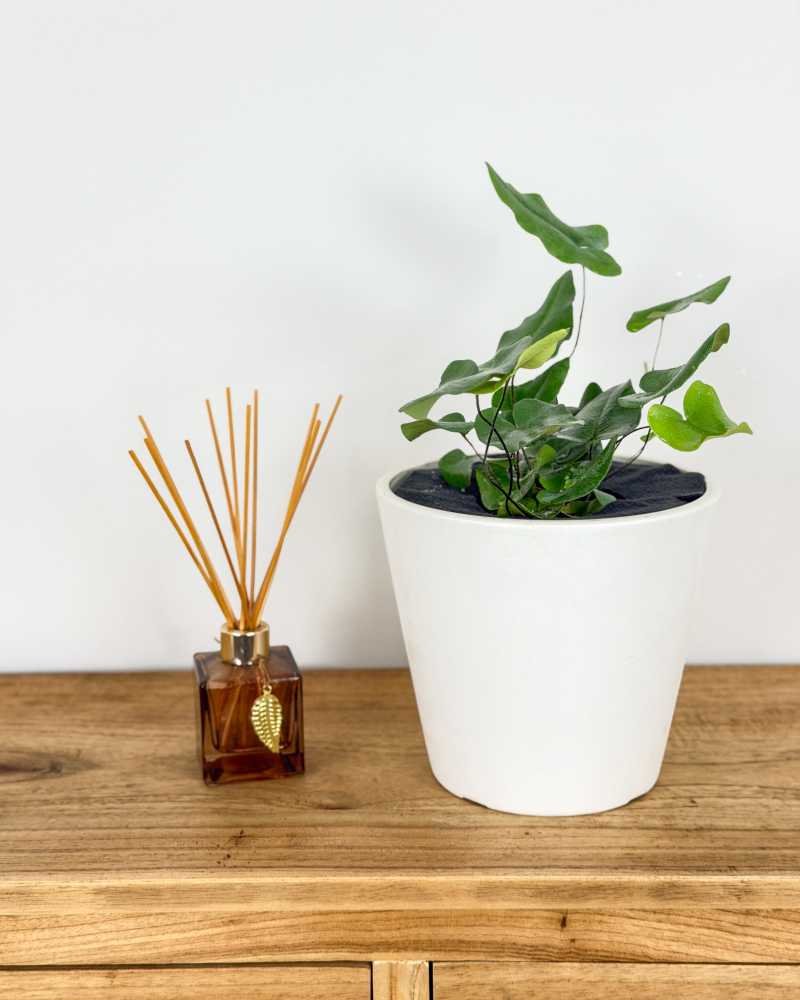
Description
Caring for your Heart Fern
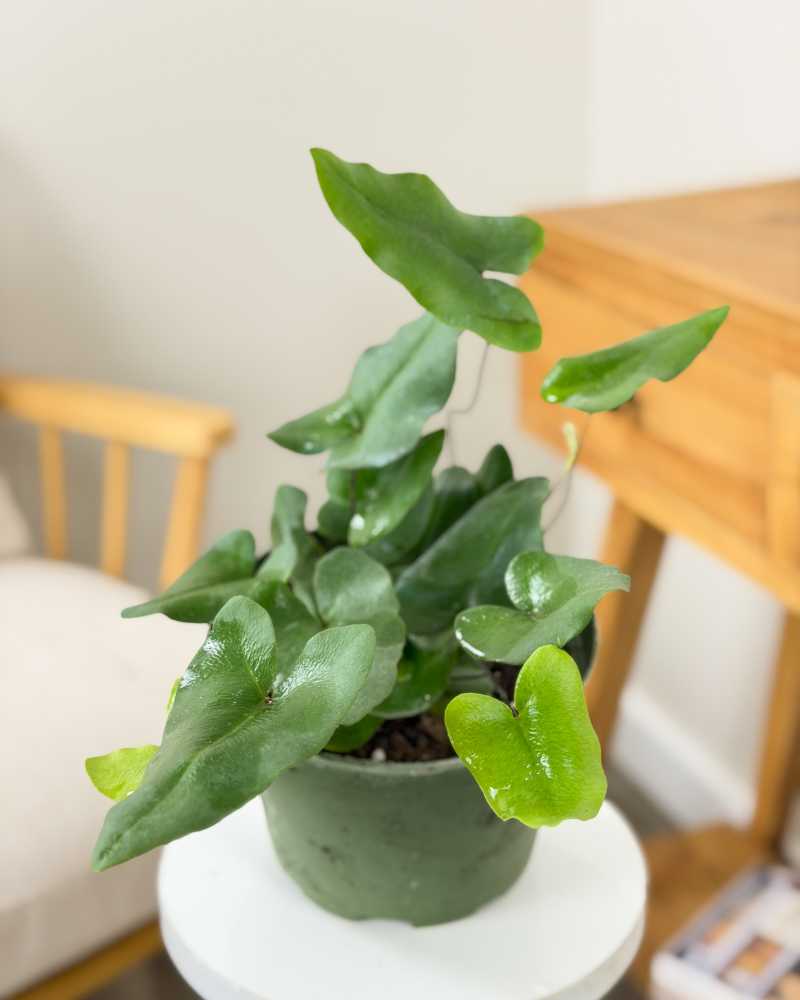
With the right care, the Heart Fern can be a delightful and eye-catching addition to your home, offering a sense of lush, tropical elegance. Pay close attention to their strict needs for high humidity, indirect light, and consistent moisture, and you’ll be rewarded with a dense rosette of beautiful heart-shaped fronds. Whether you’re an experienced fern collector or a dedicated beginner, providing the humid sanctuary this plant craves is truly worth the effort.
Light
Heart Ferns require a specific balance of light to maintain their deep green color without scorching. They thrive in medium to bright, indirect light and must be protected from any direct afternoon sun, which will quickly burn their leathery leaves. A north or east-facing window is ideal when grown indoors. If your space lacks natural light, they adapt beautifully to fluorescent lighting or low-intensity LED grow lights.
Soil
The right soil is crucial for the moisture-loving root system of the Heart Fern. They prefer a rich, organic, and highly porous potting mix that retains moisture while allowing excess water to drain away freely. A mix formulated with plenty of peat moss, perlite, and a bit of orchid bark ensures the aeration and slight acidity they need. Ensure the pot has proper drainage holes to prevent the roots from sitting in stagnant water.
Water
Consistent watering is the ultimate key to keeping a Heart Fern healthy, as they should never be allowed to dry out completely. Water your fern thoroughly as soon as the very surface of the soil begins to feel slightly dry to the touch. It is vital to keep the soil evenly damp like a wrung-out sponge, but avoid overwatering to prevent root issues. Reduce watering slightly in the winter when growth slows down.
Heart Ferns absolutely flourish in high humidity and moderate temperatures. If you are growing them indoors, you must increase the humidity around the plant using a humidifier, a pebble tray filled with water, or by placing them in a naturally humid room like a bright bathroom or a glass terrarium.
Fertilizing
Feed your Heart Fern during the active spring and summer growing months with a balanced, liquid houseplant fertilizer diluted to half-strength. Applying this gentle nutrient boost once every four to six weeks will encourage new frond development and keep the foliage rich and glossy. Avoid fertilizing during the fall and winter when the plant enters its dormant phase.
Pruning and Maintenance
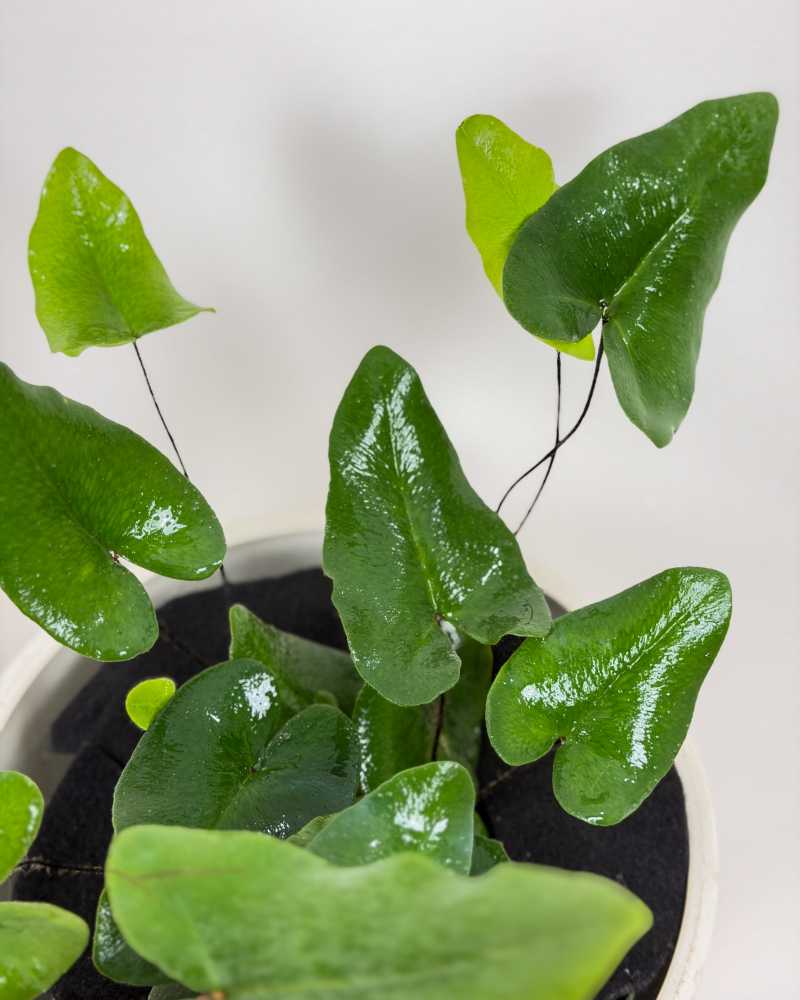
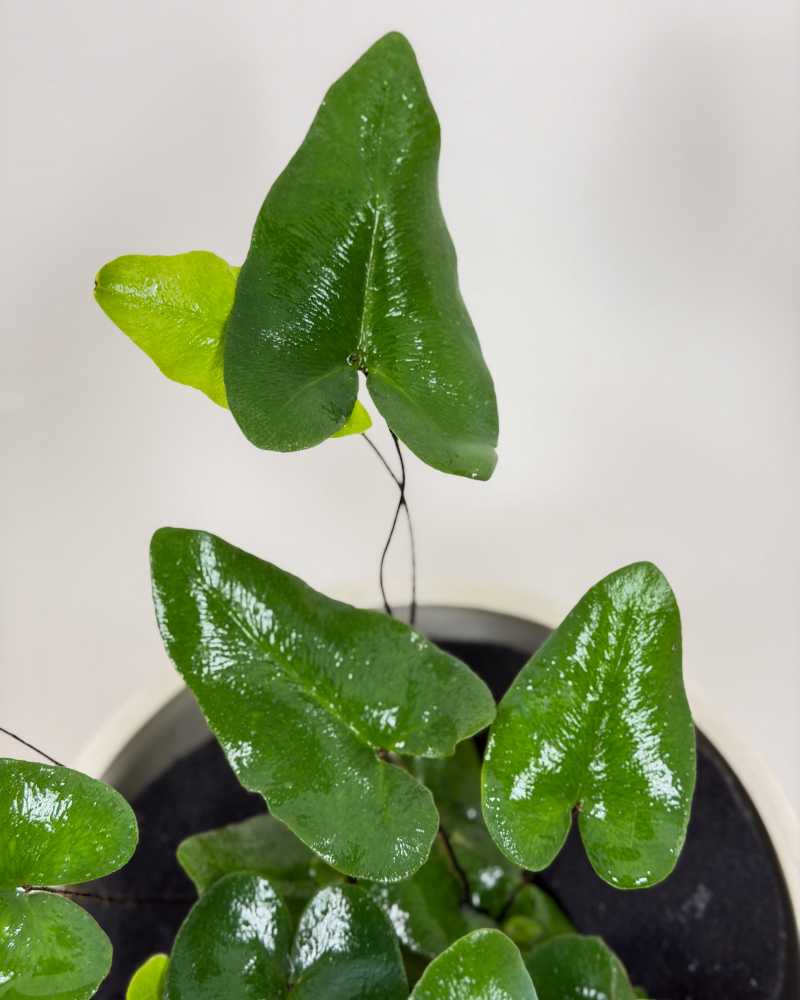
Pruning is a simple maintenance step to keep your Heart Fern looking pristine and to encourage fresh, compact growth. As old leaves mature and occasionally dry out or turn yellow, use a pair of small, sterilized scissors to snip the black stems off at the very base of the plant. Gently wipe the leathery leaves with a damp cloth from time to time to keep them free of dust and looking their best.
Pest and Disease Management
Heart Ferns can occasionally be susceptible to common indoor pests like mealybugs, scale, and fungus gnats if conditions are unfavorable. Regularly inspect the undersides of the heart leaves and treat any early signs with a gentle insecticidal soap or diluted neem oil. Fungal leaf spot and root rot can be easily avoided by providing good air circulation and ensuring the soil remains moist but never waterlogged.
Propagation
Heart Ferns can be propagated through division during the spring repotting season. As the plant grows, it naturally forms multiple crowns or clusters attached to a central rhizome system. Carefully remove the plant from its container and gently tease the root ball apart into smaller sections, ensuring each new division has a healthy clump of roots and several strong fronds. Plant them immediately into fresh, damp soil and maintain high humidity to help them establish.