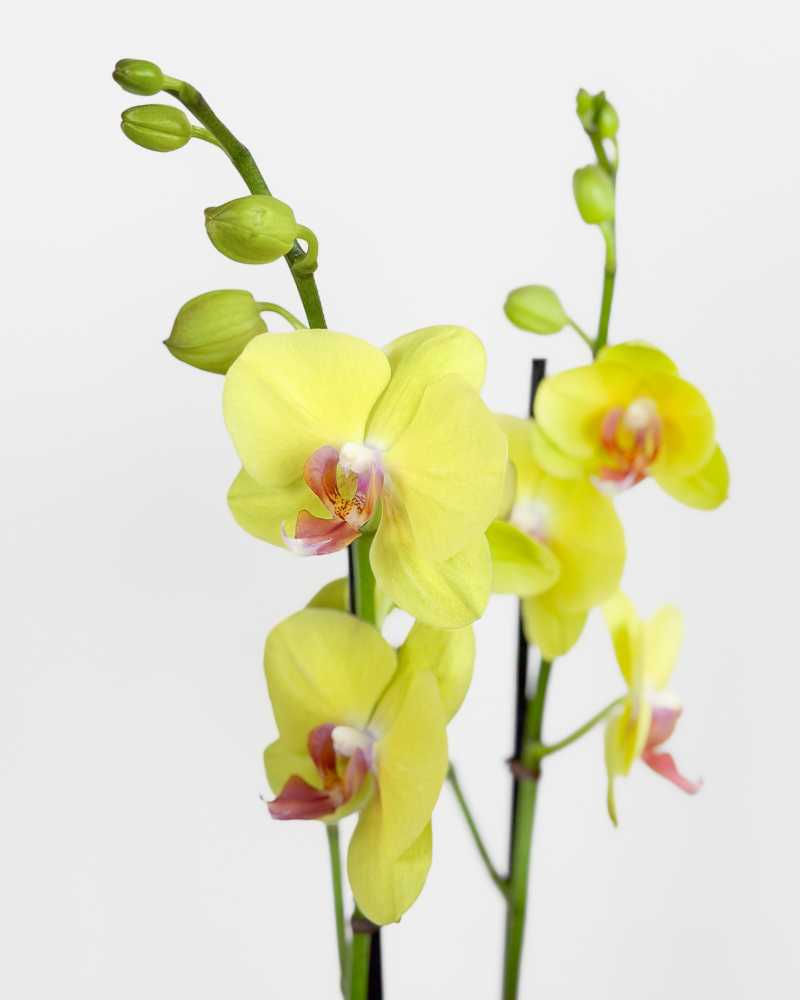
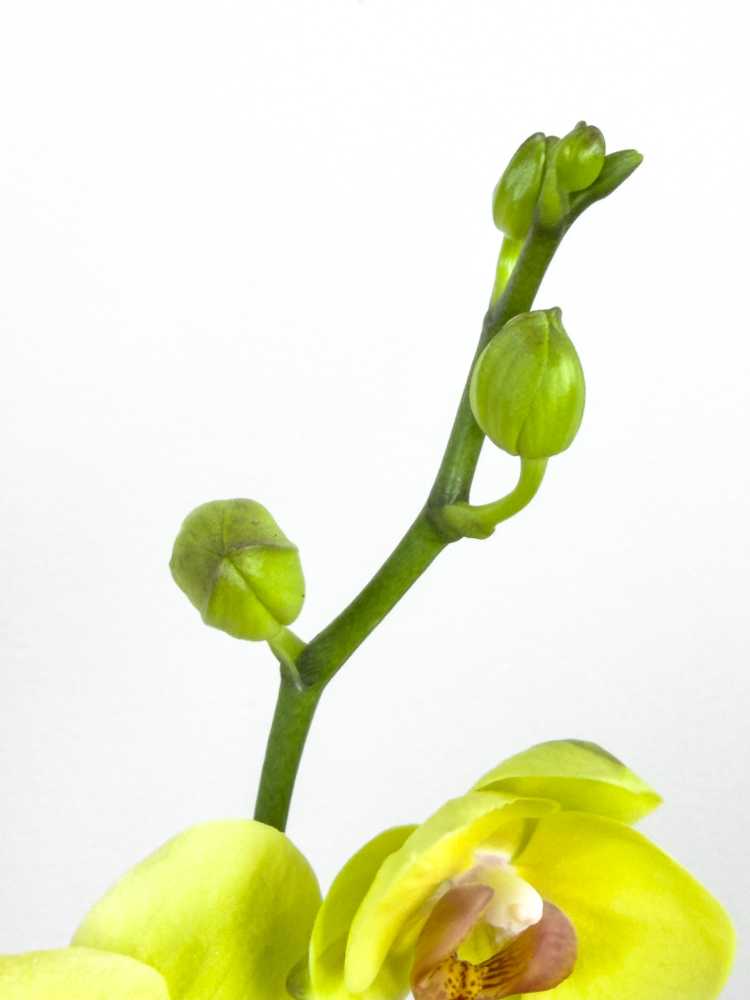
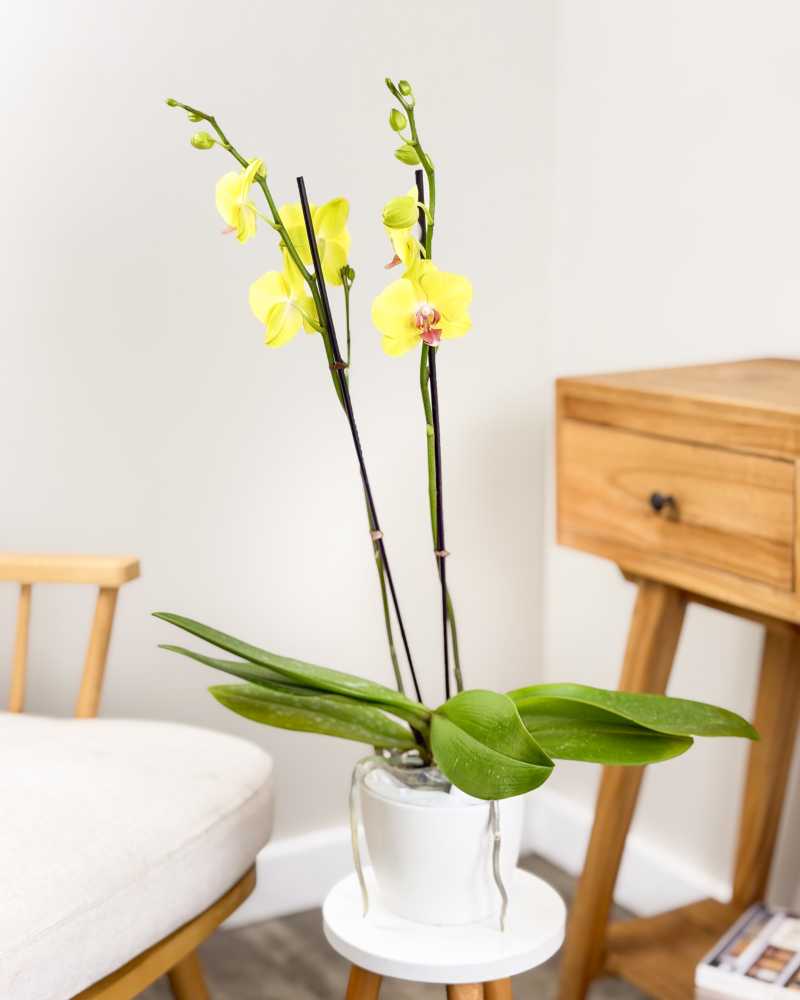
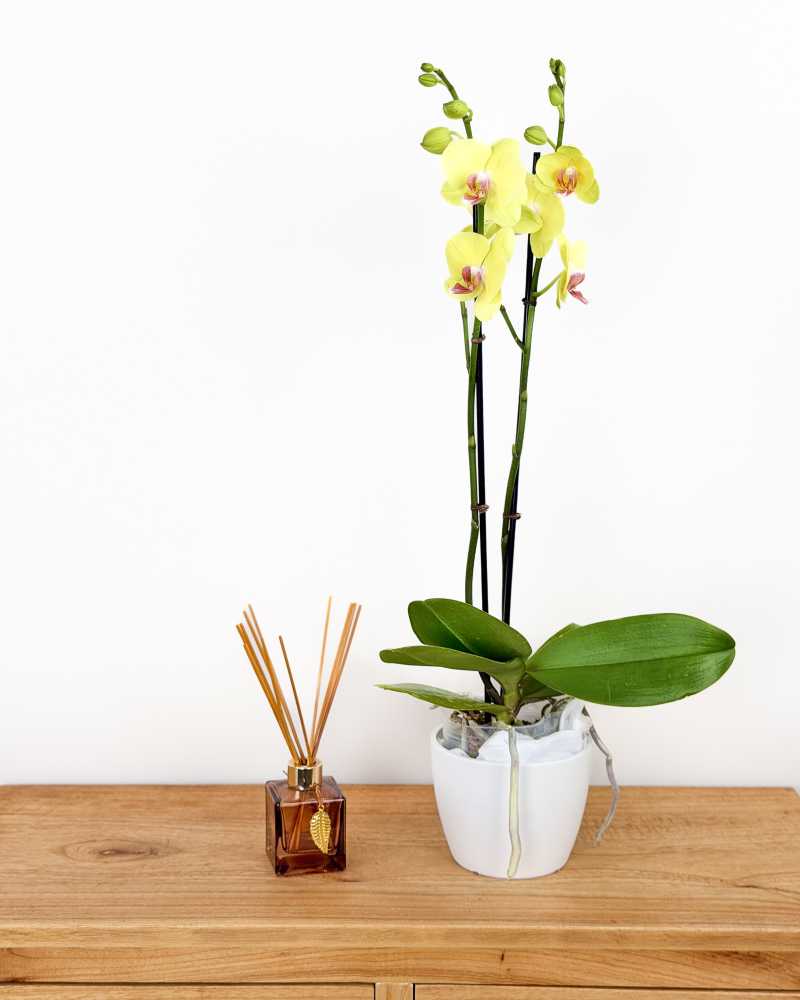
Description
Caring for your Orchid Double Spike
Light
The Orchid Double Spike thrives beautifully in bright, indirect sunlight. It relies on a generous amount of filtered light to support the heavy energy demands of maintaining two full flower stems. Keep it safely away from direct afternoon sun, which will easily scorch its large, fleshy leaves. A position near an east- or west-facing window with a sheer curtain provides the ideal lighting environment.
Soil
Like all epiphytic Phalaenopsis varieties, this orchid requires a highly porous, airy, and sharply draining growing medium. Never plant it in standard potting soil. A premium blend consisting coarse orchid bark, high-grade sphagnum moss, and perlite allows the robust root system to breathe freely while preventing moisture from pooling around the base.
Water
Water thoroughly only when the potting medium is nearly dry, or when the roots transition from a vibrant green to a silvery, grayish-white tone. Because this plant supports double the blooms, check the moisture levels regularly. Pour water directly onto the substrate, ensuring you never let water sit in the center leaf junction (the crown) to avoid rot, and always allow the pot to drain completely.
Fertilizer
Supporting two active flower spikes requires steady nutrition during the growing season. Throughout spring and summer, feed your orchid every two weeks with a balanced liquid orchid fertilizer diluted to 1/4 strength. Stop fertilizing entirely during the winter months when the plant enters its natural dormancy stage.
Common Issues
With two spikes, the plant can be sensitive to environmental stress. Sudden temperature drops, dry indoor air, or cold drafts can cause “bud blast”—where buds dry up and drop before opening. If the large leaves appear wrinkled and limp, the plant is dehydrated; if they turn yellow and mushy, it is a clear sign of overwatering.
Pests
While highly resilient, the dense blooms and lower leaf crevices can occasionally harbor common pests like mealybugs, scale, or spider mites. Check under the flowers and leaves routinely. If any pests are spotted, wipe them away gently using a cotton swab dipped in rubbing alcohol, or treat the plant with organic insecticidal soap.
Disease
The biggest threat to this premium orchid is root or crown rot, which stems from overwatering, poor drainage, or stagnant air circulation. Always utilize a container with excellent drainage holes and ensure the bark mix dries out moderately between waterings to keep the root system firm and healthy.
Pruning
As individual flowers fade, you can pinch them off to keep the plant looking clean. Once an entire spike completely turns brown and dry, use sharp, sanitized shears to cut it back close to the base. If a spike remains green after the flowers drop, trimming it just above a lower node can often trigger a secondary branch of blooms.
Potting / Repotting
This variety prefers its roots to feel slightly snug, meaning it does not need an oversized pot. Plan to repot your orchid every 1 to 2 years—only after the entire blooming cycle has completely ended. Use a clear pot with great drainage holes to refresh the old, broken-down bark mix and give the roots a clean, oxygen-rich boost.