
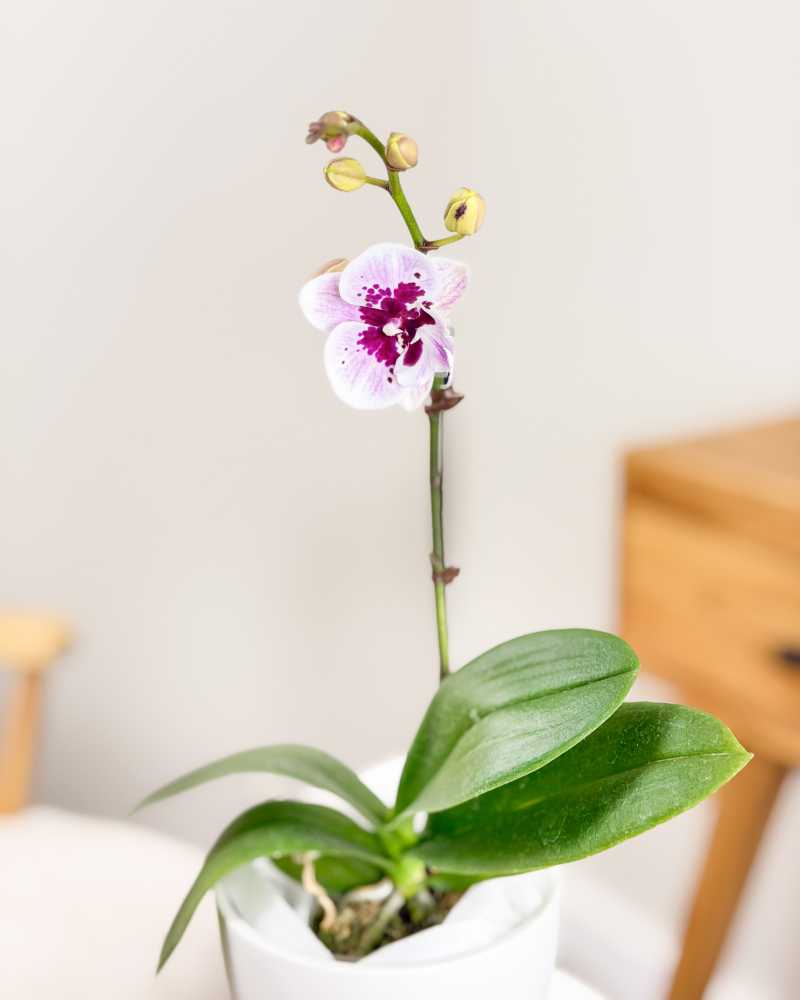
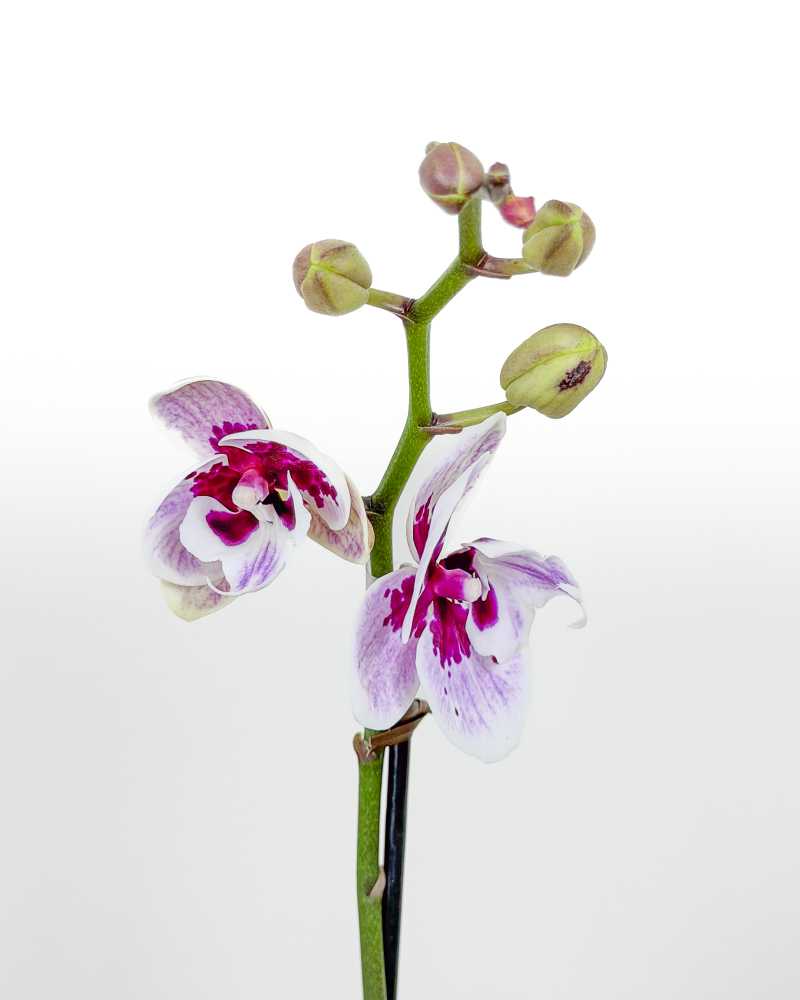
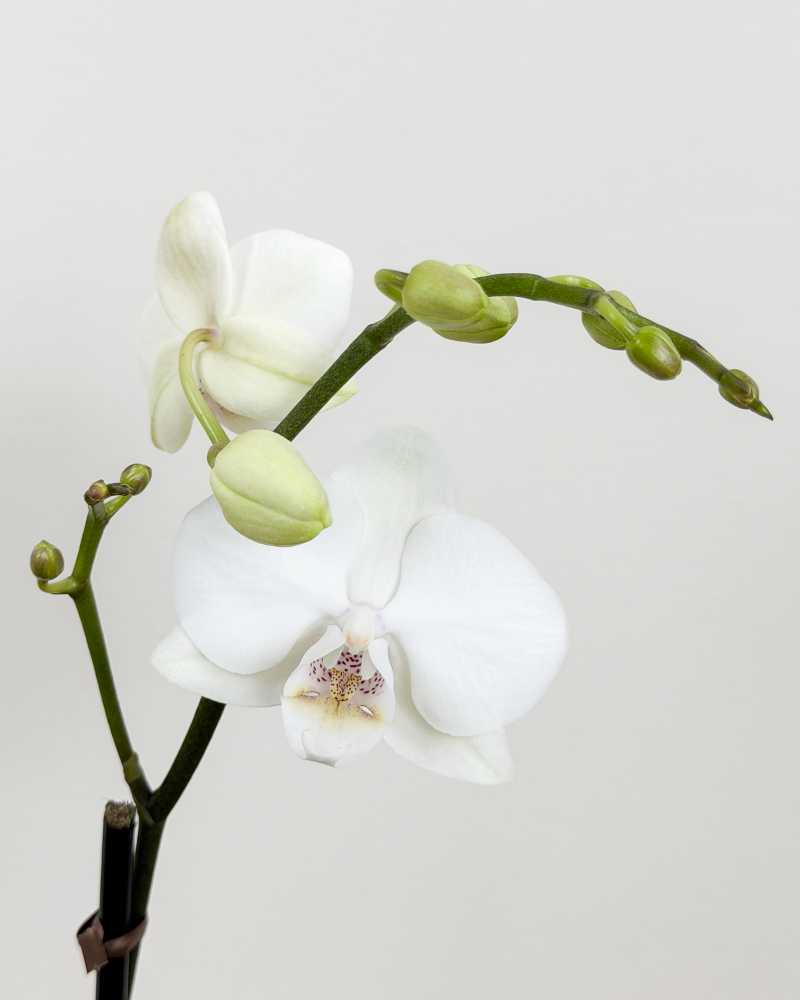
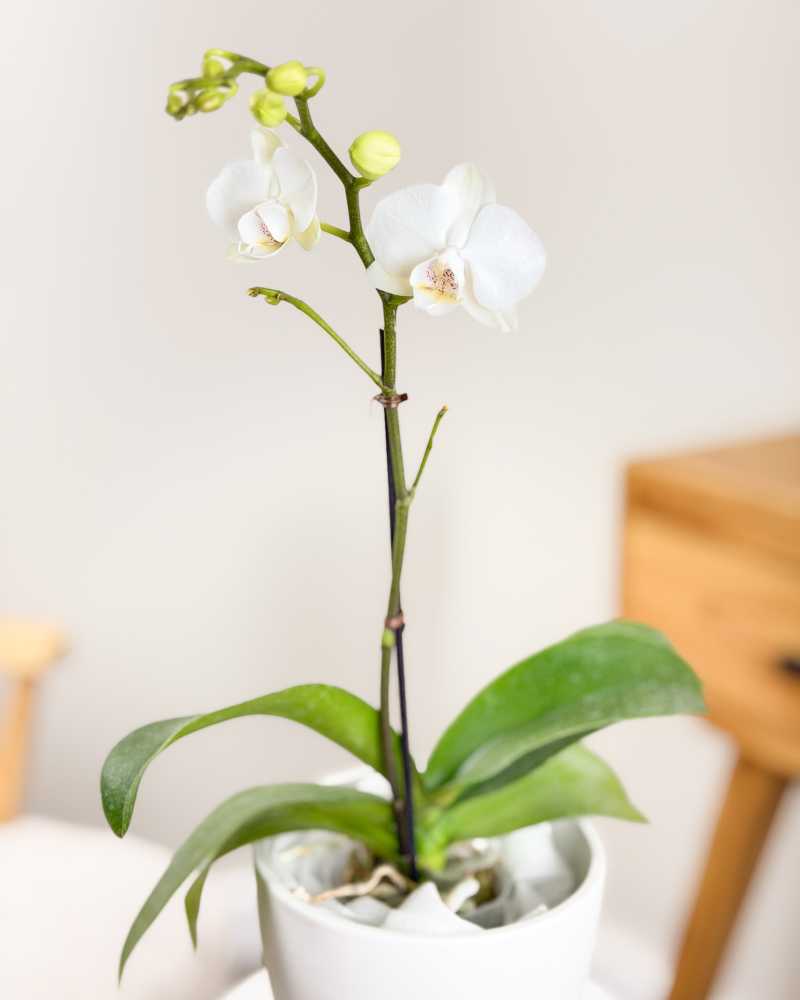
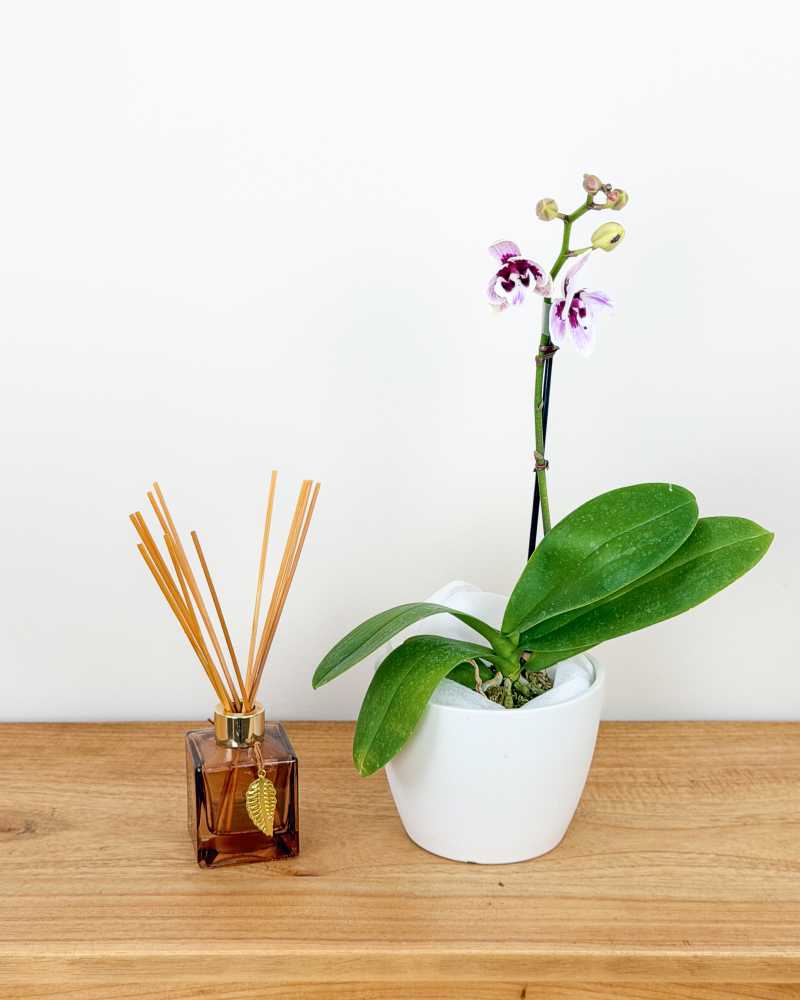
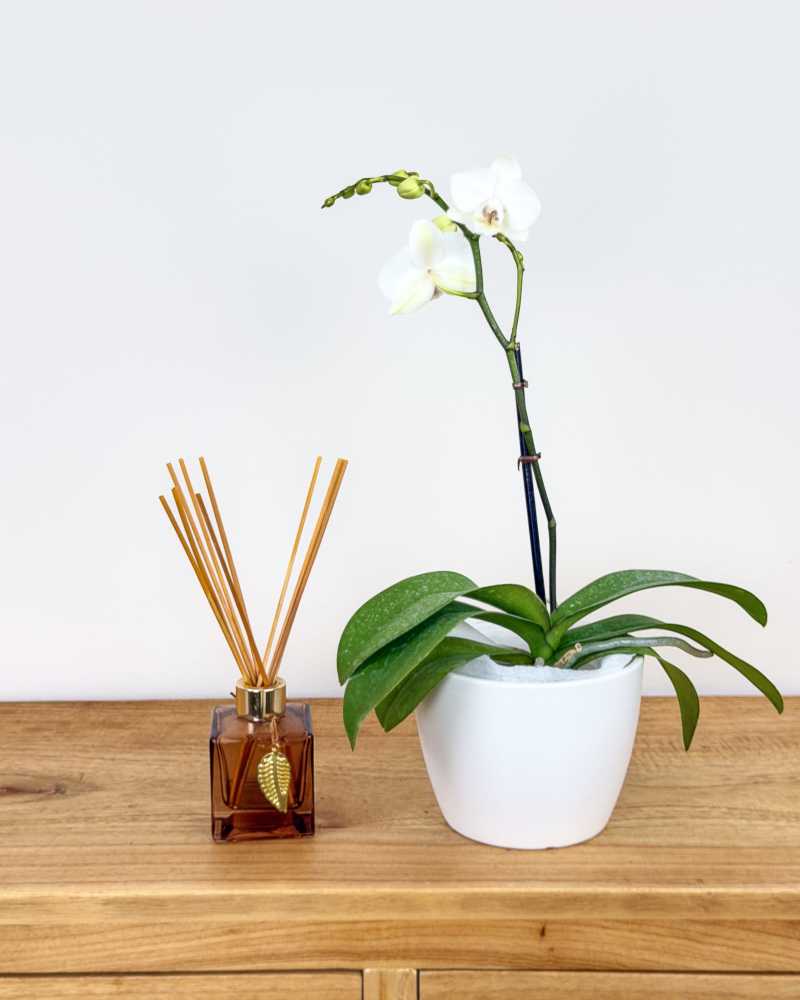
Description
Caring for your Mini Orchid
Light
The Mini Orchid thrives best in bright, indirect sunlight. It loves receiving plenty of filtered light to maintain its healthy, compact foliage and encourage long-lasting flower cycles. Avoid harsh, direct afternoon sun at all costs, as it can quickly scorch its tender, small leaves. Placing it near an east- or west-facing window provides the ideal indoor lighting environment.
Soil
Like its larger relatives, this miniature orchid is epiphytic and demands an exceptionally loose, airy, and sharply draining medium. Never use regular potting soil. For mini orchids, a premium mix of fine-grade orchid bark or high-quality sphagnum moss is ideal to ensure the delicate root system receives plenty of oxygen while retaining just the right amount of moisture.
Water
Water thoroughly only when the potting medium feels nearly dry, or when the tiny roots turn a grayish-white or silvery color. If the roots are bright green, they still have plenty of hydration. Because mini pots dry out faster than large ones, monitor moisture closely. Apply water directly to the substrate and strictly avoid letting water pool in the center crown of the leaves to prevent rot.
Fertilizer
This petite plant is a very light feeder. During the active growing and blooming season (spring and summer), apply a balanced liquid orchid fertilizer diluted to 1/4 strength every two to three weeks. Refrain from feeding completely during the dormant winter months to allow the plant its natural rest period.
Common Issues
Due to their small pots, mini orchids can experience sudden “bud blast” (buds drying up and dropping before opening) if they dry out too quickly or get exposed to sudden temperature drops and cold drafts. If the leaves look wrinkled, the plant is dehydrated; if the lower leaves turn yellow and mushy, it is receiving too much water.
Pests
While generally hardy, common soft-bodied pests like mealybugs, scale, or spider mites can occasionally try to hide deep inside the tight lower leaf crevices or underneath the tiny blooms. If spotted, safely dab them away using a cotton swab dipped in rubbing alcohol or treat the plant with organic insecticidal soap.
Disease
The primary threat to a mini orchid is root rot or crown rot, which is almost always triggered by overwatering, poor air circulation, or letting the small pot sit in standing water. Always ensure your container has excellent drainage holes and that the growing medium dries out moderately between waterings.
Pruning
Once the miniature blooms have completely faded and the flower spike begins to turn brown and dry, use sharp, sanitized shears to cleanly cut the stem back near the base. If the spike remains green and healthy, you can leave it alone or snip it just above a lower node to encourage a secondary side-flush of flowers.
Potting / Repotting
Mini orchids perform best when their roots are slightly snug, so they do not require a massive container. It is best to repot your mini orchid every 1 to 2 years—strictly after its blooming cycle is completely finished—using a clear mini pot with great drainage to refresh the old bark or moss and give the roots a clean boost.

Reviews
There are no reviews yet.