Description
Caring for your Miranda Pitcher Plant
Light
This exotic beauty thrives in bright, indirect sunlight. It loves receiving plenty of filtered light, which is crucial for the development of its large, colorful pitchers. A spot near a bright east- or west-facing window, or under a shaded patio, is ideal. Avoid intense, direct midday sun, as it can scorch the leaves and dry out the delicate pitchers.
Soil
Unlike standard house plants, the Miranda Pitcher Plant requires a nutrient-poor, highly airy, and well-draining medium. Never use regular potting soil or fertilizer-infused mixes. The perfect blend consists of equal parts long-fibered sphagnum moss and perlite or orchid bark. This replicates the loose, oxygen-rich environment of its natural tropical habitat.
Water
Crucial Step: Always use distilled water, reverse osmosis water, or clean rainwater. Tap water contains dissolved minerals and salts that will slowly burn the sensitive root system. Keep the substrate consistently damp but never waterlogged. Never let the plant sit in stagnant water, as it is prone to root rot.
Fertilizer
Do not use commercial chemical fertilizers on the soil, as this can shock or kill the plant. The Miranda Pitcher Plant gets its nutrients naturally through its pitchers! If kept indoors where insects are scarce, you can occasionally drop a couple of live or freshly dead bugs (like flies, crickets, or ants) inside the mature pitchers once a month to boost its growth.
Common Issues
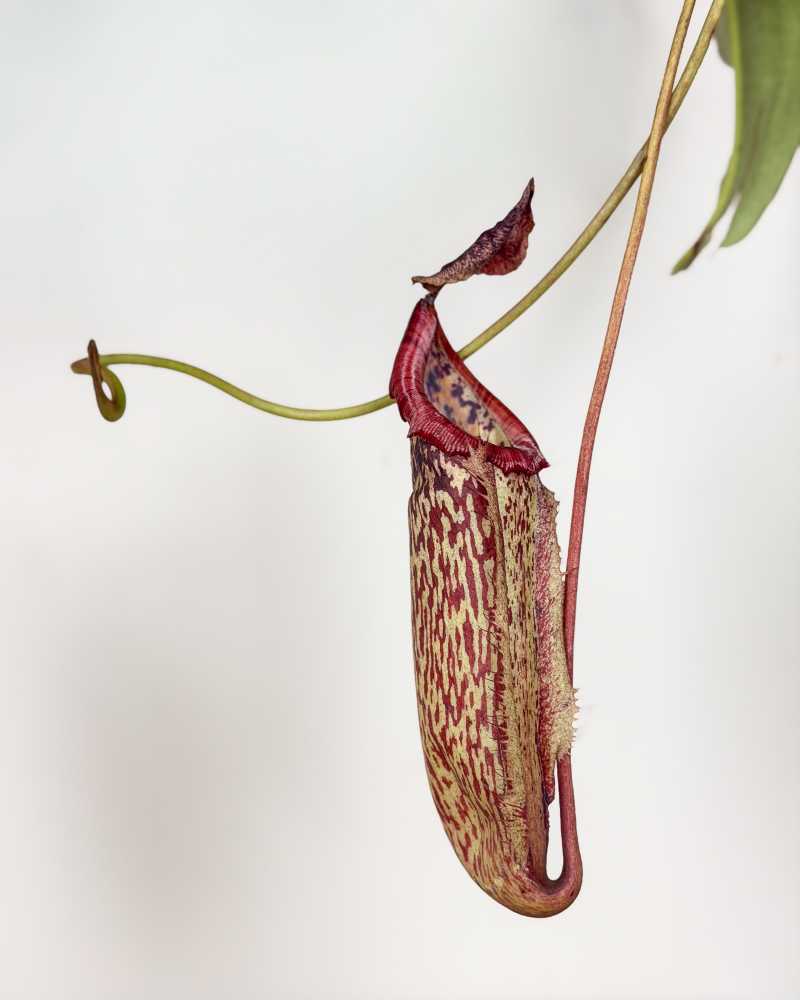
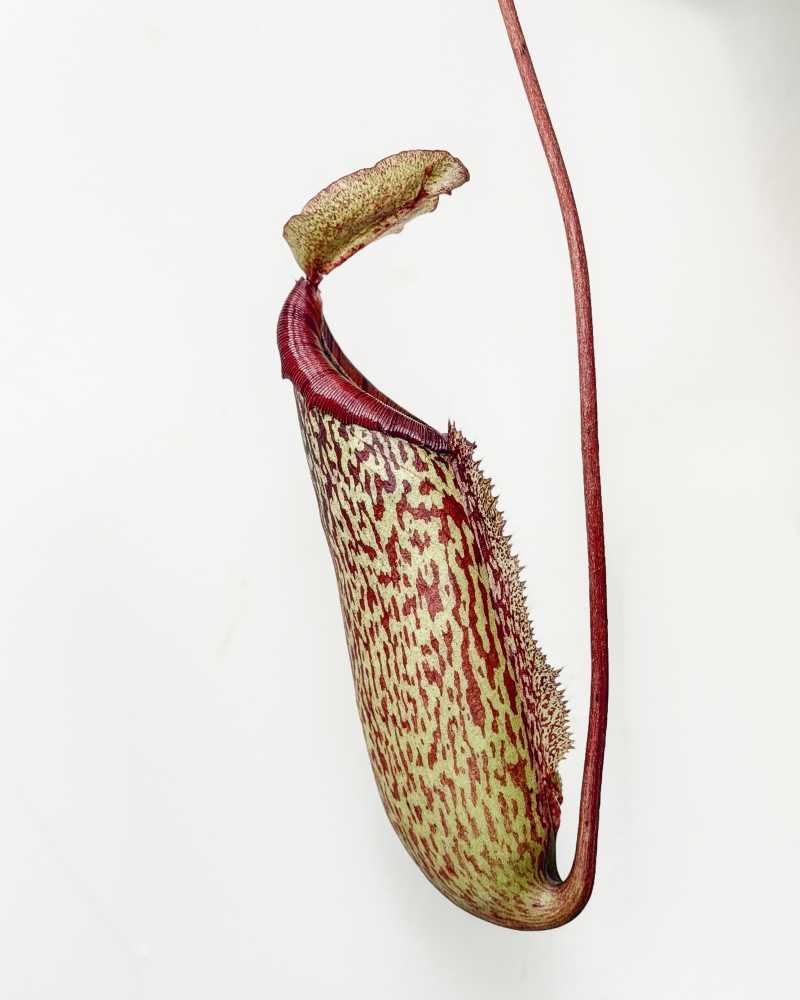
A common concern for buyers is when the plant drops its pitchers. Don’t panic—individual pitchers naturally die off as they age. However, if the plant stops producing new pitchers altogether, it is almost always a sign of low humidity or insufficient lighting. Increasing ambient humidity or moving it to a brighter spot will quickly trigger new pitcher growth.
Pests
Because it is a carnivorous plant, it naturally takes care of many common flying pests. However, it can occasionally be susceptible to scale or mealybugs hiding under the leaves or around the stems. If spotted, manually remove them using a cotton swab dipped in rubbing alcohol. Avoid harsh chemical insecticides, which can damage the plant’s sensitive foliage.
Disease
The main threat is root rot caused by stagnant water or compacted soil. Ensure your hanging basket or pot has excellent drainage. Good air circulation is also key; stagnation in ultra-high humidity can lead to fungal leaf spot.
Pruning
Pruning is purely cosmetic but keeps the plant looking tidy. Use sharp, sanitized shears to snip off older, dried-out brown pitchers or yellowing leaves at the base of their connection to the leaf tip. If the vine grows too long, you can trim the main stem to encourage a bushier growth habit.
Potting / Repotting
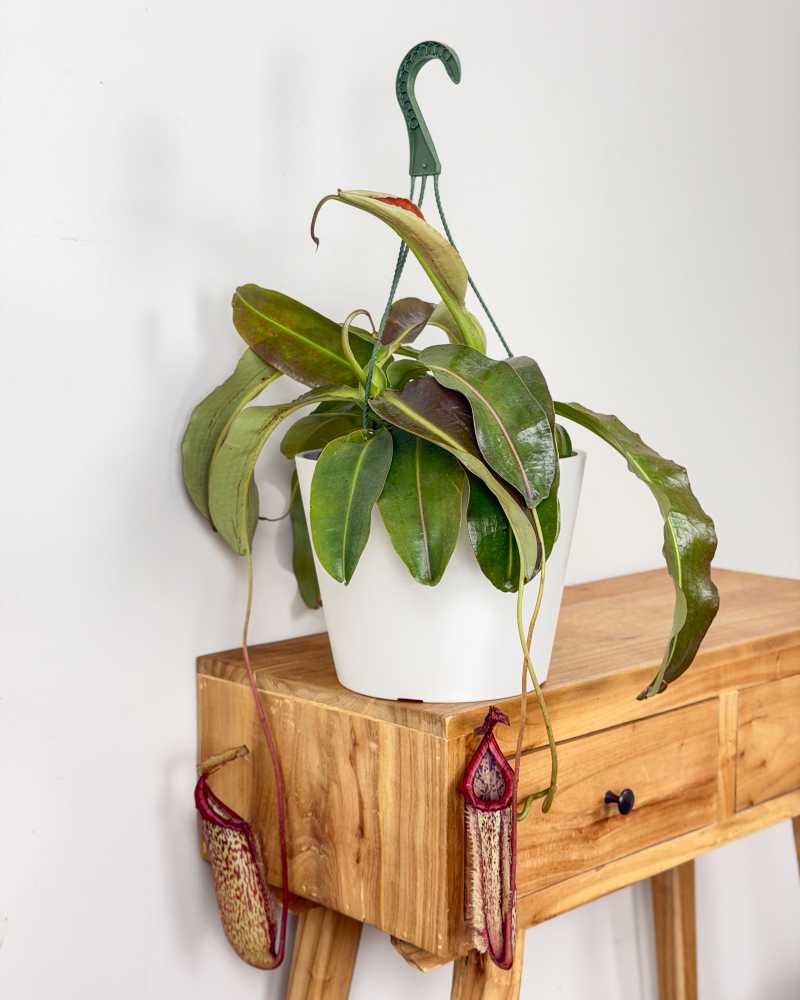
The Miranda Pitcher Plant looks absolutely spectacular in hanging baskets where its massive pitchers can cascade freely. Repot every 1 to 2 years in early spring to refresh the sphagnum moss mix and prevent it from breaking down. Be incredibly gentle with the root system during the process, as its roots are quite delicate.