Description
Caring for your Bulbine Yellow
Light
This plant thrives in full sun (at least 6-8 hours a day). Intense sunlight is what keeps the flower spikes coming and prevents the succulent leaves from stretching. It can handle partial shade, but you will notice fewer blooms and a less compact growth habit.
Soil
Like most succulents, the Yellow Bulbine demands excellent drainage. It is perfectly at home in sandy, rocky, or poor soils. If you are planting in a pot, a cactus or succulent mix is essential. Avoid heavy, wet clay, as stagnant water is the plant’s only real enemy.
Water
Once established, the Yellow Bulbine is exceptionally drought-tolerant. Water it regularly during the first few weeks after planting to help it settle. After that, it prefers to dry out almost completely between waterings. During winter, it requires very little to no supplemental water.
Fertilizer
It is a light feeder and generally flourishes without much help. If your soil is particularly nutrient-poor, a light application of balanced, slow-release fertilizer once a year in early spring is more than enough to sustain it.
Common Issues
The most common problem is “mushy” foliage or yellowing at the base, which is a classic sign of overwatering. If the plant looks like it’s falling apart from the center, check the soil moisture and ensure the drainage holes are not blocked.
Pests
It is remarkably pest-resistant. On rare occasions, you might see mealybugs if the plant is under high stress or in a very damp environment, but its sap generally acts as a natural deterrent.
Disease
The Yellow Bulbine is virtually disease-free. Fungal issues like root rot can occur only if the plant is kept in waterlogged soil. Proper spacing to allow air circulation will prevent any minor leaf spot issues in humid climates.
Pruning
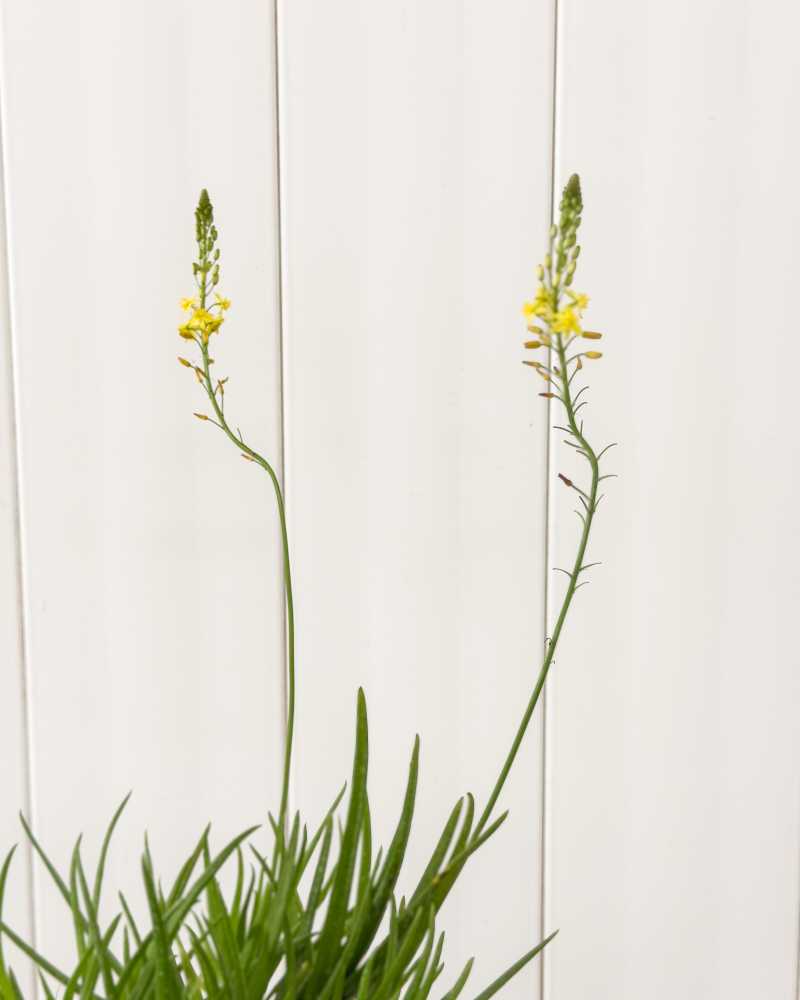
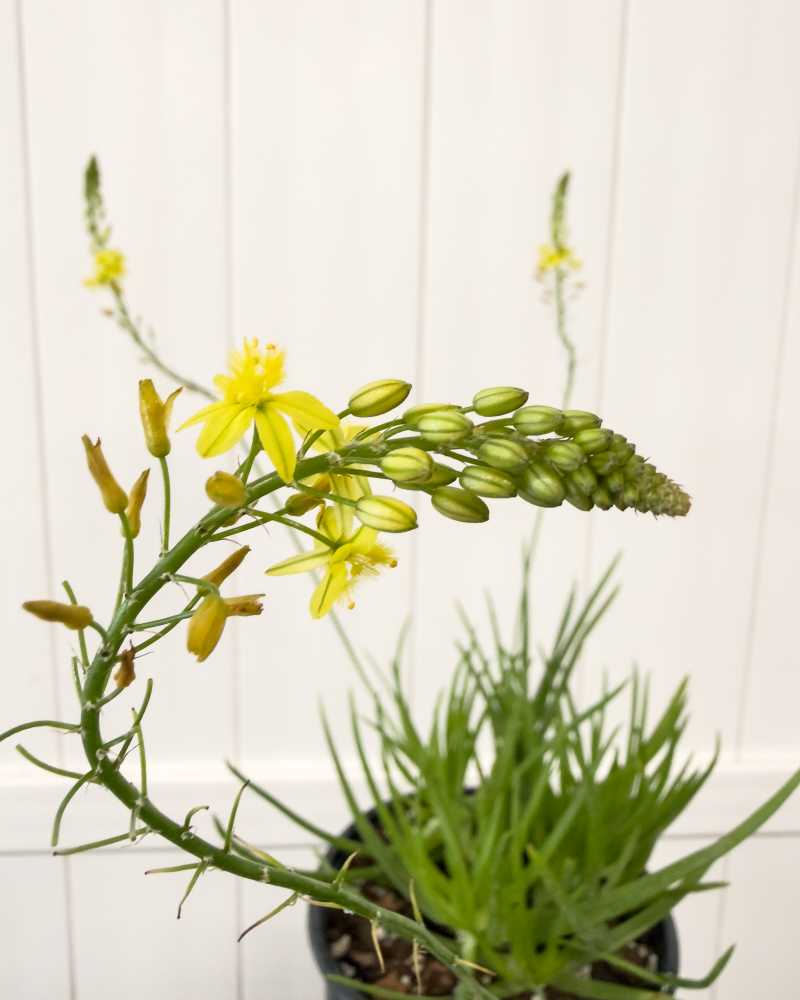
To keep the plant looking tidy and encourage fresh growth, simply deadhead the flower stalks once they have finished blooming. If the clump becomes too large or sparse over time, you can cut the foliage back by half in late winter to rejuvenate it for the new season.
Propagation
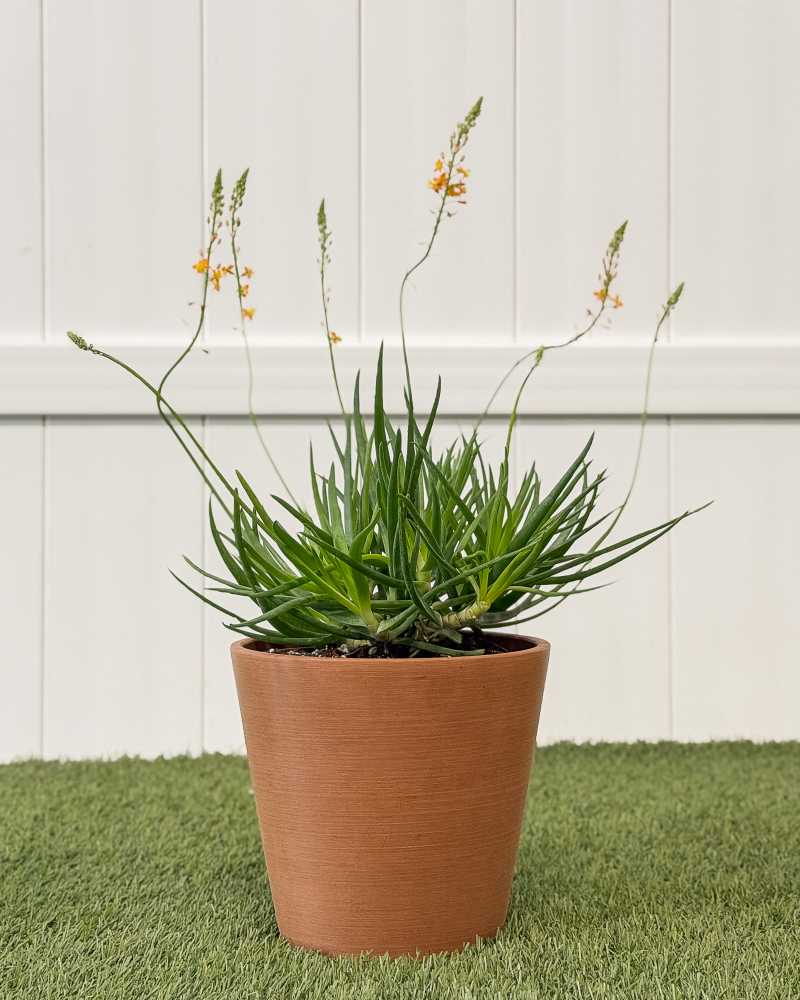
This is the easiest way to grow your collection. The plant naturally forms clumps that can be divided. Simply pull or cut a section of the plant away from the main cluster (ensuring it has some roots) and replant it. It will establish itself quickly.
Potting / Repotting
Because it is a clumping plant, it can eventually become root-bound in a container. Repot every 2 years into a pot that is 2-3 inches wider. Use fresh, gritty soil and make sure the new pot has plenty of drainage to keep the “feet” dry.