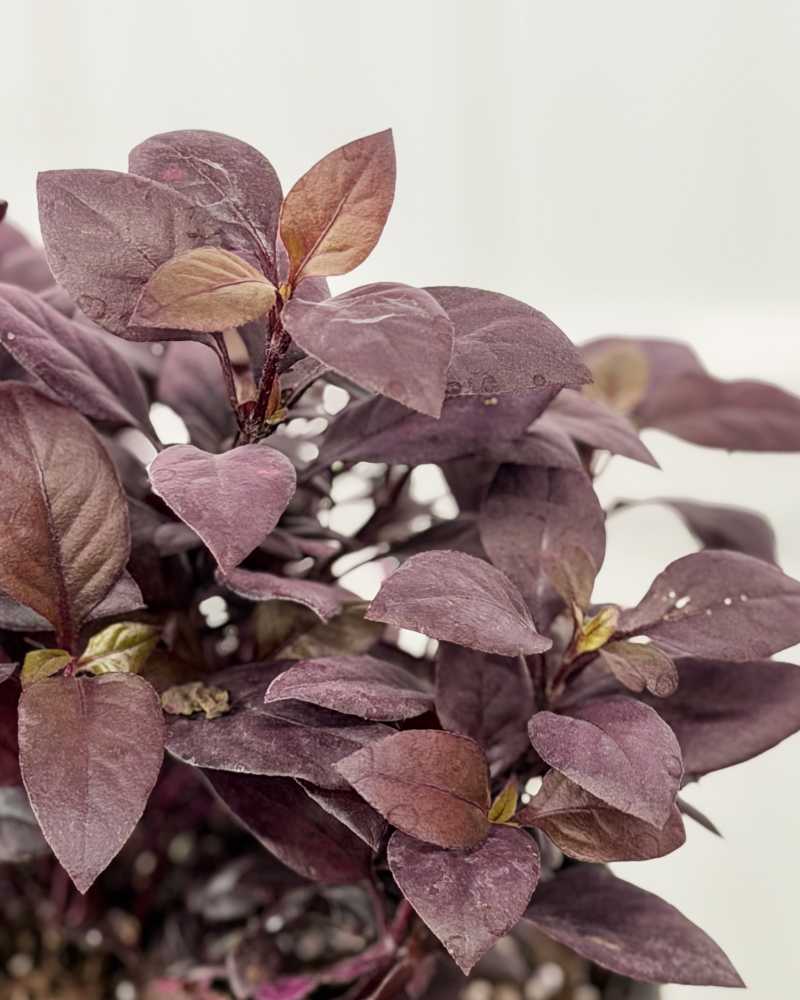
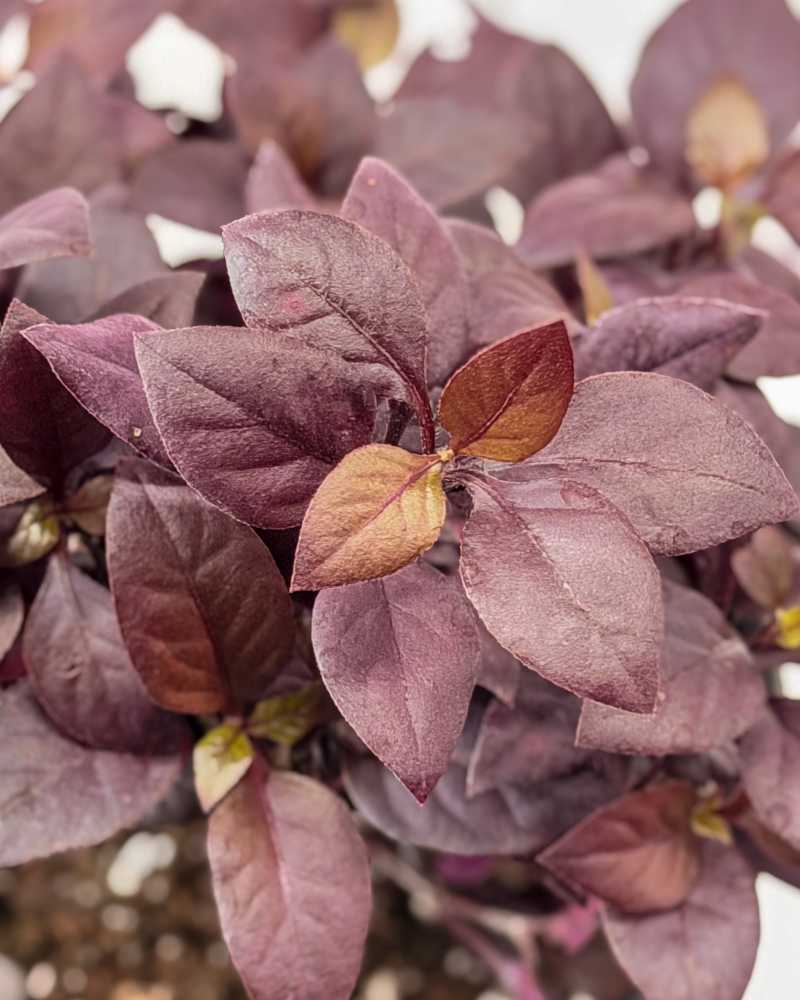
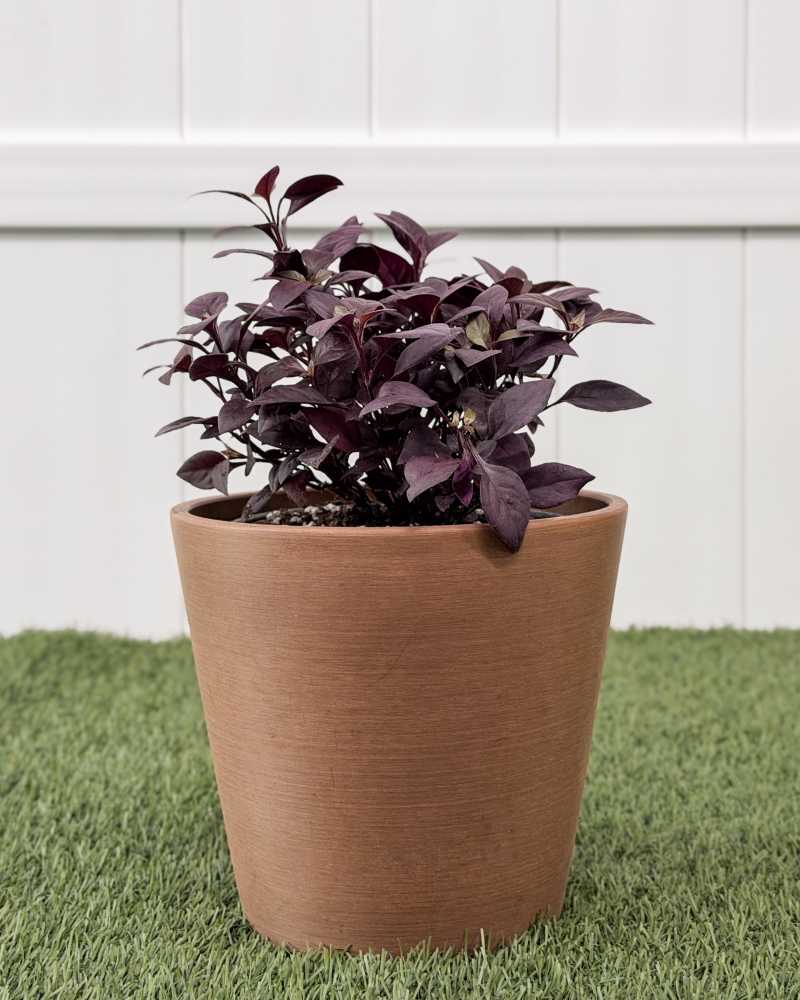
Description
Caring for your Alternanthera
Light
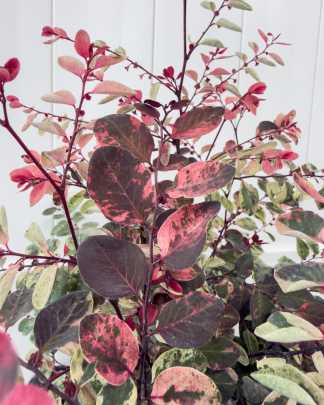
To maintain its signature “neon” colors, the Alternanthera needs bright, indirect light to full sun. When grown outdoors, some varieties develop their deepest colors in full sun, though they appreciate some afternoon shade in extremely hot climates. Indoors, place it near a bright window. If the plant doesn’t get enough light, the vibrant pinks or reds may fade into a duller green.
Soil
This plant is not overly picky about soil types but performs best in a rich, organic, and well-draining potting mix. It prefers a soil that stays consistently moist but allows oxygen to reach the roots. A standard high-quality potting soil with a bit of perlite or peat moss is perfect.
Water
Alternanthera is known for being a bit of a “drama queen” when it’s thirsty—the leaves will wilt dramatically as a signal that it needs water. It likes consistent moisture and does not handle long periods of drought well. Water when the top inch of soil feels dry. For indoor plants, ensure the pot has drainage to prevent the roots from sitting in stagnant water, which can lead to rot.
Fertilizer
To support its rapid growth and colorful foliage, use a balanced, water-soluble fertilizer every 4 weeks during the growing season (spring and summer). Avoid over-fertilizing in the winter months when the plant’s growth naturally slows down.
Common Issues
The most common issue is leggy or “stretched” growth, which occurs when the plant is reaching for more light. If you notice large gaps between the leaves, move the plant to a brighter location. Additionally, leaf drop can occur if the plant is exposed to sudden cold drafts or if the soil is allowed to dry out completely.
Pests
While relatively resistant, Alternanthera can occasionally attract aphids or spider mites, particularly in dry indoor environments. Regularly misting the plant or wiping the leaves can help prevent these pests. If an infestation occurs, an organic insecticidal soap or neem oil treatment will usually solve the problem quickly.
Disease
Root rot is the primary disease concern, usually caused by overwatering or lack of drainage. In very humid or crowded conditions, it may develop powdery mildew. To prevent this, ensure there is good air circulation around the plant and try to water at the base rather than over the foliage.
Pruning
Pruning is highly recommended to keep the Alternanthera looking lush and mounded. Don’t be afraid to “pinch back” the growing tips; this encourages the plant to branch out and become bushier rather than tall and thin. You can prune it at any time during the growing season to maintain your desired shape.
Propagation
This is one of the easiest plants to propagate. Simply take stem cuttings (about 3-4 inches long), remove the lower leaves, and place them in a glass of water or directly into moist soil. They typically develop a strong root system within just 10 to 14 days.
Potting / Repotting
Because it grows quickly, your Alternanthera may need repotting every year. If you see roots peeking out of the drainage holes, move it to a pot that is 2 inches wider. Use fresh, nutrient-rich soil to give the plant the energy it needs for its next growth spurt.