Description
Caring for your Mexican Petunia
The Dwarf Mexican Petunia is incredibly hardy and versatile. It is one of the few plants that can handle “wet feet” (flooding) just as well as it handles a dry spell. While it is very self-sufficient, following these simple care tips will ensure your white blooms stay vibrant and plentiful.
Light
To get the most flowers out of your Ruellia ‘Katie White’, plant it in a spot that receives full sun to partial shade. Sunlight is the fuel for its blooming cycle; the more light it gets, the more white flowers it will produce. While it can grow in shadier areas, you may notice fewer blooms and a more leggy growth habit. In full sun, the plant maintains its tight, carpet-like mound.
Soil
This plant is famously adaptable to almost any soil type, from sandy to clay-heavy. However, it will perform its best in fertile, well-draining soil. It prefers a neutral to slightly acidic pH. If you are planting it in a pot, any high-quality potting mix will work perfectly.
Water
One of the best features of the Dwarf Mexican Petunia is its resilience to water inconsistencies. It is highly drought-tolerant once established, but it can also survive in areas of the garden that don’t drain well or experience occasional flooding. For optimal growth, keep the soil consistently moist, especially during the first few weeks after planting. During winter, reduce watering and only supplement if the soil feels very dry to the touch.
Fertilizer
The Dwarf White Ruellia is a light feeder. In most cases, it does not require regular fertilization to bloom beautifully. If you feel your soil is particularly poor, you can apply a balanced, slow-release fertilizer once in the spring to give it a head start for the growing season.
Common Issues
The ‘Katie White’ variety is a tough survivor. It is largely unaffected by heatwaves, high humidity, or temporary lack of water. It is a very stable plant that rarely suffers from the typical stresses that affect more delicate perennials.
Pests
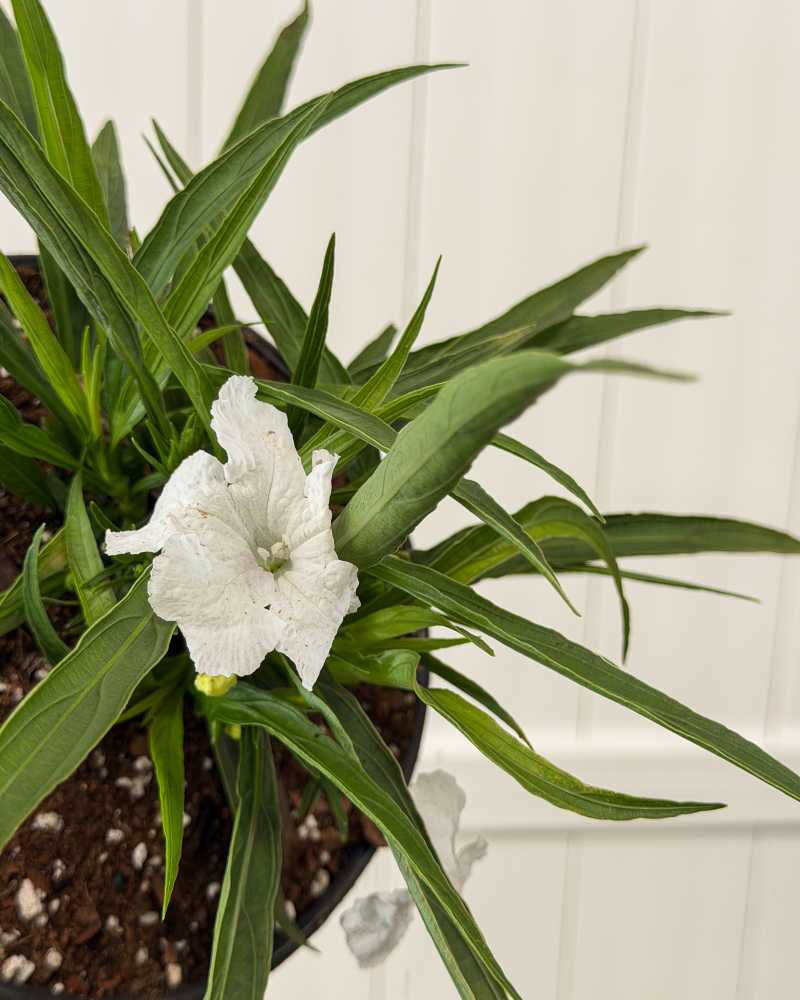
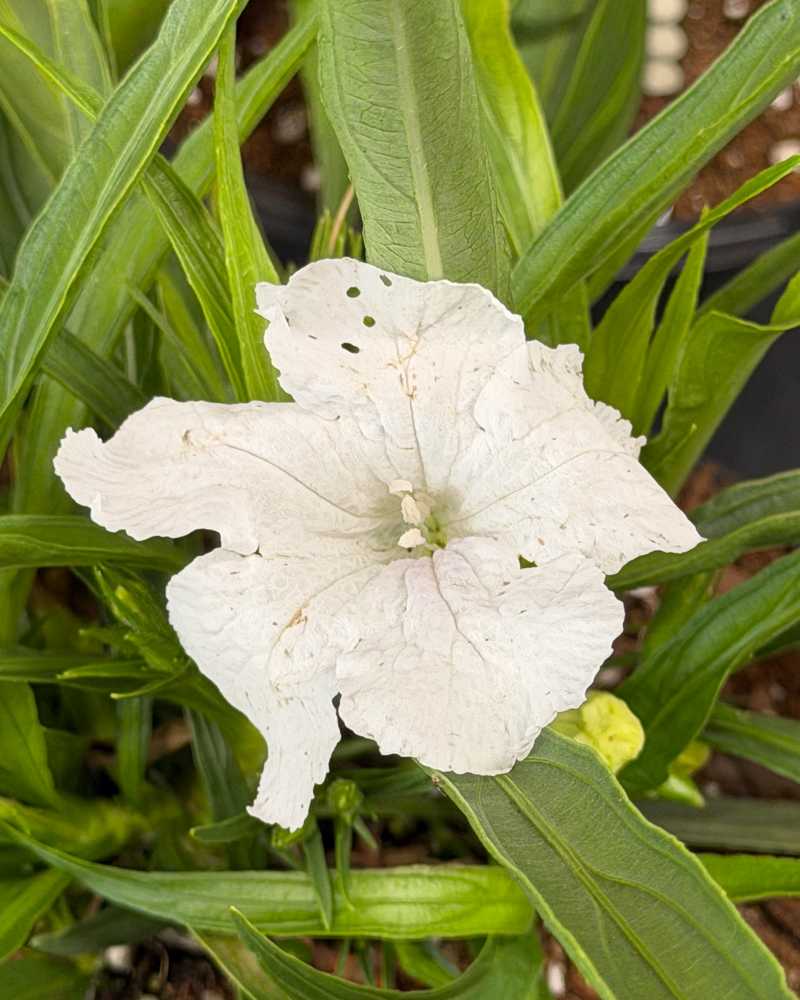
You won’t have to worry much about pests with this plant. It is generally resistant to most common garden insects. Instead of pests, expect to see beneficial visitors like butterflies and bees, which are naturally drawn to the bright white flowers.
Disease
The most common issue is foliage damage during a hard freeze. If the temperature drops significantly, the leaves may turn brown. Simply wait until the threat of frost has passed, trim back the damaged areas, and the plant will quickly rebound with fresh green growth from the base in the spring.
Pruning
Since this is a dwarf variety, it requires very little pruning to maintain its shape. However, you can “deadhead” (remove spent blooms) or trim back the stems after a heavy flowering flush to encourage a fresh round of buds. Cutting it back slightly in late winter will also help it grow back thicker and more lush.
Propagation
Dwarf Mexican Petunias are easy to propagate through clump division or stem cuttings. Simply take a cutting, place it in moist soil, and it will usually root within a few weeks. They also self-seed, though the ‘Katie’ dwarf variety is generally less aggressive than the taller species.
Potting / Repotting
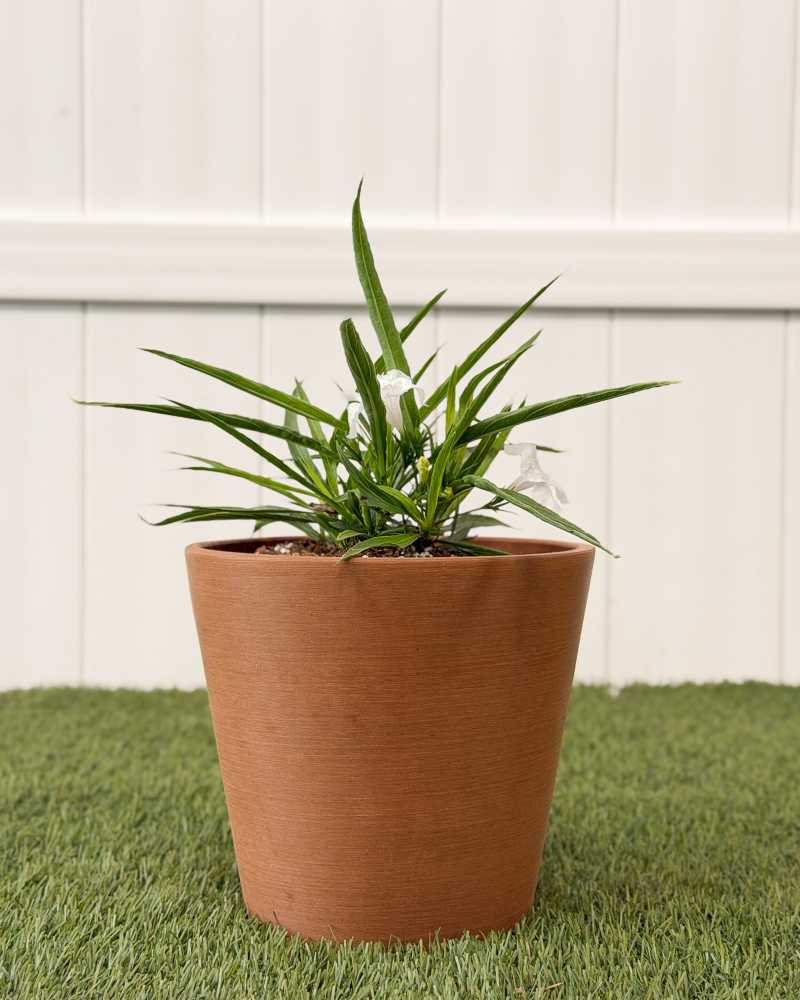
Because of its compact size, the Dwarf White Ruellia is perfect for containers. If you notice the plant becoming crowded or the water draining too slowly, it’s time to move up to a pot about 2 inches wider. Be gentle with the root ball and ensure it is planted at the same depth as it was in the previous container.