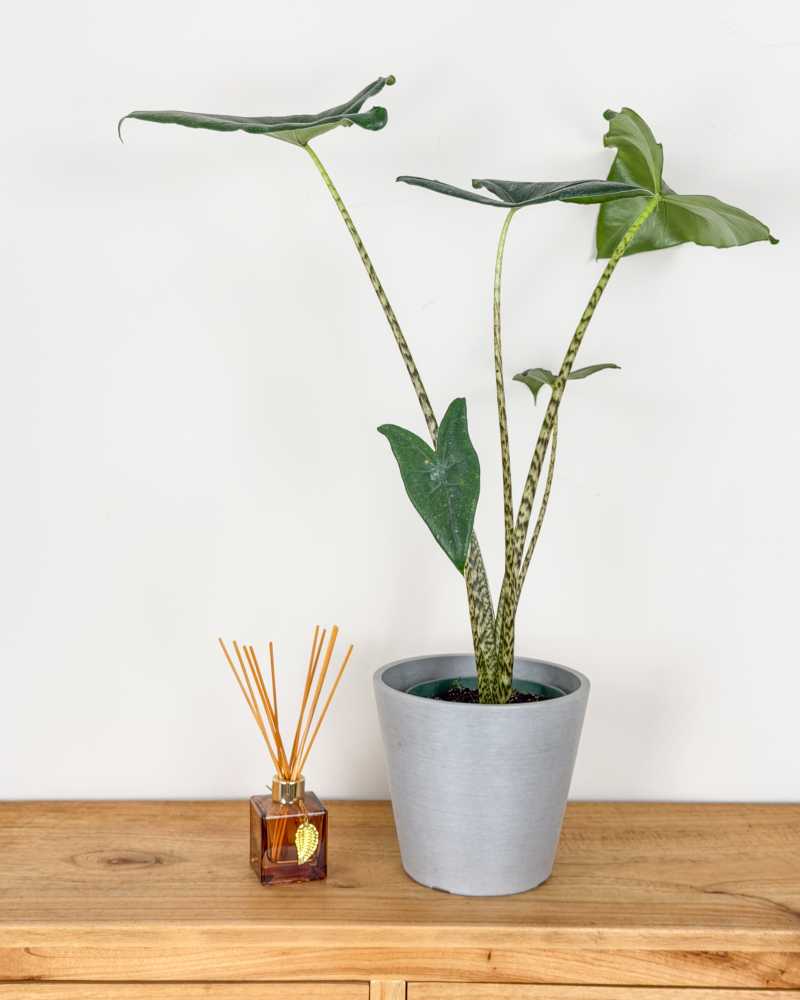
Description
Caring for your Alocasia Zebrina
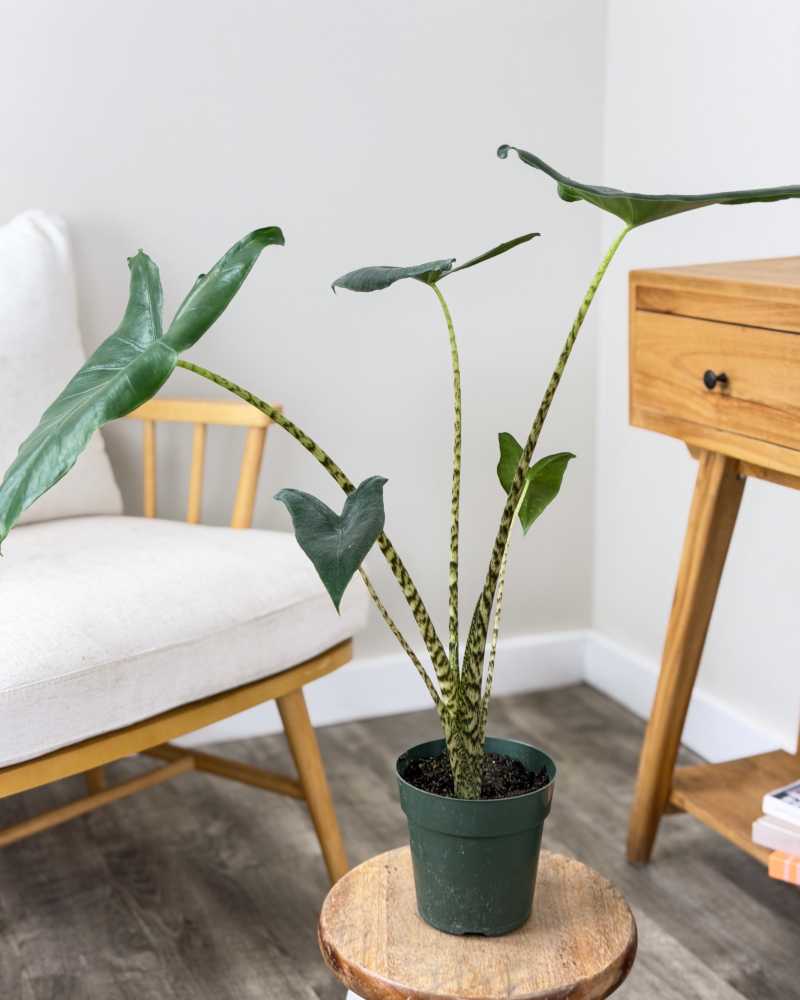
Home gardeners grow Alocasia Zebrina as striking indoor potted statement plants. Native to the tropical rainforests of the Philippines, they require warm, climate-controlled conditions to thrive indoors.
Light
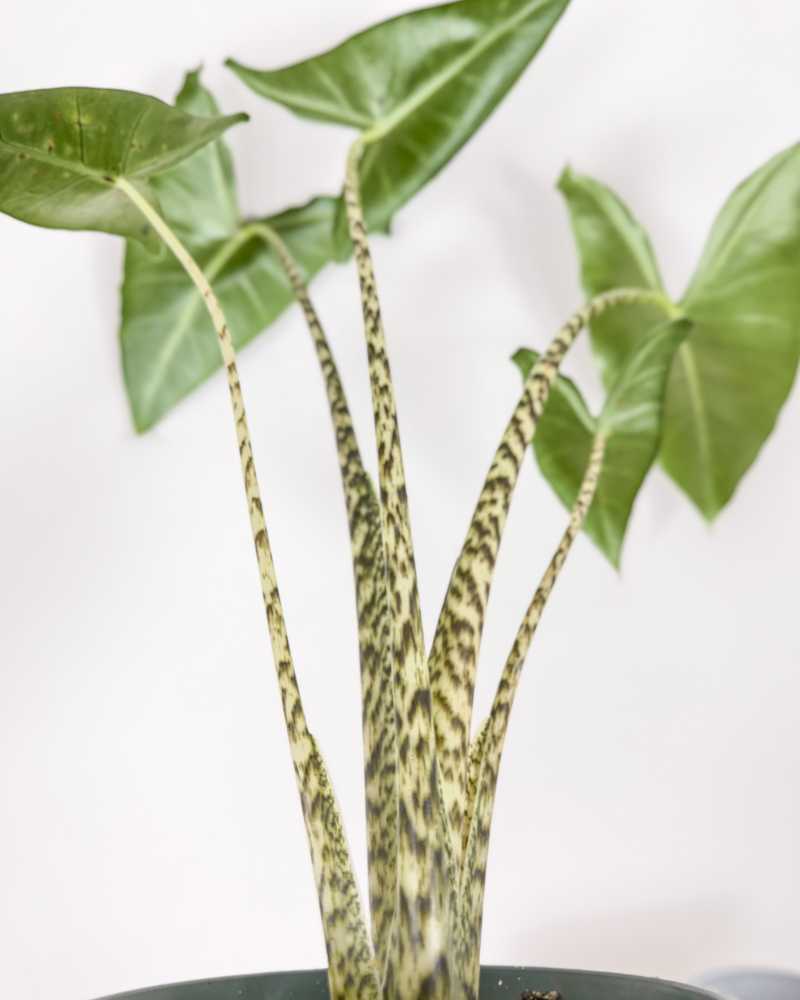
If you plan to keep your Alocasia Zebrina in your living room or office, place it near a window where it receives bright, filtered sunlight. Insufficient light can cause the plant’s growth to slow down, stems to become leggy, and the iconic zebra-like stem patterns to fade.
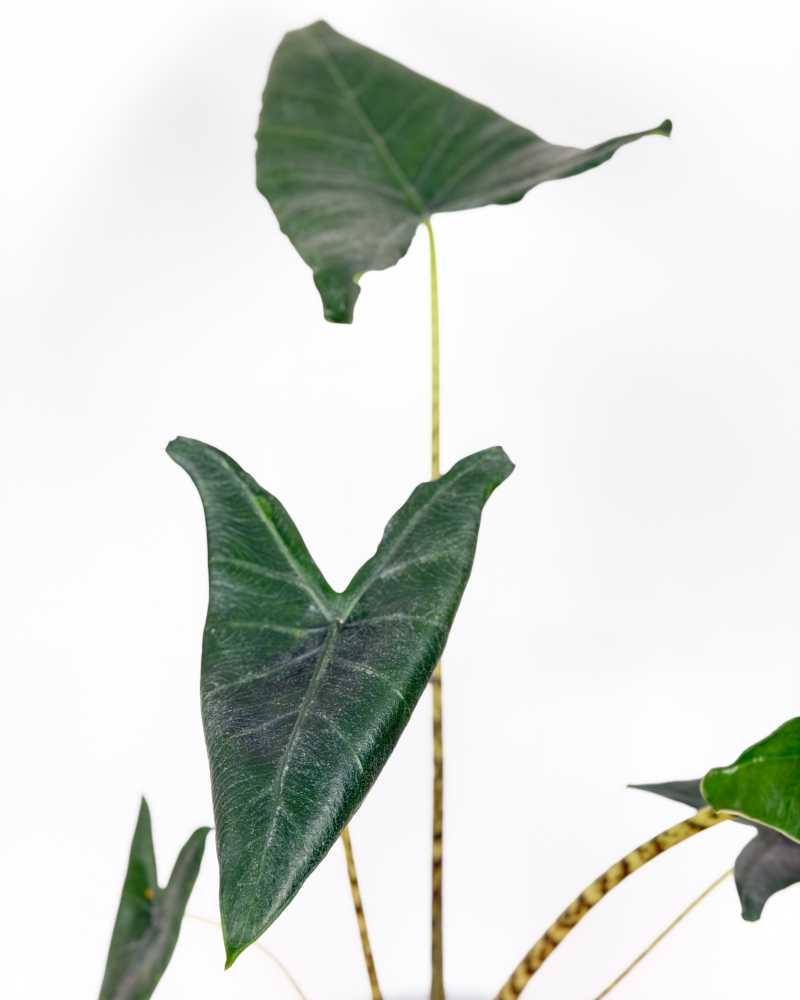
On the other hand, harsh, direct afternoon sun will quickly scorch its glossy, arrowhead-shaped leaves and cause wilting. If placing outdoors or on a patio, locate bright, shaded spots shielded from direct rays.
Soil
A loose, chunky, and highly aerated aroid mix is perfect for growing Alocasia Zebrina. Use a mixture of orchid bark, perlite, coconut coir, and quality potting mix. Check that the container has excellent drainage, as its bulbous roots and rhizomes do not tolerate standing water or overly dense soil.
Water
Make sure that the soil remains consistently moist but not overly soggy from spring to fall. Minimize watering frequency when late fall arrives and throughout the winter when growth naturally slows down. However, do not allow the root ball to dry out completely. Both bone-dry and waterlogged soil can cause significant leaf drop, making proper moisture management essential for keeping this plant healthy.
Fertilizer
Alocasia Zebrina thrives in organically rich soil and is a relatively heavy feeder during its active growth period. Use a balanced liquid houseplant fertilizer diluted to half-strength once every month during the spring and summer months. Pause or drastically reduce fertilizing during late fall and winter.
Common Issues
Like many large-leafed tropical aroids, Alocasia Zebrina can experience occasional health issues if growing conditions fluctuate.
Pests: Keep a close eye on your plant for spider mites, thrips, and mealybugs—the most common pests for Alocasias. These pests can damage the foliage and leave stippling or yellow patches. You may notice tiny webs or insects along the undersides of the leaves and stems. Dust and wipe the leaves regularly with a damp cloth to prevent pests from colonizing and to keep the leaves looking their best.
Disease: Yellow halos or brown spots on the foliage often signify leaf spot disease or moisture imbalance. Soft, mushy stems or a foul odor indicate root rot caused by overwatering or poorly draining soil. Fungal leaf spots can be treated with a copper fungicide, but if the main corm has soft rot, the plant usually cannot be saved and should be discarded.
Pruning
It is completely natural for the oldest, lower leaves of Alocasia Zebrina to turn yellow and droop as new, larger leaves emerge from the center of the crown. Once you notice a leaf fully yellowing, prune it off cleanly near the base of the stem with sharp, sanitized shears.
Propagation
For best results, propagate Alocasia Zebrina during spring or summer when the plant is actively growing. The most effective way to propagate is by division—separating small offset corms (tubers) from the parent plant’s root ball during repotting and potting them into their own small containers.
Potting / Repotting
Alocasia Zebrina generally requires repotting every 1 to 2 years as it outgrows its pot. Choose a container 2 to 3 inches larger in diameter with ample drainage holes. When repotting, gently loosen the surrounding soil, lift the root ball carefully to protect its thick corms, and repot using fresh, well-draining substrate.